
International Relations and Global Economic Development
The Interplay Between Global Politics and Economic Growth


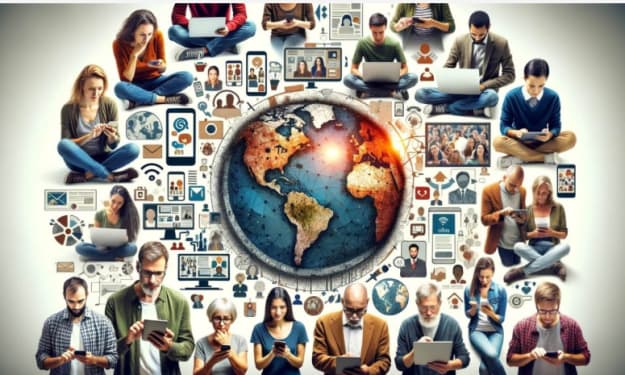
In an increasingly interconnected world, the link between international relations and global economic development has grown stronger and more complex. Nations no longer operate in silos; instead, their economic prospects are deeply shaped by their diplomatic relations, trade alliances, political stability, and participation in global institutions. As globalization advances, understanding the interplay between international relations and economic development becomes essential—not only for policymakers and economists, but also for ordinary citizens whose lives are influenced by global trends.
The Evolution of International Relations in Economic Context
Historically, international relations were largely focused on diplomacy, conflict resolution, and territorial integrity. However, with the emergence of global trade, foreign direct investment, and multilateral organizations like the World Trade Organization (WTO), the focus expanded to include economic partnerships. From the post-World War II Bretton Woods institutions like the International Monetary Fund (IMF) and the World Bank, to modern free trade agreements such as the North American Free Trade Agreement (NAFTA) and the European Union (EU), economic considerations have become integral to diplomatic strategies.
The fall of the Soviet Union in the early 1990s marked a shift toward liberal economic models and free-market globalization, where nations competed not just on military strength but on innovation, capital, and trade relationships. In this context, strong international ties often translated into economic benefits.
Diplomatic Relations as a Catalyst for Economic Growth
Good diplomatic relationships create an environment of trust and cooperation, which are key factors in promoting trade and investment. Countries with stable political systems and positive foreign relations are more likely to attract foreign direct investment (FDI). For example, the strong diplomatic and trade ties between the United States and Japan have helped foster mutual economic prosperity through technology exchange, manufacturing collaboration, and investment.
Additionally, the role of regional cooperation cannot be overstated. In Southeast Asia, the Association of Southeast Asian Nations (ASEAN) has significantly improved regional integration and economic growth by promoting peaceful dialogue and coordinated economic policies among its member states. Similarly, the African Continental Free Trade Area (AfCFTA) aims to enhance intra-African trade and economic unity, which has the potential to lift millions out of poverty through enhanced cooperation.
Trade Agreements and Economic Interdependence
One of the most direct links between international relations and economic development lies in trade agreements. Free trade agreements (FTAs) and economic partnerships reduce or eliminate tariffs, encourage investment, and allow for the flow of goods, services, and labor across borders. These agreements are often the result of long diplomatic negotiations that reflect mutual political and economic interests.
For instance, the European Union (EU) represents a highly integrated economic and political union where members benefit from free movement and shared economic policies. Despite the challenges it faces, the EU has contributed to sustained economic development across the region by enhancing competitiveness and cooperation.
Economic interdependence, however, also creates vulnerabilities. Global supply chains, while efficient, can be disrupted by geopolitical tensions. The ongoing trade war between the United States and China illustrates how deteriorating diplomatic relations can lead to tariffs, sanctions, and uncertainty—ultimately affecting not only the two nations involved but the global economy as a whole.
Political Stability and Investor Confidence
International investors closely monitor political stability and diplomatic standing when making decisions. Countries embroiled in conflict, corruption, or unstable diplomatic relations often find it difficult to attract investment. On the other hand, transparent governance, adherence to international law, and participation in global institutions often improve a country’s creditworthiness and investment profile.
Take the example of post-apartheid South Africa. After reintegrating into the international community and normalizing diplomatic relations, South Africa experienced a surge in foreign investment and economic growth. Conversely, nations like Venezuela and North Korea, which face international sanctions and diplomatic isolation, have seen their economies severely restricted despite possessing abundant natural resources.
Development Aid and Global Partnerships
Another aspect of international relations that directly influences economic development is foreign aid and development assistance. Developed nations and international institutions often provide financial aid, technical assistance, and capacity-building programs to developing countries. However, the effectiveness of such aid depends largely on the diplomatic and strategic interests of donor and recipient countries.
China’s Belt and Road Initiative (BRI) exemplifies this. Through massive infrastructure investments across Asia, Africa, and Europe, China has extended its influence while promoting economic development in partner countries. Critics argue that such programs may lead to dependency or debt traps, but supporters see them as a path toward modern infrastructure and regional growth.
Challenges in the Current Geopolitical Climate
Despite the benefits of international cooperation, the current geopolitical landscape poses several challenges. The rise of nationalism, protectionism, and isolationist policies threatens multilateralism and economic integration. Brexit, the US-China rivalry, and shifting alliances in the Middle East have all introduced uncertainty into global economic systems.
Moreover, emerging global issues such as climate change, pandemics, and cybersecurity demand coordinated responses. These challenges transcend national borders and require sustained international cooperation. Failing to engage in constructive international dialogue can stall global development efforts and exacerbate inequalities.
The Role of International Institutions
Institutions such as the United Nations (UN), World Bank, IMF, and WTO play a critical role in maintaining global order and facilitating economic growth. By providing frameworks for cooperation, dispute resolution, and funding for development, these organizations act as stabilizers in a complex international system. However, their effectiveness relies heavily on the political will of member nations and their commitment to international norms and agreements.
Recent calls for reform in these institutions reflect growing concerns that current structures may not adequately address the realities of a multipolar world. Developing countries are pushing for a greater voice in global decision-making, which could lead to more equitable economic development if properly addressed.
Conclusion
International relations and global economic development are deeply intertwined. Diplomatic engagement, trade agreements, political stability, and international cooperation all play vital roles in shaping a nation’s economic future. While globalization offers immense opportunities, it also presents significant challenges that must be navigated through strategic and thoughtful diplomacy.
As the world faces an increasingly complex set of issues, from climate change to geopolitical conflicts, the need for robust international cooperation has never been greater. Only through constructive, balanced, and forward-looking international relations can sustainable global economic development be achieved.
About the Creator
Murad Ullah
My qualification is in English Literature and Linguistics, and I am an expert in English writing.
Reader insights
Good effort
You have potential. Keep practicing and don’t give up!
Top insights
Compelling and original writing
Creative use of language & vocab
Easy to read and follow
Well-structured & engaging content
Excellent storytelling
Original narrative & well developed characters
Expert insights and opinions
Arguments were carefully researched and presented
Eye opening
Niche topic & fresh perspectives
Heartfelt and relatable
The story invoked strong personal emotions
Masterful proofreading
Zero grammar & spelling mistakes
On-point and relevant
Writing reflected the title & theme
Keep reading
More stories from Murad Ullah and writers in Education and other communities.
Social Media’s Effect on Reality, Authenticity & Human Bonds
The human intellect intricately constructs narratives, much like how our visual faculties merge images to form mental impressions. These mental frameworks shape our perceptions of people, objects, and places, deeply influencing our emotional responses to life’s experiences. These perceptions, formed within the mind’s intricate workings, significantly shape our decisions and the paths we follow in life. Prior to the widespread rise of social media, presenting a deliberately crafted version of reality to others was a challenging feat. As a result, manipulating collective thought was a difficult undertaking. However, the emergence of social media marked a pivotal shift, introducing a landscape where individuals can easily curate fictional versions of themselves, shaping misleading realities to influence public sentiment in their favour.
By Murad Ullah11 months ago in Education
7 Online Skills That Can Change Your Financial Future in 2026
7 Online Skills That Can Change Your Financial Future In today’s digital world, one skill can completely transform your life. Just a decade ago, making money online sounded unrealistic to many people. Today, thousands of people are building careers, businesses, and even financial freedom using only their laptops and internet connections. The truth is simple: the internet has created opportunities that never existed before. But the biggest mistake most people make is waiting for the “perfect moment” to start learning. The reality is that learning just one valuable online skill can open doors to income streams you never imagined. Here are seven powerful online skills that can truly change your financial future. 1. Content Writing Content writing is one of the easiest online skills to start with. Every website, blog, and online business needs high-quality content to attract readers and customers. If you can write helpful, interesting, or informative articles, you already have the foundation for this skill. Content writers earn money by writing: Blog posts Website content Product descriptions News articles Platforms like freelance marketplaces, blogging websites, and digital publications are always looking for good writers. With practice, many writers turn this skill into a full-time career. 2. Graphic Design In the online world, visuals matter. Businesses need logos, social media graphics, advertisements, and brand designs to attract attention. Graphic design allows creative people to turn their imagination into income. Even beginners can start by learning simple tools and gradually improving their skills. Graphic designers can work with: Small businesses Online brands Content creators Marketing agencies A single well-designed logo or brand package can sometimes earn more than weeks of traditional work. 3. Video Editing Video is the most powerful form of content on the internet today. From social media platforms to online courses, videos dominate the digital world. But most creators don’t have the time or skill to edit their own videos. This is where video editors come in. If you learn how to cut clips, add music, create smooth transitions, and improve video quality, you can become extremely valuable. Video editors are needed by: YouTubers Businesses Online educators Social media influencers The demand for video editing continues to grow every year. 4. Social Media Management Millions of businesses rely on social media to reach customers. But many business owners don’t know how to grow their pages, create content, or engage with their audience. Social media managers help brands: Plan content Post regularly Respond to followers Grow their audience With the right strategy, social media managers can manage multiple accounts and earn steady monthly income. This skill combines creativity with marketing knowledge, making it highly valuable. 5. Digital Marketing Digital marketing is one of the most powerful online skills you can learn. It involves promoting products, services, or brands through online channels such as search engines, social media, and email. Digital marketers help businesses get: More website visitors More customers More sales Companies are willing to pay well for people who can increase their revenue. Learning digital marketing can open doors to freelance work, remote jobs, or even your own online business. 6. Web Development Every business needs a website. But building a professional website requires technical skills. Web developers create and maintain websites using coding languages and development tools. Although this skill takes more time to learn than others on this list, it is also one of the highest-paying online skills. Many web developers work remotely and build websites for clients all around the world. Once you gain experience, the opportunities become endless. 7. AI Content Creation Artificial intelligence is rapidly changing the online world. Many creators and businesses now use AI tools to produce content faster and more efficiently. AI content creators use technology to generate: Articles Images Videos Marketing content People who understand how to use AI tools effectively have a huge advantage in the modern digital economy. Instead of replacing creativity, AI often amplifies it. Those who learn how to combine creativity with technology will be ahead of the curve. Final Thoughts The internet has made it possible for anyone, anywhere in the world, to build valuable skills and create new income opportunities. But knowledge alone is not enough. The real difference comes from taking action. Pick one skill from this list and start learning today. Practice consistently. Improve a little every day. Over time, that single skill could become the foundation of a completely different financial future. Because sometimes, all it takes is one skill to change everything.
By Baseer Shaheen 6 days ago in Education
I <3 Irasutoya
If you live in Japan, you've seen Irasutoya images everywhere. It's on posters, it's on flyers, it's on internet adverts, it's truly everywhere. You've probably seen it once or twice if you don't live in Japan. It's cute, it's simplistic and it somehow manages to get succinct points across really clearly and concisely.
By Max Brooks7 days ago in Education


Comments
There are no comments for this story
Be the first to respond and start the conversation.