
Inside Serenity International: A Jodhpur Furniture Manufacturer’s Global Strategy
Blending traditional Indian craftsmanship with modern manufacturing.
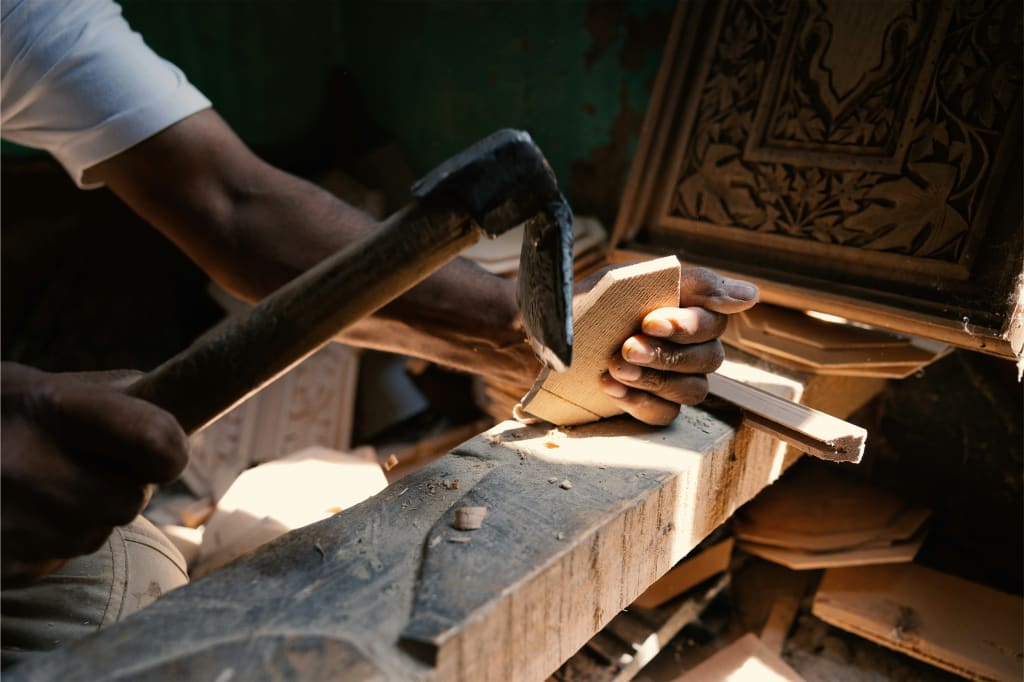
In a global industry increasingly shaped by mass production and automation, a furniture manufacturer based in Jodhpur, India, is betting on a different path—one rooted in traditional craftsmanship combined with modern manufacturing standards.
Background and Vision
Founded in Jodhpur, a city with a longstanding reputation for woodworking, Serenity International was established with the goal of merging India’s artisanal heritage with the growing international demand for contemporary and sustainable furniture. During a recent visit to the company’s facility, its founders emphasized the importance of balancing handcrafting techniques with the scalability required for global distribution. They outlined a vision where traditional methods are preserved while simultaneously meeting the expectations of overseas markets regarding volume, quality consistency, and ethical sourcing.
The city of Jodhpur itself provides a fitting backdrop for such an enterprise. Known historically as a hub for skilled woodworkers, the region offers access to a deep pool of artisanal talent, many of whom have learned their craft through generations of family practice. The company seeks to leverage this resource while ensuring that products adhere to modern international standards for design, sustainability, and compliance.
Inside the Factory: A Blending of Techniques
A walkthrough of the manufacturer’s facility revealed a hybrid approach to production: traditional woodworking practices—such as hand carving, mortise and tenon joinery, and natural timber seasoning—are paired with contemporary machinery to enhance precision and speed. Processes such as kiln drying, CNC routing, and automated sanding lines operate alongside hand-finishing stations where artisans apply the final touches.
Each stage of production, from raw timber intake to packaging, undergoes multi-level inspections. Supervisors at the site noted that while the adoption of digital tools like CAD (Computer-Aided Design) software and moisture meters aids in achieving efficiency and standardization, the essence of craftsmanship remains manual. An artisan working in the finishing section remarked, “Each piece we make carries a part of our culture. That’s something machines can’t replicate.”
The Jodhpur-based firm sources a variety of woods, including mango wood, acacia, sheesham (Indian rosewood), and reclaimed materials. Timber is processed in-house to maintain quality control and ensure responsible usage, an increasingly important factor for buyers attentive to environmental impact.
Positioning in Global Markets
Since 2020, international buyers have shown growing interest in sustainable, customizable furniture. In response, the manufacturer has diversified its offerings to include products made from reclaimed wood and environmentally certified timber, with certification processes underway through organizations such as the Forest Stewardship Council (FSC).
The company’s primary client base consists of furniture wholesalers, large retailers, and design studios across Europe, North America, and Australia. Key executives credit the firm's focus on transparent business practices, consistent fulfillment schedules, and the ability to accommodate client-specific designs as contributing factors to its expanding global footprint.
The exporter maintains a made-to-order model, allowing clients to select variations in materials, finishes, and dimensions based on market demands. This flexibility, they stated, has been instrumental in building repeat business relationships and long-term distribution partnerships overseas.
Challenges in Export Manufacturing
Despite its growth, the exporter continues to navigate industry-wide challenges common to manufacturers in the global furniture trade. These include supply chain disruptions caused by shipping delays, fluctuating timber costs influenced by international trade dynamics, and increasingly strict environmental regulations in key export markets.
To mitigate risks, the manufacturer has invested in strengthening local sourcing networks to reduce reliance on imported raw materials. It has also upgraded machinery aimed at optimizing raw material utilization and minimizing production waste. In addition, the company regularly evaluates its energy usage and production methods to align with evolving sustainability benchmarks.
Another challenge lies in adapting to shifting aesthetic trends. The manufacturer’s design team, which collaborates closely with overseas clients, is actively working to align new collections with minimalistic and modular design principles gaining traction in urban markets.
Looking Ahead
Expansion plans are underway, with the exporter set to introduce a new range of modular, compact furniture aimed at urban living spaces. The company is also preparing to launch collections that incorporate mixed materials such as metal and stone, catering to broader aesthetic preferences.
Obtaining recognized international sustainability certifications remains a priority, with ongoing audits and partnerships intended to bolster its environmental credibility. Long-term goals include increasing production capacity while maintaining a balance between handcrafted elements and scalable manufacturing solutions.
More information about the company's operations, product lines, and certifications can be accessed through its official website.
About the Creator
Keep reading
More stories from writers in Education and other communities.
From Job to Prison: Revenge, Sacrifice, and Ending
The story begins by showing a bald and strong man named Bradley, who is a car mechanic by profession. As usual, Bradley reaches the garage with a broken car, but after arriving there, he sees that the garage owner is anxiously waiting only for him, which makes him a little surprised. Then the garage owner calls him into his office. Hearing this, Bradley understands that he is about to be fired from his job, and exactly that happens. The owner tells him that these days the garage is going through a financial crisis, and that is why he is being forced to fire some workers. But this is only an excuse, because Bradley is a hard-tempered man, and the owner wants to remove him and hire someone who flatters him. Now since Bradley is a tough man, he does not argue with the owner. He goes to the locker room, takes out his belongings, takes his car, and silently leaves for home. And yes, friends, this is where the downfall of Bradley’s life begins, which continues straight until the end of the story and ends there. Anyway, Bradley stops his car in front of his house, and at the same time he sees that his wife Lauren is sitting in her car, talking to someone on the phone. Bradley becomes suspicious of her. To know the truth, he keeps watching her carefully for some time. When he becomes sure, he immediately goes to Lauren and tells her to open the car door. His wife says, “You came back from work very early today.” At the same moment, Bradley notices marks of someone else’s lips on her neck and says to Lauren, “Give me your phone.” But Lauren refuses to give the phone, because of which Bradley forcefully snatches the phone from her, and his suspicion turns out to be correct. She is talking on the phone with another man. In anger, Bradley tells Lauren to go inside the house. Lauren says, “At least listen to me.” Bradley says, “I said go inside the house.” Then Lauren silently goes inside the house. Now, he had already been fired from his job a little while ago, and now his wife’s affair, because of which he had become even more disturbed, so he starts taking out all his anger on Lauren’s car. How? You can see that yourself. Yes, he is so angry that he does not even realize that his hands have been badly injured. After that, he calms himself down and goes inside the house and questions Lauren about how many days she has been with the other man. Lauren tells him everything, that for the past three months she had been having an affair with someone else. Actually, Bradley’s wife had an abortion a few days earlier, because of which she used to remain sad, and Bradley often stayed busy with his work. Because of this, Lauren felt lonely and very depressed at home, and to fill this emptiness, she had to take support from another man. Hearing these things, Bradley realizes that he should have given time to Lauren. He apologizes to Lauren for this and says that from today, from right now, they will both start a new life. Lauren agrees. After that, Bradley tells Lauren that he has been fired from his job and now he will work for a man named Gil, who is a drug lord. As soon as she hears Gil’s name, Lauren clearly refuses and says, “You yourself said that you would never work with Gil.” Bradley says, “Yes, but in such circumstances, we cannot live like a prosperous family. To run a family, money is needed, and at this time I have no other option.” He also assures Lauren that he will do this work very carefully.
By Filmon Ke Raaz | Movie Mysteries Explainedabout 5 hours ago in Education
Beyond Speed: How High-Performance Computing Is Shaping Tomorrow’s Discoveries
High-Performance Computing is changing how people explore ideas, test theories, and solve complex problems. It allows machines to work together at great speed. These systems can handle tasks that are far too large for standard computers. As a result, High-Performance Computing and the future of discovery are closely linked.
By Jason Pruetabout 16 hours ago in Education


Comments