
Inflation in pakistan
pakistan is facing dire problems due to inflation

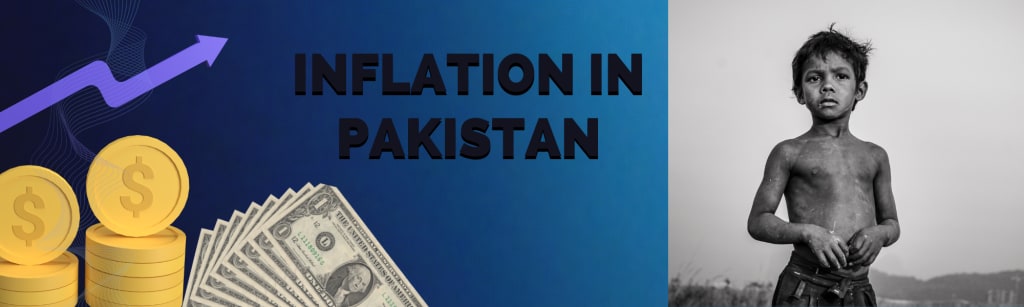
Inflation has been a persistent problem in Pakistan for many years. In simple terms, inflation refers to the rise in the general level of prices of goods and services in an economy over a period of time. High inflation can lead to a decrease in the purchasing power of individuals and can negatively impact the overall economic growth of a country. Inflation is a major economic challenge facing Pakistan. Inflation refers to a sustained increase in the general price level of goods and services in an economy over time. In recent years, Pakistan has experienced high and volatile inflation, which has affected the purchasing power of its citizens, especially those on low incomes.
The inflation rate in Pakistan has been high and volatile in recent years, with the average rate for the fiscal year 2020-21 being 8.9%. This high rate of inflation is driven by a number of factors, including:
Increase in food prices: Pakistan is an agrarian economy and relies heavily on its agriculture sector. In recent years, there has been a shortage of food supply due to poor harvests and supply chain disruptions. This has led to a significant increase in food prices.
Floods can be one of the causes of inflation in Pakistan as they can disrupt the supply chain and affect the production and transportation of goods. Floods can damage crops, livestock, and infrastructure, which can lead to shortages of essential commodities and raise their prices. Floods can also lead to an increase in transportation costs as roads and bridges may be damaged, and alternative routes may be longer or less efficient. Additionally, floods can displace people, leading to an increase in demand for food, shelter, and other basic necessities, which can further contribute to inflation.
Depreciation of the Pakistani rupee: The depreciation of the Pakistani rupee against major currencies, especially the US dollar, has led to an increase in the price of imported goods.
Increase in energy prices: The increase in energy prices, including fuel and electricity, has also contributed to inflation in Pakistan.
Fiscal deficit: The large fiscal deficit of Pakistan has put pressure on the country's central bank to print more money, which has led to an increase in the money supply and inflation.
As of September 2021, the inflation rate in Pakistan was recorded at 9.05%, which is higher than the State Bank of Pakistan's target of 5-7%. The main drivers of inflation in Pakistan include high food and energy prices, currency devaluation, and supply chain disruptions due to the COVID-19 pandemic. According to the State Bank of Pakistan, the inflation rate in Pakistan stood at 9.1% in January 2022, which is significantly higher than the target rate of 5-7% set by the government. The inflation rate has remained in the double digits for most of the past year, which has had a negative impact on the country's economy and its people.
The government of Pakistan has implemented various measures to control inflation, including increasing interest rates, reducing import duties on essential goods, and providing subsidies on certain commodities. The high inflation rate has led to rising prices of essential goods and services, making it difficult for the common people to make ends meet. This has also affected the country's poverty rate, which has increased in recent years. The government has taken various measures to control inflation, including raising interest rates and implementing fiscal and monetary policies. However, the impact of these measures is yet to be seen, and it remains a challenge for the government to bring down inflation to an acceptable level.
Regenerate response However, these measures have had limited success in controlling inflation, and it remains a significant challenge for the country.
About the Creator
sayyam fayyaz
Hi I am content writer and passionate about my work .I have written bulk of articles for different websites and gained a knowledgeble experience from this work. I would use this platform or website to deliver my full expertise.
Keep reading
More stories from sayyam fayyaz and writers in Education and other communities.
Can Training Farmers End Hunger?
What if one of the most powerful solutions to global hunger is not food aid, but knowledge? Around the world, millions of smallholder farmers grow the food that feeds their communities. Yet many of them struggle with low crop yields, unpredictable weather, poor soil quality, and limited market access. If farmers are at the center of food production, could empowering them with better skills be the key to ending hunger?
By Convoy of Hope2 days ago in Education
How to Install Floodlight Cameras: Step-by-Step Guide
Floodlight cameras give strong security for homes and businesses. They mix bright lights with video recording to scare away intruders and catch clear footage. When you pick the best floodlight camera, you get reliable protection that works day and night. This guide takes you through the installation process in clear steps.
By Bilal Ahmad3 days ago in Education
Guard Your Battery
Why are some people so attractive just by standing there? It’s not because they are "likable," but because they don’t need everyone to like them. I realized later that truly charismatic people allow themselves to be criticized, but they never criticize themselves. They never try to please the world; instead, the world stops to watch them.
By Emily Chan - Life and love sharinga day ago in Poets




Comments
There are no comments for this story
Be the first to respond and start the conversation.