
"India-Pakistan Relations 2025: A Time for War or Wisdom?"
"Exploring the Rising Tensions, Political Challenges, and the Urgent Need for Dialogue Between Two Nuclear Neighbors."

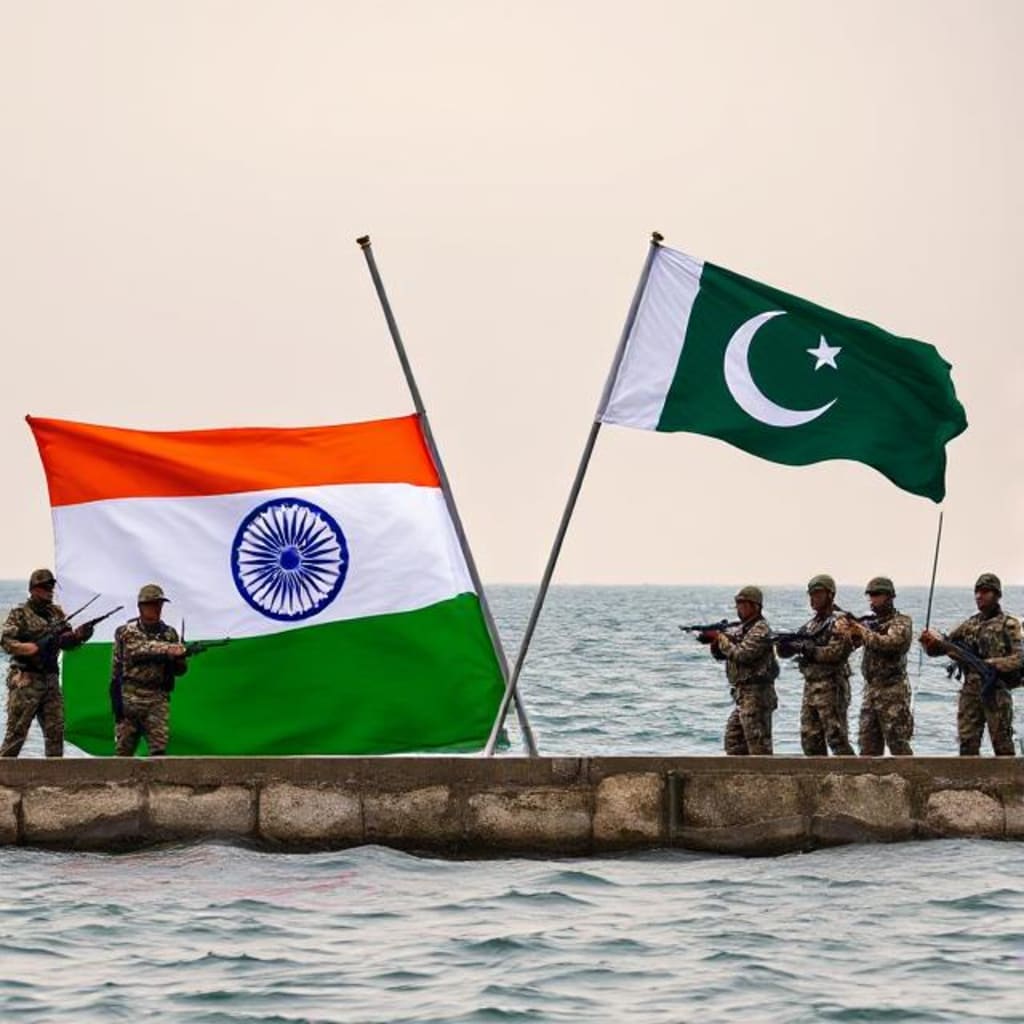
The relationship between India and Pakistan has always been a complex and emotional one. Since their partition in 1947, the two countries have shared a long history filled with wars, border clashes, and efforts at peace that often collapsed too quickly. In 2025, tensions are once again rising, and many people are wondering: is war inevitable, or can wisdom guide these two nations toward a better future?
The Current Situation
In early 2025, small incidents along the Line of Control (LoC) between India and Pakistan have started increasing. Reports of cross-border firing, drone surveillance, and minor military skirmishes are coming almost daily. Politicians on both sides are making strong statements, and media outlets are amplifying nationalist emotions. Civilians living near the borders are once again feeling unsafe and uncertain.
One of the main sources of conflict is the Kashmir region, a land both countries claim as their own. Although there have been periods of calm, the situation remains sensitive. In recent months, new laws, security operations, and political decisions have reignited old feelings of anger and betrayal.
At the same time, both countries are facing internal challenges. Pakistan is struggling with economic problems, political instability, and the threat of terrorism. India, too, is facing internal political pressures, economic inequality, and increasing religious tensions. In this atmosphere, nationalist movements find it easy to use the idea of an "external enemy" to unite and distract the population.
The Dangers of Escalation
Any military conflict between India and Pakistan would be extremely dangerous. Both countries have nuclear weapons, and even a limited war could cause massive destruction, not only to their armies but also to millions of civilians.
The world community — including the United Nations, the United States, China, and Russia — is deeply worried. Any serious clash could quickly drag in other nations or lead to an unpredictable crisis that spreads beyond South Asia.
Economically, both countries would suffer. Trade would stop. Investments would leave. Development programs would be delayed. Ordinary people, especially the poor, would pay the highest price.
History has shown that wars between India and Pakistan never really solved the core issues. After each war, both countries came back to the same difficult questions — only with more anger and more pain.
Is There Still Hope for Wisdom?
Despite the rising tensions, there are still voices calling for peace. Many citizens in both India and Pakistan are tired of conflict. They understand that war would only bring loss, not victory.
Diplomats, peace activists, writers, and artists are trying to remind people of the shared culture, history, and dreams that connect Indians and Pakistanis. Cricket matches, music, food, films — these are things that can build bridges when politicians build walls.
There are also economic reasons for peace. Both countries are young and full of potential. A peaceful South Asia could become one of the strongest regions in the world, creating jobs, improving education, and fighting poverty together.
In 2025, technology has made it easier for ordinary people to talk to each other across borders. Social media campaigns, online conferences, and youth movements are growing, demanding that leaders think about dialogue, not destruction.
The Role of Leadership
In moments of crisis, leadership becomes crucial. It is easy to be a leader during peace. True leadership is shown when leaders choose wisdom over war, especially when their people are angry and emotional.
Prime Ministers, Presidents, Army Chiefs, and Parliament members in both countries need to remember their responsibility. Provoking war might be politically popular in the short term, but it will be a tragedy in the long term.
Bold steps, such as restarting talks, agreeing on ceasefires, allowing trade, easing visa rules, and encouraging people-to-people contacts, are difficult but necessary. Peace needs to be made attractive again — not just for politicians, but for ordinary citizens.
International organizations can also help by acting as mediators, offering neutral ground for talks, and pressuring both sides to avoid dangerous actions.
Conclusion
India and Pakistan stand at a crossroads in 2025. They can choose the easy path of anger and violence, or they can take the harder but wiser road of dialogue and cooperation.
The people of both nations deserve a future without fear. They deserve the chance to build their lives without the constant threat of war. The leaders of India and Pakistan must rise above personal ambitions and political games and think about the generations that will come after them.
War has never solved the problems between India and Pakistan. Wisdom still can.
About the Creator
Keep reading
More stories from Sharjeel Muhammad and writers in Education and other communities.
"The Sun: The Lifeline and Powerhouse of the Universe"
By Sharjeel Norani The Sun is not just a bright ball of fire in the sky—it is the beating heart of our solar system, the ultimate source of energy, and a life-sustaining force without which life as we know it could not exist. It is the anchor that keeps the planets in orbit, the engine that powers Earth's climate and weather, and the reason living organisms flourish. This article explores the importance of the Sun in both scientific and philosophical terms, shedding light on how it truly is the lifeline and powerhouse of the universe.
By Sharjeel Muhammad11 months ago in Education
Digital Marketing Boom in the UK: Simple Ways Businesses Are Winning Big in 2026
Digital marketing has turned into a basic need for pretty much every business across the UK. Small shops, new startups, big companies. They all rely on it to pull in customers online. The figures make it obvious. UK firms spent a huge amount on digital ads last year. That was a big jump from the year before, and it grew quicker than the rest of the economy.
By Pranjal Pandey5 days ago in Education




Comments
There are no comments for this story
Be the first to respond and start the conversation.