
In Japanese Wisdom: Respect the Teacher, Uplift the Nation
"A Shadow of Respect: What Japan and Italy Teach Us About Teachers"

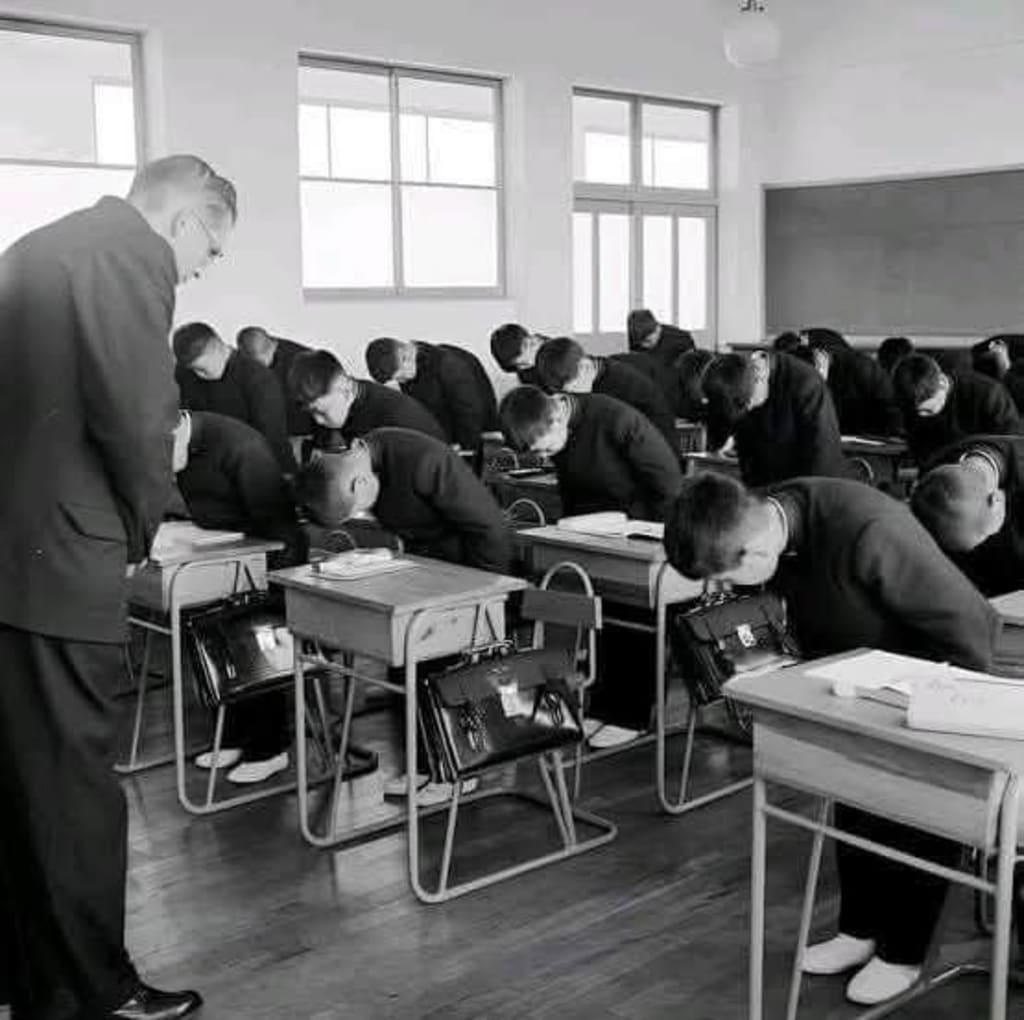
In Japanese Wisdom: Respect the Teacher, Uplift the Nation
By: [FURQAN ELAHI]
In the rich tapestry of Japanese culture, there's an age-old saying:
> “Maintain a distance of seven steps between yourself and your teacher, so that even your footsteps do not fall on your teacher’s shadow.”
This profound piece of wisdom isn’t just poetic reverence — it encapsulates an entire philosophy that honors knowledge, discipline, and the sacred role of the teacher in shaping a civilized society.
Japan’s literacy rate stands at an impressive 99%, and its crime rate is remarkably low, comparable in many regions to the safer parts of the Arab world. But these statistics aren't coincidental. They reflect deliberate national values and priorities. In Japan, education is not just encouraged, it is expected, almost demanded. Every child must receive a proper education — not only to contribute to the economy, but to ensure they grow up as law-abiding, respectful, and enlightened citizens.
The Japanese understand a truth that many societies still struggle to grasp: ignorance breeds instability. In their eyes, a child who does not learn today might grow into a citizen who contributes to society’s downfall tomorrow — either through crime, corruption, or complacency. Therefore, compulsory education is not a punishment; it is a preventive strategy — a national investment in peace, order, and long-term prosperity.
But this deep respect for knowledge is not limited to Japan alone. A story involving the celebrated Pakistani writer and thinker, Ashfaq Ahmed, brings this point home beautifully.
---
A Courtroom in Italy – A Moment of Respect
Ashfaq Ahmed, during his time as a university professor in Italy, found himself in an unusual situation. Due to some reason, he had received a traffic ticket. With his busy academic schedule, he could not pay the fine on time, and as per the law, he was summoned to court.
Standing before the judge, he was asked in a formal tone:
> “What do you do for a living that prevented you from paying your fine in time?”
Ashfaq Ahmed replied with calm dignity:
> “I am a professor; I teach at a university.”
The judge paused for a moment. Then, to everyone's surprise, he stood up from his seat and said with profound respect:
> “A respected teacher is in the courtroom.”
The effect of those words rippled through the courtroom. One by one, every individual present — the lawyers, officers, attendees — rose to their feet in silent tribute to the man standing before them, not because of his fame or ethnicity, but simply because he was a teacher.
What followed was even more remarkable. After the brief legal proceedings concluded, the judge himself, along with the courtroom staff, walked Ashfaq Ahmed to his car in the parking lot. They did not return inside until his vehicle had driven away and disappeared from their view.
This wasn’t an official protocol — it was pure human reverence, an acknowledgment of the educator’s role in society. Italy, like Japan, also boasts a literacy rate close to 100%. And such incidents reveal the cultural mindset behind those statistics.
---
Education as the Backbone of Civilization
This story is more than just a heartwarming anecdote. It’s a mirror to a reality we must all confront: Nations that honor teachers and invest heavily in education are the ones that lead the world — not just in economics, but in ethics, innovation, and human development.
Japan, Italy, Finland, Germany, South Korea — what do these countries have in common? They have prioritized education, elevated the status of teachers, and linked national success with academic excellence.
In these nations, teaching is not a fallback career. It is often one of the most respected and competitively sought-after professions. Teachers are trained rigorously, paid well, and valued socially. They are not questioned or undermined daily — they are empowered.
Contrast this with countries where teachers struggle to make ends meet, where education is seen as a burden rather than a right, and where knowledge is not celebrated but politicized. The outcome is inevitable: lower literacy rates, higher crime, weaker economies, and fragile democracies.
---
The Teacher: A Nation’s Architect
A teacher is more than just someone who delivers lessons in a classroom. A teacher is a nation’s architect, building minds, molding character, and preparing citizens for the future. When a teacher is disrespected, it's not just an individual who is insulted — it's the very foundation of the nation's future that is shaken.
The Japanese proverb reminds us that respect must be visible — even in the smallest gestures, like stepping carefully around a teacher's shadow. That symbolic distance is not one of fear or hierarchy; it’s a metaphor for humility, gratitude, and reverence for the one who gave you the tools to walk your path in life.
---
A Final Thought
As we look at the world today — with its complex challenges, polarized societies, and fractured systems — one thing becomes clear:
> The nations that lead today are the ones who respected their teachers yesterday.
And the nations that will lead tomorrow are the ones respecting them today.
Let us ask ourselves:
Are we investing in education the way we invest in defense?
Do we treat our teachers like assets or afterthoughts?
Are we building a future led by knowledge or shaped by ignorance?
---
If you’ve ever had a teacher who changed your life, pause and reflect. Share your story. Celebrate them. And most importantly, respect those who build nations not with bricks — but with wisdom.In Japanese Wisdom: Respect the Teacher, Uplift the Nation
By: [Your Name]
In the rich tapestry of Japanese culture, there's an age-old saying:
> “Maintain a distance of seven steps between yourself and your teacher, so that even your footsteps do not fall on your teacher’s shadow.”
This profound piece of wisdom isn’t just poetic reverence — it encapsulates an entire philosophy that honors knowledge, discipline, and the sacred role of the teacher in shaping a civilized society.
Japan’s literacy rate stands at an impressive 99%, and its crime rate is remarkably low, comparable in many regions to the safer parts of the Arab world. But these statistics aren't coincidental. They reflect deliberate national values and priorities. In Japan, education is not just encouraged, it is expected, almost demanded. Every child must receive a proper education — not only to contribute to the economy, but to ensure they grow up as law-abiding, respectful, and enlightened citizens.
The Japanese understand a truth that many societies still struggle to grasp: ignorance breeds instability. In their eyes, a child who does not learn today might grow into a citizen who contributes to society’s downfall tomorrow — either through crime, corruption, or complacency. Therefore, compulsory education is not a punishment; it is a preventive strategy — a national investment in peace, order, and long-term prosperity.
But this deep respect for knowledge is not limited to Japan alone. A story involving the celebrated Pakistani writer and thinker, Ashfaq Ahmed, brings this point home beautifully.
---
A Courtroom in Italy – A Moment of Respect
Ashfaq Ahmed, during his time as a university professor in Italy, found himself in an unusual situation. Due to some reason, he had received a traffic ticket. With his busy academic schedule, he could not pay the fine on time, and as per the law, he was summoned to court.
Standing before the judge, he was asked in a formal tone:
> “What do you do for a living that prevented you from paying your fine in time?”
Ashfaq Ahmed replied with calm dignity:
> “I am a professor; I teach at a university.”
The judge paused for a moment. Then, to everyone's surprise, he stood up from his seat and said with profound respect:
> “A respected teacher is in the courtroom.”
The effect of those words rippled through the courtroom. One by one, every individual present — the lawyers, officers, attendees — rose to their feet in silent tribute to the man standing before them, not because of his fame or ethnicity, but simply because he was a teacher.
What followed was even more remarkable. After the brief legal proceedings concluded, the judge himself, along with the courtroom staff, walked Ashfaq Ahmed to his car in the parking lot. They did not return inside until his vehicle had driven away and disappeared from their view.
This wasn’t an official protocol — it was pure human reverence, an acknowledgment of the educator’s role in society. Italy, like Japan, also boasts a literacy rate close to 100%. And such incidents reveal the cultural mindset behind those statistics.
---
Education as the Backbone of Civilization
This story is more than just a heartwarming anecdote. It’s a mirror to a reality we must all confront: Nations that honor teachers and invest heavily in education are the ones that lead the world — not just in economics, but in ethics, innovation, and human development.
Japan, Italy, Finland, Germany, South Korea — what do these countries have in common? They have prioritized education, elevated the status of teachers, and linked national success with academic excellence.
In these nations, teaching is not a fallback career. It is often one of the most respected and competitively sought-after professions. Teachers are trained rigorously, paid well, and valued socially. They are not questioned or undermined daily — they are empowered.
Contrast this with countries where teachers struggle to make ends meet, where education is seen as a burden rather than a right, and where knowledge is not celebrated but politicized. The outcome is inevitable: lower literacy rates, higher crime, weaker economies, and fragile democracies.
---
The Teacher: A Nation’s Architect
A teacher is more than just someone who delivers lessons in a classroom. A teacher is a nation’s architect, building minds, molding character, and preparing citizens for the future. When a teacher is disrespected, it's not just an individual who is insulted — it's the very foundation of the nation's future that is shaken.
The Japanese proverb reminds us that respect must be visible — even in the smallest gestures, like stepping carefully around a teacher's shadow. That symbolic distance is not one of fear or hierarchy; it’s a metaphor for humility, gratitude, and reverence for the one who gave you the tools to walk your path in life.
---
A Final Thought
As we look at the world today — with its complex challenges, polarized societies, and fractured systems — one thing becomes clear:
> The nations that lead today are the ones who respected their teachers yesterday.
And the nations that will lead tomorrow are the ones respecting them today.
Let us ask ourselves:
Are we investing in education the way we invest in defense?
Do we treat our teachers like assets or afterthoughts?
Are we building a future led by knowledge or shaped by ignorance?
---
If you’ve ever had a teacher who changed your life, pause and reflect. Share your story. Celebrate them. And most importantly, respect those who build nations not with bricks — but with wisdom.
About the Creator
Furqan Elahi
Writer of quiet thoughts in a loud world.
I believe stories can heal, words can build bridges, and silence is sometimes the loudest truth. On Vocal, I write to make sense of the unseen and give voice to the unsaid.
Keep reading
More stories from Furqan Elahi and writers in Education and other communities.
Hosting a Book Fair
How many of you remember the “best week ever!” from when you were a child? Book fairs were the staple of many of our childhoods with Scholastic leading the way. While there are many choices for book fairs today and I absolutely want to talk about them, that’s going to be a later article.
By Reb Kreyling6 days ago in Education
Communicating with Confidence: Building Trust Through Simplicity
Trust is the cornerstone of any meaningful relationship, whether professional or personal. At the heart of trust lies the ability to communicate clearly. People naturally respond to straightforward, reliable, and easy-to-understand information. Professionals who prioritize clarity establish credibility and foster confidence in others. Clients, colleagues, and partners feel assured that they can make informed decisions when the messages they receive are transparent and well-articulated.
By Stacey Yim4 days ago in Education




Comments
There are no comments for this story
Be the first to respond and start the conversation.