
Imran Khan Niazi: A Journey of Leadership and Governance
A Story of a true hero.
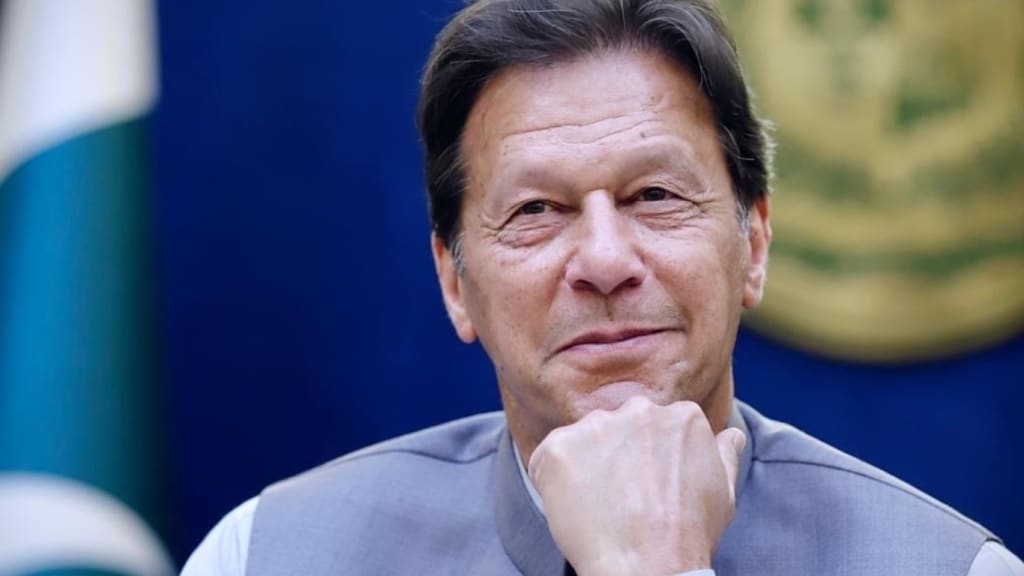
Imran Khan Niazi, popularly known as Imran Khan, is a prominent Pakistani politician, former cricketer, and the 22nd Prime Minister of Pakistan. Born on October 5, 1952, in Lahore, Pakistan, he has led an illustrious life both on and off the cricket pitch. Imran Khan's journey is a tale of perseverance, determination, and charisma, which ultimately culminated in his ascension to the highest office in the country.
The Cricketing Icon:
Before entering politics, Imran Khan made a significant mark in the world of cricket. He was a talented all-rounder and is considered one of the finest cricketers of his era. Khan represented Pakistan in international cricket from 1971 to 1992, captaining the national team for much of his career. His leadership qualities became evident during his captaincy, leading Pakistan to its first-ever Cricket World Cup victory in 1992.
Beyond his cricketing abilities, Imran Khan was admired for his sportsmanship and his dedication to fair play. He embodied the spirit of cricket, upholding its values of integrity, perseverance, and teamwork. These qualities would later become the foundation of his political philosophy as well.
A Philanthropist and Social Worker:
After retiring from cricket, Imran Khan dedicated himself to philanthropy and social work. He founded the Shaukat Khanum Memorial Cancer Hospital & Research Centre in Lahore, named in honor of his mother who succumbed to cancer. The hospital was established to provide state-of-the-art cancer treatment to the underprivileged, regardless of their ability to pay. Imran Khan's vision and commitment to this noble cause earned him widespread admiration and respect.
In addition to the cancer hospital, he founded Namal University in Mianwali, aimed at providing quality education to the youth of Pakistan. These philanthropic endeavors showcased his desire to uplift society and improve the lives of the less fortunate.
The Emergence of a Political Leader:
Imran Khan's foray into politics began in the mid-1990s, when he founded the political party Pakistan Tehreek-e-Insaf (PTI) in 1996. Initially, the party struggled to gain a foothold in the political landscape dominated by traditional political dynasties. However, Imran Khan's charisma and relentless efforts to bring about genuine change in Pakistan soon began to resonate with a section of the population.
He consistently advocated for social justice, accountability, and transparency in governance. Imran Khan's vision was to create a "Naya Pakistan" (New Pakistan) free from corruption and nepotism, where the rule of law prevails, and the welfare of the common people is prioritized.
The Struggle for Power:
Imran Khan's political journey was marked by ups and downs. For over two decades, he faced numerous challenges and disappointments, including election defeats and allegations of being a 'one-man show.' However, he remained steadfast in his beliefs and continued to build PTI as a party with a broad base of support.
The turning point came in the 2018 general elections when PTI emerged as the single largest party and secured enough seats to form a government at the federal level. Imran Khan became the Prime Minister of Pakistan, fulfilling his long-cherished dream of leading the nation.
Imran Khan as Prime Minister:
As the Prime Minister of Pakistan, Imran Khan faced an array of daunting challenges. The country's economy was in dire straits, burdened by debt and struggling to attract foreign investments. Additionally, there were issues related to social inequality, poverty, and the need for comprehensive reforms in various sectors.
Imran Khan's tenure as Prime Minister was marked by a mix of successes and criticisms. He launched ambitious initiatives, such as the Ehsaas Program, aimed at providing social safety nets to vulnerable segments of society. Moreover, he worked towards increasing the accessibility and quality of education and healthcare facilities.
On the foreign policy front, Imran Khan sought to improve Pakistan's relations with neighboring countries while advocating for peace and stability in the region. He played a significant role in mediating talks between the United States and the Afghan Taliban, contributing to the Afghan peace process.
However, critics argued that his government faced challenges in effectively tackling economic issues, managing inflation, and curbing corruption. Some also questioned the pace of reforms and implementation of promised changes.
Conclusion:
In conclusion, Imran Khan Niazi's life is a testament to the power of determination, vision, and resilience. From a cricketing legend to a philanthropist and finally to the Prime Minister of Pakistan, his journey has inspired millions. Imran Khan's focus on rooting out corruption, providing social welfare, and promoting Pakistan's global image has won him both admirers and critics.
As he continues to lead Pakistan, the success of his tenure as Prime Minister will be measured by the impact of his policies on the nation's progress and the well-being of its citizens. Like any leader, he faces significant challenges, but his commitment to a better Pakistan remains unwavering.
About the Creator
Keep reading
More stories from writers in Education and other communities.
Innovation Under Pressure: Transforming Industry Obstacles into Growth Engines
Every industry faces moments of pressure that test its stability and direction. Economic shifts, changing consumer behavior, supply disruptions, and rapid digital transformation often create uncertainty. While these challenges can feel disruptive, they also open the door to meaningful innovation. Organizations that respond thoughtfully can convert industry obstacles into powerful drivers of growth, efficiency, and long-term success.
By Ian Schenkel Haliburtonabout 4 hours ago in Education
Is Light a Wave or a Particle?
What Is Light? Light is a form of electromagnetic radiation. It carries energy, travels through empty space, and allows us to see the universe. From radio waves to gamma rays, light spans a vast spectrum, but visible light is only a small part of it.
By shahkar jalal2 days ago in Education




Comments
There are no comments for this story
Be the first to respond and start the conversation.