
Hydraulic Jack: Working, Types & Brands
Hydraulic Jack: Working, Types & Brands

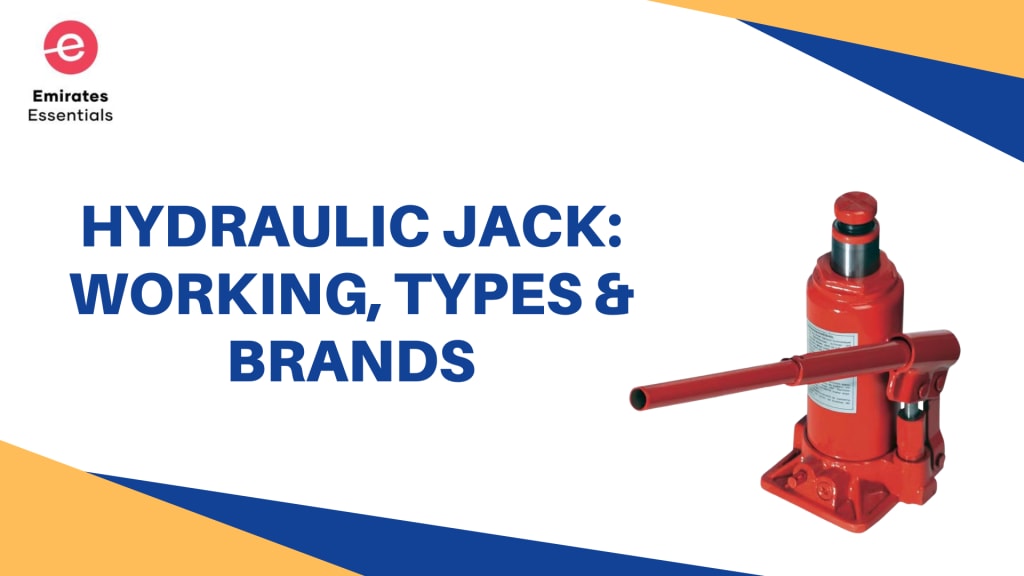
A hydraulic jack is a tool that uses liquid under pressure to lift heavy items. We often see them lifting cars, heavy machines, and even in workshops. This guide gives you the true details—how hydraulic jacks work, the safe way to use them, how to pick the right one, and the real costs.
What Is a Hydraulic Jack?
A hydraulic jack is a lifting device that uses fluid pressure to multiply force. Instead of pushing hard by hand or turning big screws, it uses hydraulic fluid in a cylinder to do the lifting.
Here are some types of people often used:
- Hydraulic car jack
- Hydraulic trolley jack
- 2 ton, 3 ton, or 5 ton hydraulic jack models
- Hydraulic jack with electric or air operation
- Small hydraulic jacks for lighter jobs
- Heavy-duty 50 ton hydraulic jack for industrial use
How Does a Hydraulic Jack Work?
A hydraulic jack works on Pascal’s Law, which says that pressure applied to a confined fluid is transmitted equally in all directions. When pressure is created inside the jack, the hydraulic fluid pushes against a piston, forcing it upward. This upward movement lifts the load placed on it.
Because of this principle, even a small amount of force applied at one point can generate enough power to raise a much heavier object at another. That’s why a compact hydraulic car jack or small hydraulic jack can handle loads far heavier than what muscle power alone could achieve.
How to Use a Hydraulic Jack
Using one safely is just as important as having one. Here’s how:
- Park on level, solid ground.
- Use wheel chocks to keep the vehicle from rolling.
- Find the proper lifting points under the car (check your car’s manual).
- Position the jack squarely under the lifting point.
- Close the release valve.
- Pump (or use air/electric) to lift.
- Once lifted high enough, use jack stands to support the load. Do not rely only on the jack.
- When done, slowly open the release valve to lower.
- This method works for manual, floor, trolley, or electric hydraulic jacks.
Hydraulic Jack Manufacturers
The quality of a hydraulic jack is directly tied to the manufacturer behind it. Leading brands focus on durability, precision engineering, and safety, ensuring their products can handle both everyday use and demanding industrial tasks. From compact 2-ton hydraulic jacks to heavy-duty 50-ton hydraulic lifting jacks, top manufacturers cover a wide range of needs.
Torin (Big Red)
Affordable and reliable, Torin makes trolley jacks, bottle jacks, and floor jacks. Popular among car owners and DIY users.
Arcan
Known for professional-grade quality and low-profile floor jacks, ideal for workshops and sports cars.
Blackhawk
Strong steel construction with models ranging from 2-ton to heavy service jacks. Balanced choice for home and garage use.
Hein-Werner
Premium U.S. brand offering heavy-duty hydraulic jacks. Preferred by professionals for durability and safety.
Pro-Lift
Value-focused brand producing floor, bottle, and trolley jacks. Simple, practical designs for everyday use.
Conclusion
A hydraulic jack is more than just a lifting tool—it’s a reliable partner for cars, workshops, and industries. From compact 2 ton jacks to heavy-duty 50 ton hydraulic jacks, each type serves a specific need. Choosing the right one depends on weight capacity, usage, and safety features. Regular maintenance, like using quality hydraulic jack oil and checking for leaks, ensures long life. Whether it’s a hydraulic car jack for quick roadside help or an air hydraulic jack for industrial tasks, the right jack makes lifting safe and effortless. Always invest in a trusted brand to work with confidence.
FAQS
How to remove air from a hydraulic jack?
Open the release valve, pump handle several times, then close the valve. This pushes air out.
Many jacks use hydraulic power—why?
Because hydraulic systems multiply force with fluid pressure. You can lift big loads with relatively low effort thanks to Pascal’s Law.
How to fill a hydraulic jack?
Locate the fill plug or oil reservoir, add clean hydraulic-jack oil (or suitable hydraulic fluid) up to the required level, avoiding overfill.
How to use a 2 ton hydraulic jack?
Place the jack under the correct lift point, close release valve, pump lift until desired height, use stands for safety, then lower carefully.
How to use a hydraulic floor jack?
Slide under car, place at lift point, pump handle until lifted, always support load with stands before working under it.
Who invented the hydraulic jack?
Richard Dudgeon patented a version of the hydraulic jack (portable hydraulic press) in 1851.
How to bleed a hydraulic jack?
Release valve open, pump handle to move trapped air out, close release valve again before lifting applications.
Are hydraulic jacks safe?
Yes, if used correctly. Use proper lift points, never exceed weight capacity, maintain oil, avoid leaks, always use jack stands.
What is the principle of hydraulic jack?
Pascal’s Law: pressure in a confined fluid spreads equally, enabling force multiplication.
Why is hydraulic jack used?
To lift heavy loads safely and with less human effort, especially where manual methods would be hard or slow.
Can you use jack oil for hydraulic oil?
It depends “jack oil” is a type of hydraulic fluid but usually meant for lower pressure, less demanding use. Always check manufacturer recommendations
What is the hydraulic jack 5 ton price?
The hydraulic jack 5 ton price depends on brand, type (manual, trolley, electric), and region. Expect to pay significantly more than for a 2-ton jack.
What are automotive hydraulic jacks used for?
They are used for lifting cars, changing tires, doing repairs under vehicles, raising heavy components safely for maintenance.
About the Creator
Taher Saifuddin: Transforming Toronto’s Classrooms with Inclusive and Future-Focused Education
In the heart of Canada’s most diverse city, Toronto educator Taher Saifuddin is quietly leading a transformation in the way learning is delivered, measured, and experienced. With over two decades of experience, Taher is recognized for his dynamic role in teaching, academic leadership, and digital innovation across Toronto’s private and independent schools.
By Dena Falken Esq5 days ago in Education
What People Get Wrong About Consulting
Many people talk about consulting, but few understand what it truly involves. Movies, social media, and word of mouth often shape a narrow view. This creates confusion for students, business owners, and even new consultants. The topic of common misconceptions about consulting matters because these beliefs affect career choices and business decisions. When ideas are wrong, expectations break down fast.
By Nicole Metz5 days ago in Education
Center Stage with Paul Stewart
*** I'm keen to republish the interviews I did for my series with Vocal creators. It's been a few years and I thought it might be nice to revisit these wonderful conversations. I'll be releasing them one at a time for a few weeks/months.
By Heather Hubler3 days ago in Interview




Comments
There are no comments for this story
Be the first to respond and start the conversation.