
Human vs Artificial Intelligence
Exploring Human Intelligence and Artificial Machines
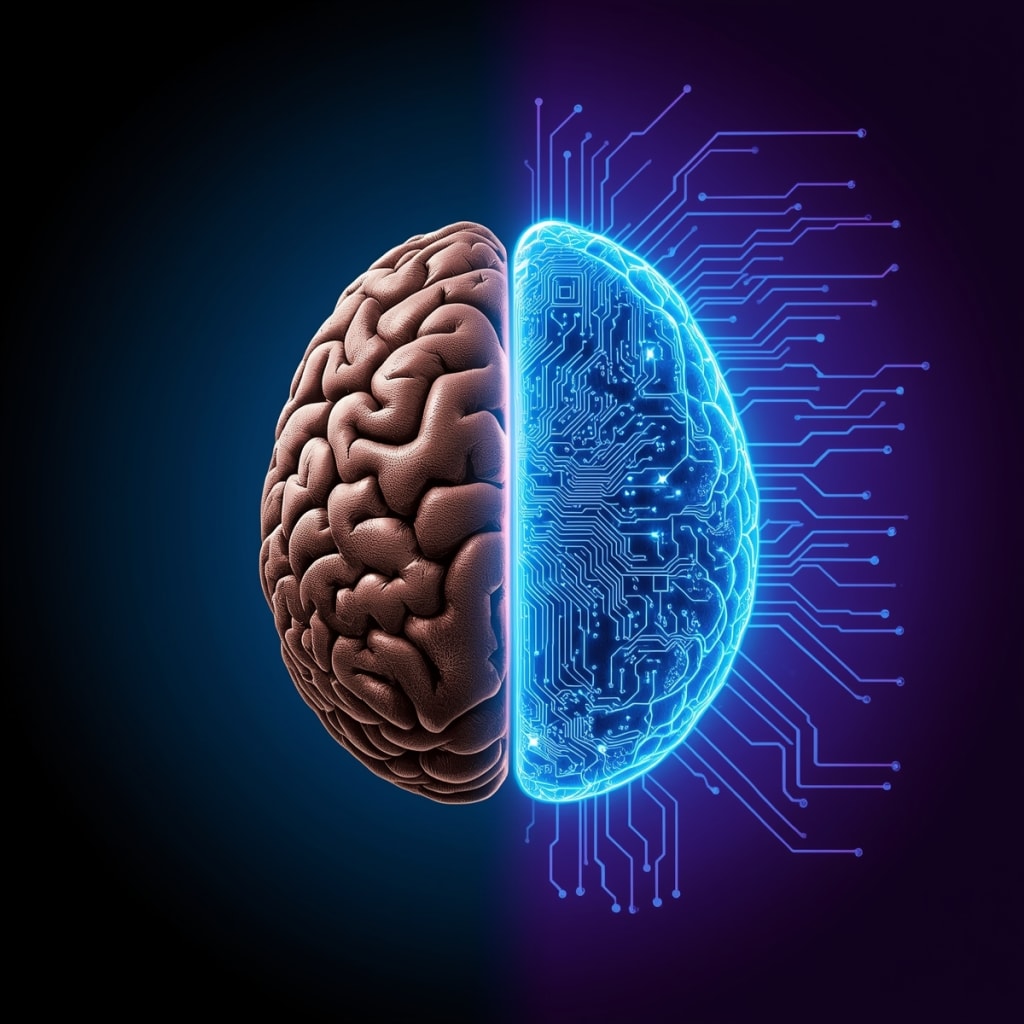
Introduction
What makes us human? At the heart of our uniqueness lies intelligence—the set of cognitive abilities that allow us to think, learn, and adapt. From solving complex problems to expressing emotions through language, human intelligence is vast and multi-dimensional. On the other hand, artificial intelligence (AI) is humanity’s attempt to replicate these abilities in machines. While both serve the purpose of problem-solving, their origins and applications are worlds apart.
---
What is Human Intelligence?
Human intelligence can be defined as the cognitive ability of an individual to reason, plan, solve problems, think abstractly, comprehend complex ideas, learn quickly, and adapt to changing environments. It includes several abilities we often take for granted in our daily lives:
Recognizing patterns and trends.
Understanding and analyzing new ideas.
Planning for the future.
Making decisions in uncertain situations.
Retaining and recalling important information.
Using language to communicate thoughts and emotions.
In essence, human intelligence is not just about knowledge—it’s about the ability to use knowledge wisely.
---
The Six Core Types of Intelligence
According to multiple theories of learning, every human being possesses six types of intelligence, though in varying degrees:
1. Logical-Mathematical Intelligence – The ability to work with numbers, reasoning, and problem-solving. Scientists, engineers, and mathematicians often excel in this.
2. Linguistic Intelligence – Mastery of words, reading, writing, and communication. Writers, poets, and teachers demonstrate this strongly.
3. Spatial Intelligence – The capacity to think in images, visualize objects, and understand space. Artists, architects, and pilots rely heavily on it.
4. Musical Intelligence – Sensitivity to sound, rhythm, and tone. Musicians, singers, and composers show this intelligence.
5. Bodily-Kinesthetic Intelligence – Using the body skillfully, as in sports, dance, or physical crafts. Dancers, athletes, and surgeons excel here.
6. Interpersonal Intelligence – The ability to understand others, their emotions, and intentions. Leaders, counselors, and teachers embody this form of intelligence.
Together, these intelligences shape the diversity of human potential and talent.
---
Broader Categories of Intelligence
Beyond the six primary types, intelligence can also be subdivided into broader categories:
Practical Intelligence – Applying knowledge to solve real-world problems.
Collective Intelligence – Wisdom and knowledge shared within a group or community.
Emotional Intelligence – Recognizing and managing emotions, both one’s own and others’.
Social Intelligence – Navigating relationships, networks, and society effectively.
Business Intelligence – Using data and insights to make strategic commercial decisions.
This classification shows that intelligence is not a single quality, but a spectrum of abilities that support survival, growth, and creativity.
---
How Intelligence Operates
Human intelligence functions through two fundamental operations:
1. Reflection: Making inferences from observed facts. For example, noticing dark clouds and predicting rain.
2. Induction: Thinking abstractly and drawing general truths from observations. For instance, understanding the laws of gravity from repeated experiences of objects falling.
These two processes complement one another and lead to effective actions that guide human decision-making and progress.
---
Measuring Human Intelligence: IQ Tests
One of the most well-known tools for assessing intelligence is the IQ test. IQ (Intelligence Quotient) tests measure various abilities such as logical reasoning, memory, problem-solving, and language skills. While they do not capture the full richness of human intelligence, they provide valuable insights into how individuals process information and adapt to challenges.
---
Artificial Intelligence (AI): Intelligence Made by Humans
While human intelligence is natural, artificial intelligence (AI) is created by humans. It refers to the ability of machines to mimic human cognitive functions like learning, reasoning, and decision-making. With the emergence of robotics and computer science, researchers began integrating theories and techniques into machines to simulate aspects of human thought.
This intelligence is called “artificial” because it is designed and manufactured, not born. AI systems range from simple programs that play chess to advanced robots that assist in surgery or drive cars.
---
A Fascinating Historical Example
The concept of artificial intelligence is not as modern as it seems. In 1515, Leonardo da Vinci built an automaton in the shape of a lion to amuse the King of France. Though mechanical rather than digital, this creation reflected humanity’s timeless desire to create machines capable of imitating life and intelligence. Today’s AI is far more sophisticated, but the dream began centuries ago.
---
Human vs Artificial Intelligence
While both forms of intelligence share the goal of solving problems, they differ in essence:
Human intelligence is natural, emotional, creative, and adaptive. It grows through experience and is deeply tied to consciousness.
Artificial intelligence is programmed, limited by its design, and lacks true self-awareness or emotions.
Rather than competing, the two should be seen as complementary—AI can assist humans by handling repetitive tasks, analyzing large data sets, and providing efficiency, while humans bring creativity, empathy, and moral reasoning.
---
Conclusion
Human intelligence is one of the greatest wonders of nature. It allows us not only to survive but also to dream, create, and inspire. Artificial intelligence, on the other hand, is a product of that very brilliance—a reflection of humanity’s quest to extend its thinking into machines.
The future does not need to be about humans versus machines, but about humans with machines—working together to build a world that is smarter, fairer, and more compassionate.
Please share this information with others
About the Creator
Keep reading
More stories from Arif Ullah and writers in Education and other communities.
Reach Your Goals
It was a quiet evening. The golden rays of the sun were slipping behind the trees, casting long shadows across the park. Birds were returning to their nests, and a soft breeze whispered through the leaves. Amid this calm, a young boy walked slowly toward his father. His shoulders were heavy, his face pale, and his eyes filled with a quiet despair that no one else could see.
By Arif Ullah5 months ago in Motivation
The Human Guide Behind Technical Excellence
Mentorship of skilled technicians plays a decisive role in shaping strong careers and reliable work standards. Technical skill alone does not make a technician capable. Real growth comes from shared experience, steady guidance, and trust built over time. In many industries, mentorship fills the gap between classroom learning and real job demands. It helps technicians move from basic ability to confident performance. This article explores how mentorship supports learning, builds skills, and strengthens the future workforce.
By Michael Gastinela day ago in Education
Pioneering Therapies for Untreated Diseases
Medical science has made incredible progress in treating many illnesses. Yet, some diseases remain resistant to conventional therapy. These untreated diseases affect millions of people worldwide, causing long-term disability or shortened lifespans. Pioneering therapies for untreated diseases aim to fill this gap, offering hope where traditional treatments have failed. Scientists, clinicians, and biotech companies are working together to create therapies that are both innovative and effective.
By Dr. Janet Chollet2 days ago in Education
Miss Persephone's Manual to a Seemingly Ordinary Life
Miss Persephone was found at the dining table, her blue eyes swollen, her tears arriving and retreating like the tides of the ocean. Earlier that day, her family had visited her in the retirement home where she had lived for eight years. It was her eightieth birthday.
By Imola Tótha day ago in Fiction


Comments
There are no comments for this story
Be the first to respond and start the conversation.