
HRMS System: The Smart Way to Manage a Modern Workforce
HRMS System

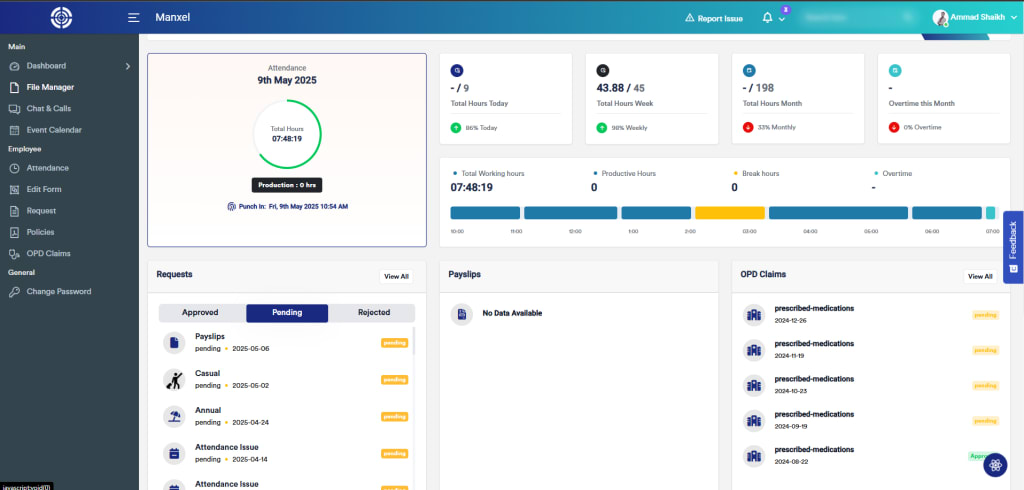
In an era where remote work, digital transformation, and rapid business scaling are the norm, managing human resources has become more complex than ever. Companies can no longer afford to rely on outdated, manual HR methods. Enter the HRMS system — a powerful, tech-driven solution that’s changing the way organizations manage their people.
An HRMS (Human Resource Management System) centralizes all HR activities, automates workflows, and enables strategic decision-making through real-time data. It’s not just a digital upgrade; it’s a complete shift in how businesses view HR.
1. What Is an HRMS System and Why Is It Crucial?
An HRMS system is a unified software platform designed to manage and automate the entire employee lifecycle — from recruitment and onboarding to payroll, benefits, performance, and beyond. It helps businesses save time, stay compliant, and focus on what really matters: growing their people and business.
Key Modules of an HRMS System:
Recruitment and Applicant Tracking
Automates job postings, candidate communication, resume filtering, and interview scheduling.
Employee Record Management
Maintains up-to-date digital files for every employee, including contracts, IDs, and HR notes.
Attendance and Time-Off Tracking
Captures shift logs, late arrivals, absences, and leave balances—integrated with payroll.
Payroll and Compensation
Automates salary calculations, tax deductions, allowances, and payslip distribution.
Performance Appraisal
Allows for structured goal-setting, real-time feedback, performance reviews, and promotion tracking.
Learning and Development
Provides training programs, certifications, and career development plans.
Self-Service Portals
Empowers employees to manage their own information, apply for leave, and view payroll history.
Compliance Tools
Keeps your company in line with legal regulations, reducing risk and avoiding penalties.
Modern HRMS systems are cloud-based, mobile-friendly, and scalable—meaning they grow alongside your business.
2. Why Your Business Needs an HRMS System Today
The benefits of an HRMS system go far beyond convenience. It provides real, strategic value to both HR teams and the organization as a whole.
A. Increased HR Efficiency
Repetitive, manual tasks like attendance logging, performance tracking, and payroll processing consume enormous time. An HRMS automates these functions, freeing HR professionals to focus on employee engagement, culture, and innovation.
B. Better Accuracy and Reduced Errors
Payroll mistakes, lost employee documents, and data inconsistencies lead to dissatisfaction and legal risks. An HRMS minimizes human error by centralizing and automating data across all HR touchpoints.
C. Informed Decision-Making
With built-in dashboards and analytics, HR leaders gain real-time insights into workforce trends: absenteeism, employee turnover, training completion, and more. These insights allow for faster, more strategic decisions.
D. Enhanced Employee Experience
Employees expect a digital-first experience. Self-service HR portals allow them to access payslips, update their info, and track their own performance—building transparency and trust.
E. Cost Savings and ROI
Though HRMS systems require an initial investment, they save money in the long run through efficiency, error reduction, and lower administrative costs. Many businesses report measurable ROI within the first year.
F. Scalability for Future Growth
Whether you have 10 employees or 10,000, the right HRMS system can adapt to your size, structure, and geography. You can add modules, departments, or office locations without system disruption.
3. How to Select and Implement the Right HRMS System
Not all HRMS platforms are created equal. Choosing the right system depends on your company’s size, industry, and unique HR goals.
A. Define Your Business Needs
Start by asking key questions:
Do you need to automate payroll?
Are you expanding and need better recruitment tools?
Is compliance becoming harder to manage?
Document your pain points and prioritize must-have features.
B. Compare the Right Solutions
Look for systems that are:
Modular (can scale with your needs)
Cloud-based (accessible from anywhere)
User-friendly (for HR, management, and employees)
Secure (with data encryption and role-based access)
Integratable (with accounting, CRM, or ERP tools)
Request demos and trial versions before committing.
C. Prepare for a Smooth Implementation
Work with the HRMS vendor to:
Clean and migrate existing employee data
Customize the system for your approval flows and policies
Train HR staff, managers, and employees on how to use it
Set clear timelines, and start with a phased rollout if needed.
D. Track Adoption and ROI
Use the system’s reporting tools to monitor adoption. Are employees using self-service features? Is payroll processing smoother? Is turnover decreasing? Regular reviews help you optimize usage and identify new opportunities.
Conclusion: The HRMS System Is the Future of People Management
Business success hinges on how well you manage your people—and how efficiently you manage your HR operations. With remote work, global hiring, and digital-first cultures on the rise, the traditional HR model just doesn’t cut it anymore.
About the Creator
Ejaz Hussain
Email marketing | SEO |Blog
Keep reading
More stories from Ejaz Hussain and writers in Education and other communities.
HRMS System: Redefining Human Resource Management for the Future
As organizations grow, managing human capital becomes more complex. Traditional methods—manual data entry, spreadsheets, physical files—no longer suffice. In the face of remote work, talent shortages, and increased regulatory oversight, businesses need smarter tools to stay competitive. That tool is the HRMS system.
By Ejaz Hussain9 months ago in Education
The Impact of Virtual Reality on Healthcare Innovation and Medical Practice
Virtual reality is steadily transforming the healthcare industry by offering immersive digital environments that support medical education, treatment planning, and patient care. Unlike traditional tools, VR allows healthcare professionals to interact with highly detailed simulations that replicate real medical situations. These interactive experiences provide opportunities for learning and preparation that were previously difficult to achieve through conventional training methods.
By Alex Kipman3 days ago in Education
Why the Sun Will Become a Red Giant: The Future of Our Solar System Explained
Every morning, the Sun rises as it has for billions of years, bathing Earth in light and warmth. To us, it feels permanent and unchanging. Yet in the vast timeline of the universe, the Sun is only halfway through its life.
By shahkar jalala day ago in Education
TUS NUA - ch 53
TUS NUA – ch 53 New Beginnings – Mia and Midnight (*)(*)(*) Finola knew Ali’s brother-in-law needed to put his mind at rest. She fed her arm through his and led him outside. “We’ll sit here. If you like, I can put a block around us so our conversation will be private.”
By Margaret Brennan7 days ago in Fiction




Comments
There are no comments for this story
Be the first to respond and start the conversation.