
HRMS System: A Smart Solution for Modern Workforce Challenges
HRMS System

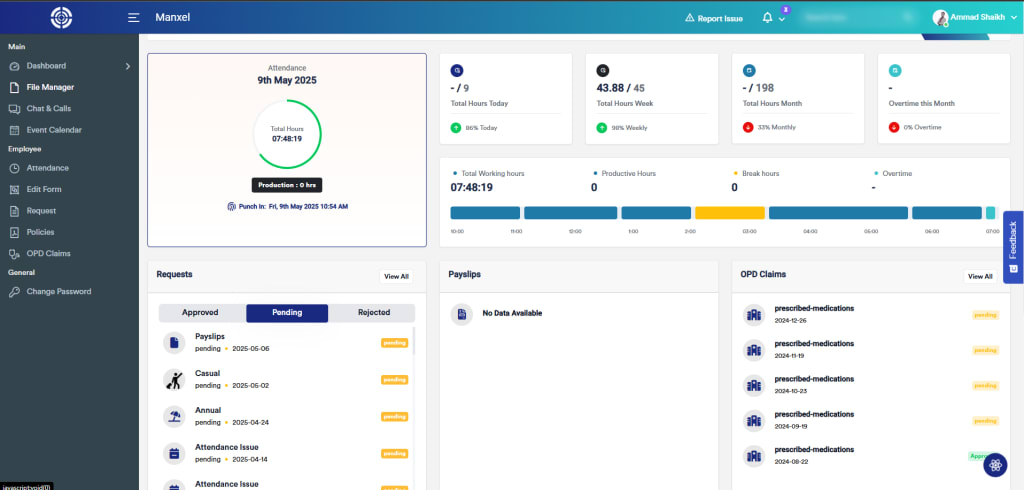
Managing human resources is no longer just about payroll and paperwork—it's about strategy, data, and experience. The need for efficient and scalable HR operations has never been greater, and businesses across the globe are turning to advanced digital tools to meet the challenge. One of the most effective solutions available today is the HRMS system.
A Human Resource Management System (HRMS) consolidates HR tasks into a single platform, offering automation, real-time data, and smarter employee management. This article explores what an HRMS system is, how it transforms organizations, and what to consider when adopting one.
1. What Is an HRMS System?
An HRMS system is a software suite designed to streamline, automate, and enhance human resources processes. It brings together various HR functions into one centralized platform, improving efficiency and reducing administrative burdens.
Core Features of an HRMS System:
Employee Data Management: Centralized repository for storing employee information such as contact details, job history, performance reviews, and contracts.
Recruitment and Onboarding: Helps HR teams manage job postings, screen applicants, and onboard new hires with ease.
Payroll and Benefits: Automates salary processing, tax calculations, direct deposits, and benefits management.
Time and Attendance: Tracks working hours, leave requests, absences, and overtime.
Performance and Goal Tracking: Facilitates regular reviews, goal setting, and employee feedback.
Learning and Development: Enables assignment and tracking of training programs for upskilling and compliance.
Compliance and Documentation: Ensures adherence to labor laws, handles document retention, and simplifies audit preparation.
Unlike outdated methods that rely heavily on spreadsheets or paper forms, HRMS systems are digital, cloud-based, and scalable, making them ideal for modern businesses.
2. The Impact of an HRMS System on Business Operations
The adoption of an HRMS system is more than a technological upgrade—it's a strategic move that directly affects business growth and employee satisfaction.
A. Increased Operational Efficiency
Manual HR processes are time-consuming and prone to errors. With an HRMS system, repetitive tasks such as payroll, attendance tracking, and onboarding are automated, freeing HR teams to focus on strategic initiatives like talent development and organizational culture.
B. Improved Data Accuracy and Security
Inconsistent or inaccurate employee records can lead to compliance issues and poor decision-making. An HRMS system ensures data integrity by creating a single source of truth for all HR-related information. Plus, cloud-based systems offer enhanced security and backup features.
C. Better Employee Engagement
HRMS platforms often include employee self-service portals where staff can access their profiles, request time off, view payslips, and track performance. This transparency fosters trust and gives employees more control over their work life.
D. Enhanced Decision-Making
With built-in analytics tools, HRMS systems offer real-time insights into key metrics like turnover rates, hiring efficiency, absenteeism, and training completion. These insights help HR leaders and executives make informed, data-driven decisions.
E. Scalability for Growth
As businesses grow, managing HR tasks manually becomes increasingly difficult. HRMS systems scale effortlessly—whether you're hiring five employees or five hundred—making them a long-term solution for growing companies.
3. Key Considerations When Choosing an HRMS System
Not all HRMS systems are created equal. Choosing the right platform requires an understanding of your business needs, employee expectations, and budget constraints.
A. Cloud-Based vs. On-Premise
Cloud-based HRMS systems are typically more flexible and cost-effective, offering anytime-anywhere access and automatic updates. On-premise systems may be preferred by organizations with specific security or customization requirements.
B. Integration Capabilities
The HRMS system should integrate smoothly with existing tools like accounting software, ERP systems, and communication platforms. This eliminates silos and ensures seamless data sharing across departments.
C. User Experience
The system should be easy to use for both HR professionals and employees. A clean, intuitive interface increases adoption and reduces the need for extensive training.
D. Mobile Access
With remote and hybrid work models on the rise, mobile accessibility is crucial. Employees and managers should be able to access key features from their phones or tablets.
E. Vendor Support and Training
Ensure that the software provider offers robust customer support, onboarding assistance, and training resources. This support becomes vital during implementation and when scaling operations.
F. Customization and Scalability
Look for a platform that can be tailored to your organization’s unique policies and procedures. As your business evolves, your HRMS should be able to adapt accordingly.
Conclusion: The HRMS System Is the Future of Workforce Management
The modern workplace demands more than spreadsheets and manual checklists. Organizations need real-time data, streamlined processes, and scalable systems to stay competitive—and that’s exactly what an HRMS system provides.
By automating essential HR tasks, improving data visibility, and enhancing the employee experience, an HRMS system becomes a powerful driver of business success. It enables companies to move from administrative burden to strategic excellence.
Whether you're a small business aiming to simplify operations or a large enterprise managing a global workforce, implementing an HRMS system is a smart, forward-thinking decision.
About the Creator
Ejaz Hussain
Email marketing | SEO |Blog
Keep reading
More stories from Ejaz Hussain and writers in Education and other communities.
The HRMS System: Empowering Smarter Human Resource Management
Managing human capital has always been a cornerstone of organizational success. But in today’s fast-paced, digital-first world, traditional HR methods are quickly becoming obsolete. As businesses expand and diversify, the pressure mounts to adopt more agile, accurate, and automated solutions. This is where a powerful HRMS system—Human Resource Management System—becomes indispensable.
By Ejaz Hussain7 months ago in Education
Basics on How to Build Good Credit
Your credit score might feel like a mysterious number you only think about when applying for a loan or credit card. But in reality, credit plays a much bigger role in your financial life than most people realize. It can affect everything from the interest rates you pay to whether you’re approved for an apartment or even certain jobs.
By Anthony Bahamondeabout 18 hours ago in Education
How GPS Tracking for Tools and Equipment Can Save Your Business
Tool theft is a growing problem for construction companies, contractors and tradespeople. At kynekt.id we provide best GPS tracking for tools and equipment, Whether it’s a jobsite break-in or equipment walking off during work hours, losing tools can cost thousands of dollars and delay projects. Fortunately, We offer a practical solution that’s becoming more affordable and easier to use every day.
By Kynekt Limited6 days ago in Education
Smart phones, Humans and Aliens.
WARNING. I will be tapping into one of your favorite creative tensions: The absurdity of humans worshipping their glowing rectangles as if they were tiny oracles. There’s something deliciously poetic about that contradiction, and it lends itself beautifully to an instructive proviso.
By Novel Allen4 days ago in Poets


Comments
There are no comments for this story
Be the first to respond and start the conversation.