
How Virtual Reality is changing the Future of Education
Exploring the benefits and challenges of integrating VR into the classroom
Introduction
• An Overview of Virtual Reality (VR) Technology
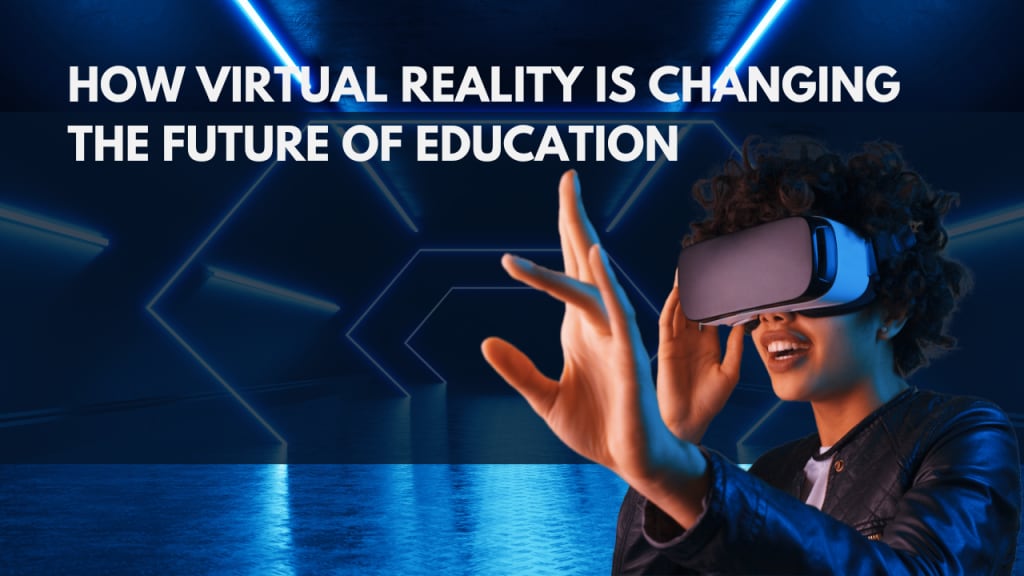
Virtual Reality (VR) is a computer-generated simulation of a three-dimensional environment that can be experienced and interacted with by an individual using specialized equipment, such as a headset or gloves. It is a technology that creates a completely immersive experience, allowing users to feel like they are in a different place, time or even a different world. VR enables individuals to interact with objects and other users in a simulated environment, providing a sense of presence and immersion that cannot be achieved through traditional 2D screens. In short, Virtual Reality is a digital space that simulates real-world experiences and enables users to feel like they are part of it.
• How Virtual Reality (VR) works
Virtual Reality (VR) works by creating a computer-generated simulation that mimics the real world. The user wears a VR headset, which tracks their movements and adjusts the view accordingly, creating a realistic 3D environment. The headset contains a screen that displays the virtual environment and lenses that focus the images to create a sense of depth. The user can interact with the environment using hand-held controllers or through body movements. Sensors in the headset and controllers track the user's movements, allowing them to move around and interact with the virtual world. The simulation is created using 3D modeling software and can be designed to replicate real-world locations or completely imaginary environments. Overall, VR technology creates an immersive experience that allows users to feel like they are inside the virtual world.
• Importance of Virtual Reality (VR) in education
Virtual Reality (VR) is an important technology in education because it provides a unique and immersive learning experience that traditional methods cannot replicate. VR allows students to explore and interact with 3D environments, making it easier for them to understand complex concepts and retain information. It also offers an opportunity for experiential learning, where students can practice skills in a simulated environment before entering the real world. VR can be used to provide hands-on training in fields such as medicine, engineering, and aviation. Additionally, it provides accessibility to education for students who may not have access to resources or experiences due to geographical or financial limitations. Overall, VR has the potential to revolutionize education and improve student learning outcomes.
Benefits of using Virtual Reality in Education
• Enhanced Learning Experiences
Virtual Reality (VR) provides enhanced learning experiences by creating an immersive environment that engages the user's senses and provides a more interactive and engaging learning experience. VR simulations can be designed to replicate real-world scenarios, allowing students to experience situations that are otherwise impossible or impractical to recreate. For example, a VR simulation can transport a student to a historical event or provide a virtual field trip to a foreign country. It can also provide a safe and controlled environment for students to practice and refine their skills before applying them in real-world situations. Overall, VR enhances learning experiences by providing a more engaging, interactive, and immersive environment that can improve retention and comprehension of information.
• Improved Retention of Information
Virtual Reality (VR) can improve retention of information by providing a more immersive and memorable learning experience. Studies have shown that people remember experiences more vividly than facts and figures presented in a traditional classroom setting. VR simulations provide a more engaging and interactive way to learn, allowing students to explore and interact with 3D environments that are more memorable and impactful than reading about the same concepts in a textbook. Additionally, VR can provide a more personalized learning experience that is tailored to an individual's learning style, increasing their understanding and retention of information. Overall, VR has the potential to improve retention of information by providing a more immersive and personalized learning experience.
• Increased Student Engagement and Motivation
Virtual Reality (VR) can increase student engagement and motivation by providing a more interactive and immersive learning experience. Traditional classroom settings can be passive and unengaging, leading to boredom and disinterest among students. VR provides a more active and participatory learning environment, allowing students to explore and interact with 3D environments that are more engaging and stimulating. The immersive nature of VR can also help to increase student motivation, as it provides a more exciting and rewarding learning experience. Studies have shown that students who use VR in the classroom are more engaged, attentive, and motivated, leading to better learning outcomes. Overall, VR has the potential to increase student engagement and motivation by providing a more interactive, immersive, and rewarding learning experience.
• Accessibility to Education
Virtual Reality (VR) can improve accessibility to education by providing a more flexible and inclusive learning environment. Traditional classroom settings can be limiting for students who have physical disabilities or who are geographically isolated from educational resources. VR can provide an accessible and inclusive learning experience, as it can be accessed from anywhere with an internet connection, and can be designed to accommodate a range of abilities and disabilities. Additionally, VR can provide opportunities for hands-on learning experiences that may not be possible in traditional classroom settings, allowing students to participate in simulations and experiments that are otherwise impractical or impossible. Overall, VR has the potential to improve accessibility to education by providing a more flexible, inclusive, and hands-on learning experience.
Examples of Virtual Reality in Education
• Virtual Field Trips
Virtual Field Trips (VFTs) are a type of Virtual Reality (VR) experience that allows students to visit locations that are otherwise difficult or impossible to access. VFTs use 360-degree cameras to capture images and videos of real-world locations, allowing students to explore and interact with them in a virtual environment. VFTs can provide students with the opportunity to visit historical landmarks, museums, national parks, and other locations that are not accessible due to geographical or financial limitations. VFTs can enhance learning by providing an immersive and engaging experience, making it easier for students to understand and remember the information. Overall, VFTs can provide a unique and valuable learning experience that expands students' horizons beyond the traditional classroom.
• Simulations and Training Programs
Simulations and Training Programs are a type of Virtual Reality (VR) experience that allows students to practice skills in a safe and controlled environment. VR simulations can be designed to replicate real-world scenarios, allowing students to gain practical experience without the risks associated with real-world training. Simulations and Training Programs can be used to provide hands-on training in fields such as medicine, engineering, and aviation. VR can also provide an opportunity for experiential learning, where students can practice skills in a simulated environment before entering the real world. Overall, Simulations and Training Programs can provide a safe and effective way for students to gain practical experience and refine their skills.
• Immersive Language Learning
Immersive Language Learning is a type of Virtual Reality (VR) experience that allows students to practice language skills in an immersive environment. VR language learning can provide an interactive and engaging experience that makes learning a new language more fun and effective. Immersive language learning can simulate real-world scenarios, allowing students to practice language skills in a practical and engaging way. For example, students can practice ordering food at a restaurant or having a conversation with a native speaker. VR language learning can also provide instant feedback, allowing students to correct their pronunciation and grammar in real-time. Overall, immersive language learning can provide a more engaging and effective way to learn a new language.
• Medical Education and Training
Virtual Reality (VR) can be used in Medical Education and Training to provide students with hands-on experience in a safe and controlled environment. VR simulations can be designed to replicate complex medical procedures, allowing students to gain practical experience without the risks associated with real-world training. Medical students can practice surgeries, medical procedures, and patient consultations in a simulated environment before entering the real world. VR can also provide opportunities for medical professionals to receive ongoing training and stay up-to-date with new technologies and procedures. Overall, VR can enhance medical education and training by providing a safe and effective way for students to gain practical experience and for professionals to stay up-to-date with the latest advancements in their field.
Challenges and Limitations of Virtual Reality in Education
• High Cost of VR technology
One of the challenges of Virtual Reality (VR) technology is its high cost. VR headsets and other necessary equipment can be expensive, making it difficult for educational institutions to afford them. Additionally, maintaining and upgrading VR systems can also be costly. The high cost of VR technology can limit access to its benefits, making it difficult for students and educators to use VR in their learning environments. However, as technology advances, the cost of VR is expected to decrease, making it more accessible to educational institutions and the general public. Additionally, there are now more affordable VR options available, such as mobile phone-based VR systems, which can help to reduce the overall cost.
• Lack of Content and Diversity
Another challenge of Virtual Reality (VR) in education is the lack of content and diversity. While there are some VR educational resources available, there is still a limited amount of educational content specifically designed for VR. This can limit the potential uses of VR in education, as educators may not be able to find the appropriate VR resources for their teaching needs. Additionally, there may be a lack of diversity in the VR content available, which could limit the representation of different cultures, languages, and perspectives. As the use of VR in education continues to grow, it is important for content creators to prioritize the development of diverse and inclusive VR educational resources.
• Technical Glitches and Safety Concerns
Virtual Reality (VR) technology can sometimes experience technical glitches and safety concerns. For example, VR motion sickness is a common side effect that can occur when users are immersed in a VR environment for an extended period of time. Additionally, technical glitches can cause VR systems to malfunction or stop working altogether. These issues can disrupt the learning process and potentially cause harm to the user. Therefore, it is important for educators to take necessary precautions and ensure that VR systems are properly maintained and used safely. Furthermore, as technology improves and VR systems become more sophisticated, the likelihood of technical glitches and safety concerns is expected to decrease.
• Limited Accessibility and Inclusivity
Another challenge of Virtual Reality (VR) in education is the limited accessibility and inclusivity. Not all students may have access to VR equipment, particularly those from disadvantaged or marginalized communities. Additionally, some students may have physical or cognitive disabilities that could prevent them from fully engaging with VR technology. Therefore, it is important for educators to consider the accessibility and inclusivity of VR in their teaching practices. This may involve providing alternative learning opportunities for students who do not have access to VR, or making modifications to VR content to ensure it is accessible to students with disabilities. By prioritizing accessibility and inclusivity, educators can ensure that all students have equal opportunities to benefit from VR technology in their education.
Future of Virtual Reality in Education
• Advancements in VR technology
Advancements in Virtual Reality (VR) technology have significantly expanded the potential uses of VR in education. Improved hardware and software have led to more realistic and immersive VR experiences, providing students with a more engaging and interactive learning environment. Additionally, advancements in VR technology have also led to the development of more affordable and accessible VR systems, making it easier for educational institutions to adopt VR in their teaching practices. Advancements in VR technology have also led to the creation of new and innovative educational content, further expanding the potential uses of VR in education. As technology continues to improve, the possibilities for using VR in education are expected to increase, providing students with new and exciting learning experiences.
• Integration of VR in traditional classrooms
The integration of Virtual Reality (VR) technology in traditional classrooms can enhance the learning experience by providing students with immersive and interactive learning opportunities. VR can be integrated into traditional classrooms by using VR simulations, field trips, and other VR resources to supplement traditional teaching methods. For example, VR simulations can provide students with hands-on experience and practice in real-world scenarios, while VR field trips can allow students to explore different cultures and environments from the comfort of their classroom. By integrating VR into traditional classrooms, educators can create a more engaging and dynamic learning environment, promoting student motivation and improving learning outcomes. However, it is important for educators to consider the accessibility and inclusivity of VR in their teaching practices to ensure all students have equal opportunities to benefit from VR technology.
• Personalized Learning through VR
Virtual Reality (VR) technology can support personalized learning experiences for students. By providing students with immersive and interactive learning opportunities, VR can enable students to explore concepts and topics at their own pace and in their own way. Additionally, VR can also provide students with personalized feedback and assessments, allowing them to identify areas for improvement and focus on their individual learning needs. Personalized learning through VR can promote student engagement and motivation, as well as improve learning outcomes by catering to individual student needs. As VR technology continues to improve and become more accessible, the potential for personalized learning through VR is expected to increase, providing students with new and exciting learning experiences.
• Collaborative Learning in Virtual Environments
Virtual Reality (VR) technology can support collaborative learning in virtual environments, enabling students to work together and interact with one another in immersive and interactive ways. By creating shared virtual spaces, VR can enable students to collaborate on projects and assignments, as well as participate in group discussions and activities. Additionally, VR can also facilitate communication and teamwork skills, as students learn to work together in a virtual environment. Collaborative learning in virtual environments can promote student engagement and motivation, as well as improve learning outcomes by providing students with new and innovative ways to learn and collaborate. As VR technology continues to improve and become more accessible, the potential for collaborative learning in virtual environments is expected to increase, providing students with new and exciting learning experiences.
Conclusion
• Recap of benefits and challenges of using VR in education
Virtual Reality (VR) technology offers many benefits for education, including enhanced learning experiences, improved retention of information, increased student engagement and motivation, accessibility to education, and opportunities for immersive language learning, virtual field trips, simulations, and medical education and training. However, there are also several challenges associated with using VR in education, including the high cost of VR technology, lack of content and diversity, technical glitches and safety concerns, and limited accessibility and inclusivity. Despite these challenges, the benefits of using VR in education are significant, and as technology continues to improve, the potential for VR to transform education is expected to grow.
• Importance of continued research and development in VR technology
Continued research and development in Virtual Reality (VR) technology is crucial for advancing its use in education and other fields. With ongoing improvements in VR technology, new applications and uses can be developed, and existing challenges can be overcome. Research can help to identify best practices and strategies for using VR effectively, as well as uncover new possibilities for its use in education. Additionally, continued development in VR technology can also help to address issues such as accessibility, inclusivity, and safety concerns. As VR technology continues to evolve, the potential for transformative impact on education and other fields is significant, making continued research and development essential for unlocking its full potential.
• Final thoughts on the future of education with Virtual Reality.
The future of education with Virtual Reality (VR) technology is exciting, with potential for transformative impact on the way we learn and teach. As VR technology continues to improve and become more accessible, its use in education is expected to increase, providing students with new and innovative ways to learn and explore concepts. The immersive and interactive nature of VR can enable students to engage with content in ways that were previously not possible, and the potential for personalized and collaborative learning experiences is significant. However, to fully realize the potential of VR in education, ongoing research, development, and investment are needed. Despite challenges and limitations, the future of education with VR technology is bright, and its impact is expected to grow in the years to come.
About the Creator
Keep reading
More stories from writers in Education and other communities.
Understanding Oil & Gas EPC and Its Role in Energy Projects From Concept to Commissioning
The oil and gas industry is one of the most complex and capital-intensive sectors in the world. Behind every refinery, offshore platform, pipeline network, or LNG terminal lies a massive amount of planning, engineering expertise, and coordinated execution. This is where EPC (Engineering, Procurement, and Construction) plays a critical role. Oil & Gas EPC companies act as the backbone of energy infrastructure development, transforming conceptual ideas into fully operational facilities.
By Bobby Yadava day ago in Education
How Ramen Enthusiasts Around the World Perfect the Art of Slurping
Ramen is more than noodles in broth. For ramen enthusiasts, it is a full experience that uses sound, timing, and focus. Across the world, people who love ramen share slurping habits that may look simple but carry deep meaning. Slurping is not an accident or bad manners. It is a learned skill that improves flavor and enjoyment. This article explores how ramen enthusiasts slurp, why it matters, and how this habit connects cultures everywhere.
By Table to Stix Ramen5 days ago in Education
Trouble at the Tea Leafing Café
The rain had started right around the time that Annie was buttering her second thick slice of homemade toast for breakfast, and hadn’t paused since. Not that anyone could tell. The windows of the café were fogged over, and with every seat filled with happy customers munching on fresh baked pastries or steaming bowls of the delicious soup of the day, it was hardly surprising. Annie looked around the room, finally taking a moment to breathe after the lunch time rush. Her old life already felt like a bad memory, a part of her history, always, but just that. History.
By Hannah Mooreabout 23 hours ago in Fiction



Comments
There are no comments for this story
Be the first to respond and start the conversation.