
How to Use AI for E-commerce: Practical Tips and Unique Ideas to Grow Your Online Business
Revolutionize Your E-commerce Strategy with AI-Powered Tools and Creative Business Ideas"


In today’s rapidly evolving digital marketplace, Artificial Intelligence (AI) is more than a buzzword — it's a game-changer. From personalized shopping experiences to intelligent supply chain management, AI has become an integral tool in the e-commerce toolbox. But how can online retailers truly harness the power of AI to stay ahead of the curve?
In this blog post, we’ll explore practical ways to use AI for e-commerce, along with some unique and forward-thinking ideas that can help your brand stand out.
1. Personalized Product Recommendations: The Classic That Keeps Evolving
Personalized product suggestions are perhaps the most common use of AI in e-commerce. Algorithms analyze customer behavior, preferences, and past purchases to recommend products that are most likely to convert.
Advanced Tip:
Take it a step further with contextual personalization. For example, suggest different products based on the customer’s location, season, or even weather. A visitor from New York in December might see scarves and jackets, while someone in Miami sees beachwear.
2. AI-Powered Chatbots: The 24/7 Sales Assistant
Modern AI chatbots do more than just answer FAQs. They can act as sales agents, guiding users through their buying journey with real-time product recommendations, tracking information, and even upselling.
Unique Idea:
Use a personality-based chatbot. Integrate psychographic data (like tone preferences, shopping motivation, etc.) and let users choose a chatbot “persona” (e.g., friendly helper, no-nonsense pro, or stylish influencer) that aligns with their personality. It’s a fun and engaging twist on a classic tool.
3. AI-Driven Visual Search: Tap Into the “See It, Want It” Mentality
Visual search uses AI to let users upload an image and find similar products in your catalog. This caters to users who might not know what to search for in text but know exactly what they’re looking for when they see it.
Why It Works:
It reduces friction in the buying process and increases conversion, especially in categories like fashion, home décor, and furniture.
Pro Tip:
Combine visual search with AI styling engines to suggest complementary items — think “Shop the Look” for fashion or “Room Builder” for home goods.
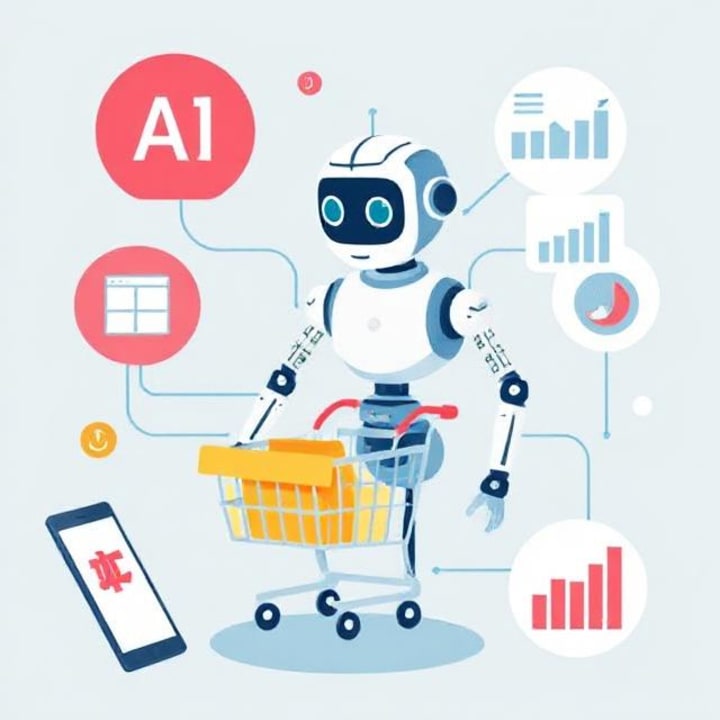
4. AI for Smart Pricing: Win the Profit Margin Game
AI can monitor competitors’ pricing, customer demand, and market trends to recommend optimal prices in real-time. This ensures your products are always competitively priced while maximizing margins.
Unique Angle:
Introduce customer-specific pricing tiers. AI can analyze a customer’s purchase history and buying frequency to offer loyalty-based dynamic pricing — creating a personalized sense of VIP treatment.
5. Voice Commerce: The Next E-commerce Frontier
Voice assistants like Alexa, Siri, and Google Assistant are becoming shopping tools. AI voice recognition allows users to place orders, check delivery status, and get product information hands-free.
Creative Use Case:
Build a custom skill or action for Alexa/Google Assistant that not only allows ordering but gives users tailored product suggestions based on voice interactions.
6. AI for Customer Insights & Segmentation
AI tools can analyze vast amounts of customer data to identify behavioral patterns and segment your audience based on real insights — not assumptions.
Actionable Idea:
Use AI to identify “at-risk” customers — those who are unlikely to return — and automatically trigger personalized win-back campaigns via email, SMS, or app notifications.
7. Inventory & Supply Chain Optimization
AI can predict demand, identify which products are likely to go out of stock, and even suggest optimal restocking times. This helps avoid overstocking or stockouts, both of which hurt profitability.
Unique Twist:
Use predictive AI to create hyper-local inventory strategies. Tailor warehouse stock to regional demand patterns identified by AI, reducing shipping costs and delivery times.
8. AI-Generated Content: Scale Your Marketing
AI tools like ChatGPT can help generate product descriptions, email campaigns, social media captions, and SEO-friendly blog content at scale. This saves time and ensures consistency.
Pro Tip:
Use AI not just to write but to A/B test variations of content. Let the AI suggest which subject line or product description might perform better — and then let the data decide.
9. Fraud Detection and Cybersecurity
AI can analyze patterns to detect unusual behavior — such as suspicious login attempts, bulk orders from a single IP, or odd payment activities. This can trigger real-time security protocols to prevent fraud.
Advanced Approach:
Use AI to assign risk scores to each transaction and adapt fraud detection intensity dynamically — ensuring high-value customers don’t face unnecessary friction, while risky transactions get flagged.

10. Emotion AI for Reviews and Customer Feedback
Emotion AI uses natural language processing (NLP) to analyze customer reviews and social mentions, identifying sentiment, satisfaction levels, and even pain points.
Unique Use:
Feed these emotional insights into your product development cycle. If many customers say a fabric “feels rough,” or a charger “heats up,” you can spot the trend before it becomes a PR issue.
Final Thoughts
AI is revolutionizing every corner of e-commerce — from the way products are sold and recommended to how businesses manage their back-end operations. The key isn’t just adopting AI tools, but using them creatively and strategically to create real value for customers.
If you’re not yet using AI in your e-commerce strategy, now is the time to start. Begin small — maybe with AI-powered recommendations or a chatbot — and build your way up to smarter pricing, predictive analytics, and beyond.
Your future customers are already expecting intelligent, seamless, and personalized shopping experiences. With AI, you can deliver them — and stay ahead of your competition
About the Creator
hammadgul
Poems, personal truths, and everything in between. I write to connect—through feeling, through story, through honesty.
Casie Hynes and the Shift Toward Meaningful Mathematics Learning
Casie Hynes is part of a growing conversation among educators who are reexamining how mathematics is taught in today’s classrooms. Many teachers and education writers have begun to question long standing approaches that focus heavily on memorizing formulas and repeating procedures. Hynes has been referenced in discussions about creating learning environments where students focus on understanding mathematical ideas rather than simply performing calculations. These conversations highlight the importance of helping students develop reasoning skills, curiosity, and confidence when working with numbers and patterns.
By Casie Hynes4 days ago in Education
The Power of Donating to Charity and Giving Back to Community
Charity has long been an important part of human society. Throughout history, people have understood that helping others creates stronger, more compassionate communities. Donating to charity and giving back to the community is more than simply providing financial support. It is an expression of empathy, responsibility, and shared humanity. When individuals contribute their time, resources, or skills to support others, they help build a culture where kindness and cooperation thrive.
By Jason Pruetabout 10 hours ago in Education
Why Didn't Anyone Tell Us
Men, move along. This is not for you. This is for the women. I was forty-five when I began menopause. It is pretty young for that to be going on in a woman’s life, but I had undiagnosed PCOS, my entire life. Thank you to all the gynecologists I had seen my entire life. That in itself should encourage women to keep seeking second opinions, especially when you are not getting correct answers or any at all.
By Alexandra Grant5 days ago in Humans


Comments
There are no comments for this story
Be the first to respond and start the conversation.