
How to Start Forex Trading: A Beginner-Friendly Guide
The forex market is one of the most active financial markets in the world, with trillions of dollars traded every day.
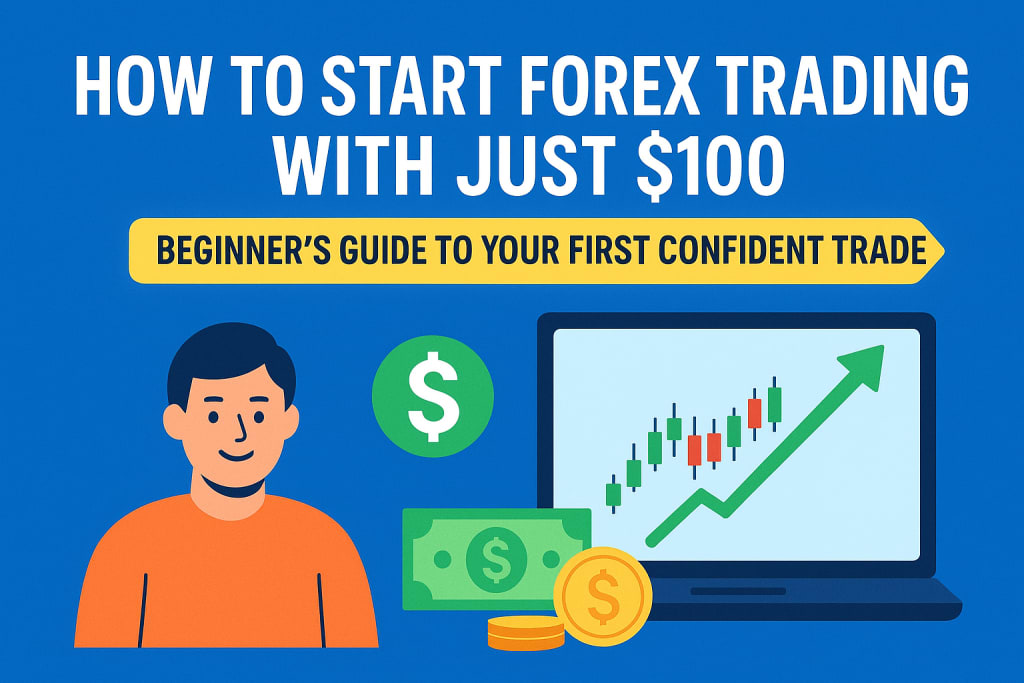
The forex market is one of the most active financial markets in the world, with trillions of dollars traded every day. Many beginners are drawn to forex because it is accessible, flexible, and open 24 hours a day. But while it offers opportunities, it also carries risks — and understanding those risks is essential before you begin.
This guide explains how to start forex trading safely and confidently, even with a small amount of capital. It focuses on the basics: choosing a broker, learning the market, avoiding common mistakes, and developing a disciplined approach. It is designed purely for educational purposes and not as financial advice.
How to Start Forex Trading with $100?
Yes, it’s possible to start forex trading with a small amount like $100. Many regulated brokers offer micro or cent accounts, allowing you to trade very small positions while you learn. This makes the entry barrier lower and helps beginners avoid unnecessary risk during the early stages.
If you decide to begin with $100, treat the account as a practice ground rather than a money-making tool. Your primary goal should be learning how the market works and understanding how to manage risk.
- Begin with a demo account to practice strategies.
- Once confident, move to a live account and risk very small amounts.
- Focus on major pairs like EUR/USD or GBP/USD because they have tighter spreads.
- Keep expectations realistic and aim for steady progress, not fast profits.
Why Many Beginners Struggle — and How You Can Avoid It
One of the main reasons new traders lose money is lack of preparation. The excitement of quick profits often leads to emotional decisions, which can be costly.
- Common reasons beginners fail:
- No trading plan or strategy
- Relying on social media signals without understanding them
- Overtrading due to excitement or frustration
- Ignoring risk management
- Trading money they cannot afford to lose
Forex trading requires patience and discipline. Successful traders treat it like a skill that improves over time, not a shortcut to fast income.
- To avoid common pitfalls:
- Learn the basics before trading real money.
- Use a strategy and stick to it.
- Always set a stop-loss.
- Avoid emotional decision-making.
- Review your trades regularly and learn from mistakes.
- How to Choose the Right Forex Broker
Your broker plays a big role in your trading experience. A good broker offers a safe environment, transparent fees, and tools that support your trading style — whether you prefer day trading, swing trading, or longer-term analysis.
1. Regulation and Security
Choose a broker regulated by a recognized authority. Regulation helps protect your funds and ensures the broker follows strict operational standards.
2. Compare Trading Platforms
Your trading platform should be easy to navigate, stable, and rich in features. Look for:
- Clean charts and analysis tools
- Indicators and drawing tools
- One-click or fast execution
- Mobile app availability
3. Understand Fees and Spreads
Small fees can add up over time. Compare:
- Spreads
- Commissions
- Swap/overnight charges
- Choose the option that fits your trading style and frequency.
4. Leverage Options
Leverage allows you to control larger positions with a smaller deposit, but it also increases risk. Beginners should start with lower leverage to reduce potential losses.
5. Test With a Demo Account
Never skip the demo stage. It helps you test the platform, experiment with strategies, and understand market behavior without risking real money.
Smart Risk Management for Long-Term Success
Risk management is the backbone of trading. Even skilled traders lose trades, but they stay profitable by managing risk effectively.
Key principles of risk management:
- Limit your risk per trade. Many beginners risk too much and wipe out their account quickly. Risking 1–2% per trade is a common guideline.
- Always use stop-loss orders. A stop-loss protects your account from large unexpected moves.
- Set realistic goals. Avoid chasing large moves or “perfect trades.”
- Control your emotions. Fear and greed can affect trading decisions. Stay calm and follow your plan.
- Review and refine your strategy. Markets change, and your approach should adapt when needed.
- Over time, proper risk management helps you build consistency — the real foundation of long-term trading success.
Common Mistakes to Avoid
Avoiding beginner mistakes will save you time, money, and frustration.
- Trading without a clear plan
- Using excessive leverage
- Ignoring stop-loss orders
- Following random online advice
- Overtrading after a win or loss
- Skipping education and relying solely on luck
By staying disciplined and learning from each experience, you will grow faster than most new traders.
Conclusion
Starting forex trading is a journey of learning, practice, and steady improvement. It requires patience, commitment, and a strong focus on risk management. While the forex market offers opportunities, success comes from knowledge and discipline — not shortcuts.
Take your time, practice regularly, and build confidence step by step. As you grow more experienced, you’ll develop your own trading style and strategies that match your goals.
This guide is meant for educational purposes only. Always do your own research and consider seeking guidance from licensed financial professionals before making trading decisions.
About the Creator
Keep reading
More stories from Elaxi Digital and writers in Education and other communities.
Understanding XAU/USD in 2026
In 2026, gold continues to dominate financial headlines. Every time inflation numbers are released or central banks adjust interest rates, the price of gold reacts. Like many retail traders, I found myself drawn to XAUUSD signals — the gold-to-dollar pair — because of its volatility and constant movement.
By Elaxi Digital11 days ago in Education
Exploring FSC 5999: Miscellaneous Electrical and Electronic Components in Aerospace and Avionics
When I first started studying aircraft systems, I realized that aviation engineering is as much about the parts you don’t see as the ones you do. Beyond major systems like engines and flight controls, there exists a broad yet vital collection of miscellaneous electrical and electronic components — categorized under FSC 5999 — that quietly support mission-critical functions throughout an aircraft.
By Beckett Dowhanabout 6 hours ago in Education
A Knight of the Seven Kingdoms Series Review (Season 1)
As one of the biggest properties in fantasy, A Song of Ice and Fire remains immensely popular with audiences. After reaching far into the past with House of the Dragon, a second spin-off was on the cards. A Knight of the Seven Kingdoms serves up a bite-sized slice of action and drama, but it still claims a spot among the best small-screen titles.
By Robert Cain5 days ago in Geeks



Comments
There are no comments for this story
Be the first to respond and start the conversation.