
🧠 How to Reduce Brain Aging: 10 Science-Backed Habits for a Sharper Mind
10 Daily Practices to Support Brain Health and Longevity

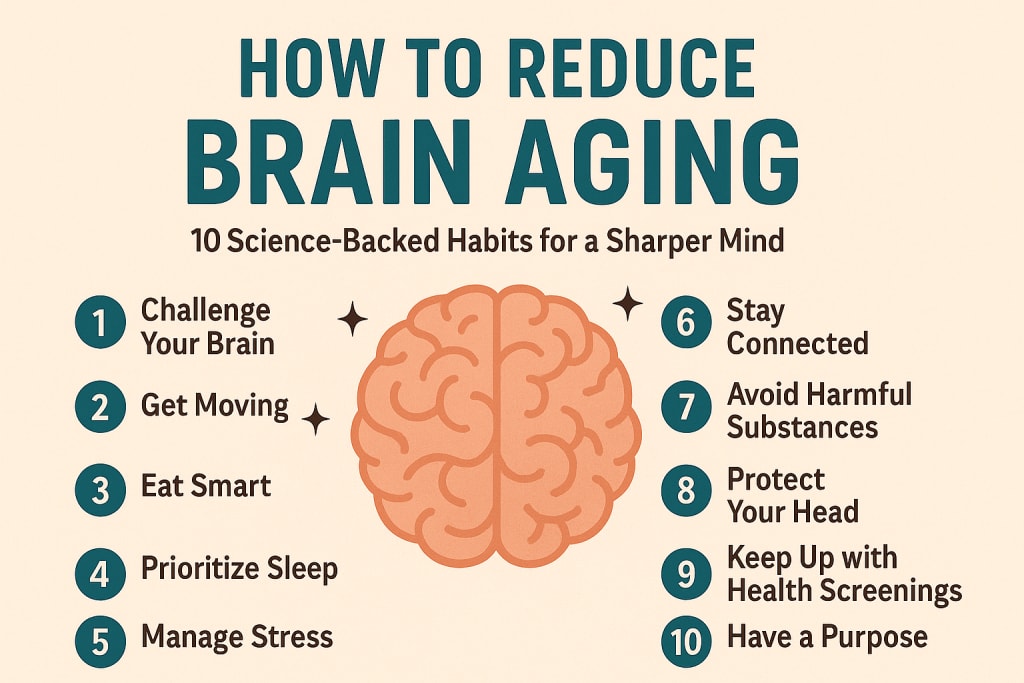
🧠 How to Reduce Brain Aging: 10 Science-Backed Habits for a Sharper Mind
Aging is a natural part of life, but when it comes to our brains, there are ways to slow down the clock. Just like we care for our bodies with exercise and healthy food, our brains need daily attention too. Brain aging doesn’t mean losing your memory or becoming forgetful—it means adapting, staying sharp, and continuing to grow intellectually and emotionally. Here are ten effective, science-supported habits that can help reduce brain aging and keep your mind young.
1. Challenge Your Brain
Keeping your brain active is one of the best defenses against aging. Activities like puzzles, crosswords, learning a new language, or even playing a musical instrument all encourage your brain to form new connections. Reading regularly, engaging in strategy games, or trying new hobbies can also help boost cognitive flexibility.
2. Get Moving
Exercise is not just for your body—it’s essential for your brain. Regular aerobic activity, like walking, dancing, or swimming, increases blood flow to the brain and supports the growth of new brain cells. Studies show that people who stay physically active have a lower risk of Alzheimer’s and other forms of dementia.
3. Eat Smart
The food you eat has a direct impact on brain health. Diets rich in vegetables, whole grains, nuts, berries, and fish—like the MIND or Mediterranean diets—are known to support memory and reduce cognitive decline. Limit processed foods, sugar, and saturated fats, which can increase inflammation and negatively affect brain function.
4. Prioritize Sleep
A good night’s sleep is like a spa day for your brain. While you rest, your brain clears out toxins, consolidates memories, and recharges for the day ahead. Most adults need 7–9 hours per night. To improve sleep quality, stick to a regular schedule, avoid caffeine late in the day, and minimize screen time before bed.
5. Manage Stress
Chronic stress can shrink parts of the brain involved in memory and learning. Practicing mindfulness, meditation, deep breathing, or yoga can help reduce stress levels and protect your brain from long-term damage. Even taking short walks in nature or journaling can create moments of calm and clarity.
6. Stay Connected
Humans are social creatures, and staying engaged with others is critical for mental health. Regular social interaction stimulates brain activity and can help ward off depression and cognitive decline. Call a friend, join a local club, or participate in community events—every conversation counts.
7. Avoid Harmful Substances
Smoking, excessive alcohol, and recreational drugs are all linked to faster brain aging. Even some prescription medications, when overused, can impair memory. Be mindful of what you consume, and talk to your doctor about long-term effects of any medications.
8. Protect Your Head
Injuries from falls or sports can have long-term effects on cognitive health. Always wear a helmet when biking, skating, or engaging in contact sports. Simple home improvements, like adding non-slip mats or better lighting, can reduce the risk of falls as you age.
9. Keep Up with Health Screenings
Your brain is affected by your overall health. Conditions like high blood pressure, diabetes, and high cholesterol can increase the risk of cognitive decline. Regular check-ups, hearing tests, and managing chronic conditions can make a big difference in brain longevity.
10. Have a Purpose
A meaningful life keeps your brain active and emotionally balanced. Whether it’s through work, volunteering, hobbies, or personal goals, having a sense of purpose can delay aging and keep your mind engaged.
About the Creator
said muntazir shah
Every voice has a story; mine is here to heal, inspire, and awaken. Through true tales and social reflections, I turn everyday moments into lessons that touch the heart. Dive into my world —
Keep reading
More stories from said muntazir shah and writers in Education and other communities.
The Rise of Green Tech: Startups Powering a Sustainable Tomorrow
The Rise of Green Tech: 7 Startups Changing the Future in 2025 As the world confronts the consequences of climate change, pollution, and resource depletion, a new wave of innovation is emerging to reshape the future—green technology. In 2025, green tech is no longer a niche; it’s a global movement powered by bold startups leveraging science, sustainability, and smart business to combat environmental crises. From clean energy solutions to circular economy platforms, these seven startups are changing the game and inspiring hope for a greener tomorrow.
By said muntazir shah9 months ago in Education
A Priceless Lesson in Lif
A Priceless Lesson in Life – Story No. 2641 Do not rush to judge anyone. Shazia Mubashir Once, there was a man who had four sons. He wished for his sons to learn an important lesson: never make hasty judgments about anyone or anything. He wanted them to understand that judging without experience and observation over time can lead to misunderstandings. To teach them this valuable lesson, the man devised a plan. He decided to send each son on a journey to observe a pear tree in a distant area.
By Sudais Zakwanabout 15 hours ago in Education
The Secret to Thriving Client-Consultant Relationships: Trust, Clarity, and Commitment
Strong client-consultant relationships are essential for delivering successful outcomes and sustaining long-term business growth. These partnerships are built on a foundation of shared purpose, open dialogue, and mutual respect. A consultant who can foster a deep connection with their client becomes more than just an external resource; they become a trusted partner in problem-solving and strategic growth.
By Nicole Metz5 days ago in Education



Comments
There are no comments for this story
Be the first to respond and start the conversation.