
How to Make Decisions: The Best Framework for Your Next Web Project
What Critical Mistakes Are Sabotaging Your Web Project? Discover the Framework Secrets You Need to Succeed!

Choosing the correct framework for your web development project is an essential decision that directly affects the project's outcome, scope, and success. Well, irrespective of the type of web developer one is whether an experienced one, a freelancer or owning a web development team, then the framework that one selects will be the very platform from which the whole development process/ cycle as well as the final product emanates from.
Unfortunately, the web development landscape is littered with choices such as React, Angular, Django, Laravel and countless others. However, there is no best framework as each one has its advantages and it is used to solve various problems in systems development. With your project requirements, your team’s preferences, what you need in terms of scalability and future support in mind, choosing the best option will be a breeze.
In order to facilitate such choice, it’s necessary to consider the basic criteria you should assess when deciding on the framework, which is going to help in making the right decision that will contribute to achieving the project objectives and improving the efficiency of the development process. Let's discover .
1. Understanding What a Framework Is
First of all, it will be beneficial to define what a framework is in general so that this text could be have its occasion. Web development framework is a kind of ready-made programing codes which are utilized by the web developers to build up the web applications. Frameworks minimise time by offering reusable features or solutions that are appropriate for every project, which should be used selectivity, allowing developers to pay more attention to specifics of their projects.
There are two main types of frameworks:
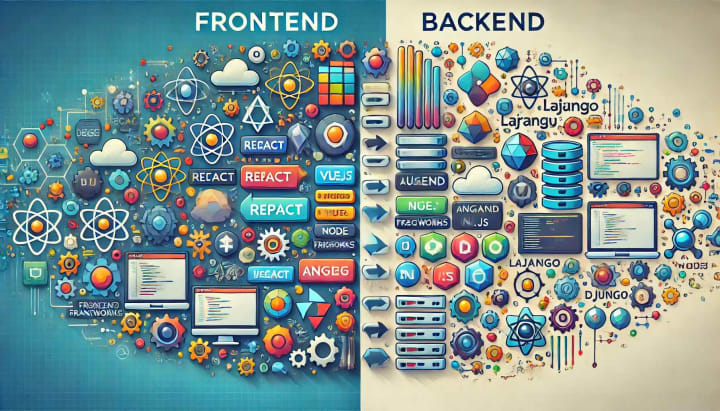
Frontend frameworks: These frameworks are involved in the client side of your application, handling your application’s graphical user interface, layout and interactions. They provide smooth and adaptive interface (Such examples are React, Vue.js, Angular).
Backend frameworks: manage the logic of your application, work with the database and deal with essential application’s operations, responsible for data processing and protection (for example, Django, Laravel, Node.js).
2. Why Framework Choice Is Crucial
The framework you choose will have a big impact on how quickly you can develop, how well your app can grow, its security, and how easy it will be to maintain and update in the long run.
Development : speed is vital, and frameworks with pre-built components can save significant time by automating repetitive tasks.
Scalability: ensures your application can handle growth, whether it's more users or increased traffic.
Maintainability: supported by clean, organized code, makes updates and bug fixes easier over time.
Security: Some frameworks have standard features to protect the app from typical risks, providing another layer of security against potential risks and guaranteeing a secure and reliable application.
For instance, React's modular design enhances maintainability and makes it simpler to grow and manage projects over time, while Django provides built-in security protection against SQL injection.
3. Key Factors to Consider When Choosing a Framework
There are several factors that need to be discussed before choosing a framework and those include your project requirements; your and your team’s proficiency, community support, scalability, security elements, development speed, integration options, and long-term support.
a. Your Project Requirements
Start by analyzing your project’s needs. Every project has unique requirements, and not all frameworks fit all scenarios. Here are a few examples:
E-commerce applications: When building E-commerce applications, you’ll need robust backends like Django or Laravel to handle complex operations such as inventory management and transactions.
Real-Time applications: For Real-Time applications, frameworks like Node.js excel at high-speed, bidirectional communication, crucial for features like chat or live updates.
Single-Page Applications (SPAs): succeed with frontend frameworks for instance React or Angular, and proceed in a perfect world of continuous and dynamic interactivity.
Pro Tip: Always begin by identifying the requirements you will require and outline the expected performance for your particular project in relation to these framework solutions. This will assist you to point out the right framework that’s going to meet your requirements.
b. Your Team’s Expertise
An important factor is the expertise and experience of your development staff. A framework like Angular has an extensive learning process, with its potential power. Frameworks such as Flask or Vue.js, however, are easy for beginners to use.
If your team is already proficient in a specific programming language, stick with frameworks built for that language:
When selecting a framework based on language:
JavaScript: React and Vue.js are excellent for frontend development, while Node.js excels in backend tasks.
Python: Django is great for full-stack development with robust features, while Flask is a lightweight choice for simple web applications.
PHP: Laravel offers an elegant syntax and rich tools, while CodeIgniter is lightweight and fast.
For beginners: choose frameworks with clear, comprehensive documentation and active, supportive communities. These resources will help you learn faster, troubleshoot effectively, and stay motivated as you build your skills.
c. Community Support and Ecosystem
Frameworks with active communities are usually a better choice. They offer valuable support, frequent updates, extensive documentation, and a wealth of learning resources to help developers.
Extensive documentation: When choosing a framework, prioritize those with extensive documentation that provides clear, detailed guides and examples.
Quick resolution for common issues: A strong community ensures quick resolution for common issues, saving valuable time.
Access to libraries and plugins: Additionally, frameworks with access to libraries and plugins offer ready-made solutions to extend functionality effortlessly.
Popular Frameworks with Strong Communities:
React: It is created and updated by Meta, previously known as Facebook, and enjoys the support of a big and active user base, so the updates are frequent and the software is thoroughly provided with all the necessary back-up.
Django: A Framework based on Python which has a strong backing from the Python community globally and has access to numerous resources,, good documentation and a robust environment for constructing a scalable solution.
d. Scalability and Performance
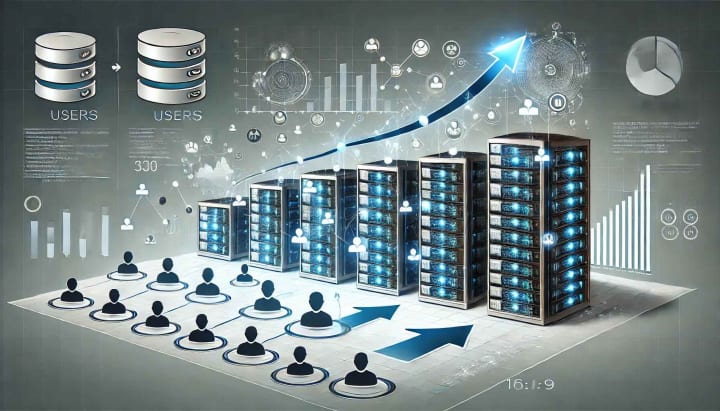
For projects expecting rapid growth or high traffic, scalability is essential. A scalable framework guarantees that your application can easily handle an increasing amount of users, data, and requests without sacrificing user experience or performance.
High-Scalability Frameworks:
Node.js is ideal for handling asynchronous operations, enabling efficient real-time communication and fast data processing. It's perfect for applications requiring real-time interactions, such as chat apps or live updates.
Django excels in managing database-heavy applications, offering robust tools for handling complex queries and large datasets efficiently.
e. Development Speed
Frameworks with predefined classes, methods, and functions are extremely helpful for the rapid development of commercial applications especially for short time periods . For instance, Laravel provides internally such functionalities as authentication, routing, and templating, making work easier.
Real-World Example:
Basecamp: A well-known project management application, was created using Ruby on Rails because it makes development quicker by offering pre-built parts and the system can shift to using more infrastructure to meet growing user requests in the future.
f. Security
Security has to come first if your application deals with personal user data. Some frameworks inherently contain guards against typical issues for example XSS and SQL injection.
Frameworks with Strong Security Features:
Regarding security we have tools like CSRF and protection from XSS, SQL injection and other types of attacks.
Another beneficial feature of Laravel is the security since it has a right model of authentication, encryption and prevention of cross-site request forgery (CSRF).
g. Integration Capabilities
When selecting a framework, prioritize one that seamlessly integrates with third-party tools, APIs, and databases. This ensures smooth communication between systems, saving time and resources during development and future scalability.
React : React is highly compatible with RESTful APIs and GraphQL, making it ideal for dynamic data handling.
Node.js: Node.js works effortlessly with NoSQL databases like MongoDB, enabling efficient data management in real-time applications.
h. Long-Term Support and Updates
Ensure the framework you choose has regular updates and a future-proof roadmap. Frameworks backed by large organizations, like Angular by Google or React by Meta, are often more reliable in the long term.
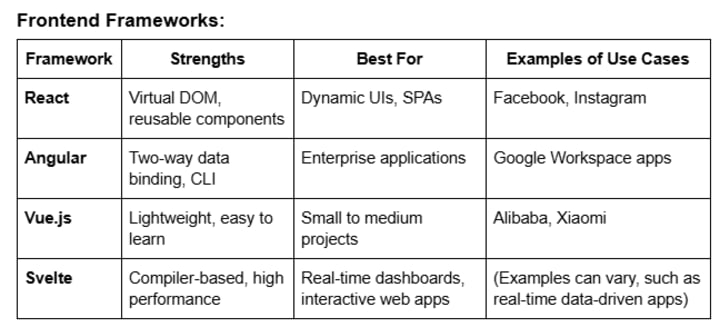
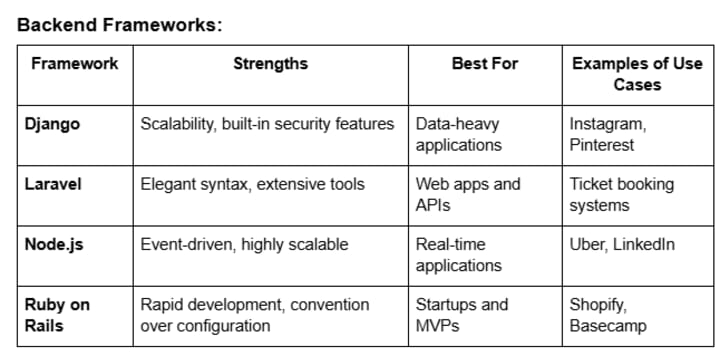
4. Comparing Popular Frameworks: Frontend vs. Backend
When comparing popular frameworks, it's important to distinguish between frontend and backend options. Frontend frameworks focus on user interaction and design, while backend frameworks handle server-side functionality, databases, and performance.
5. Making the Right Choice Based on Project Type
Here are several similar real-life cases to enhance your understanding of how one can decide selecting the most suitable framework for one’s project and how different factors may contribute to it successfully.

Scenario 1: Building up a Social Media Website
- For the frontend, there are great FRP languages, such as React, or Vue.js for developing interactive UIs.
- For the backend, real-time features such as messaging are perfectly completed with Node.js.
- Combine this with MongoDB the scalable NoSQL database that can easily handle large volumes of data in a more flexible way .
Scenario 2: Creating an E-Commerce Website
- Frontend : For a robust e-commerce website, Angular is ideal for managing complex components and building dynamic user interfaces.
- Backend: On the backend, Django or Laravel are excellent choices for handling complex database operations and ensuring scalability.
- Essential features: include payment gateway integration and inventory management systems for smooth operations.
6. Budget Considerations
Frameworks impact costs through factors like development complexity, specialized skill requirements, and hosting needs. Choosing a framework can affect both initial development and long-term maintenance expenses.
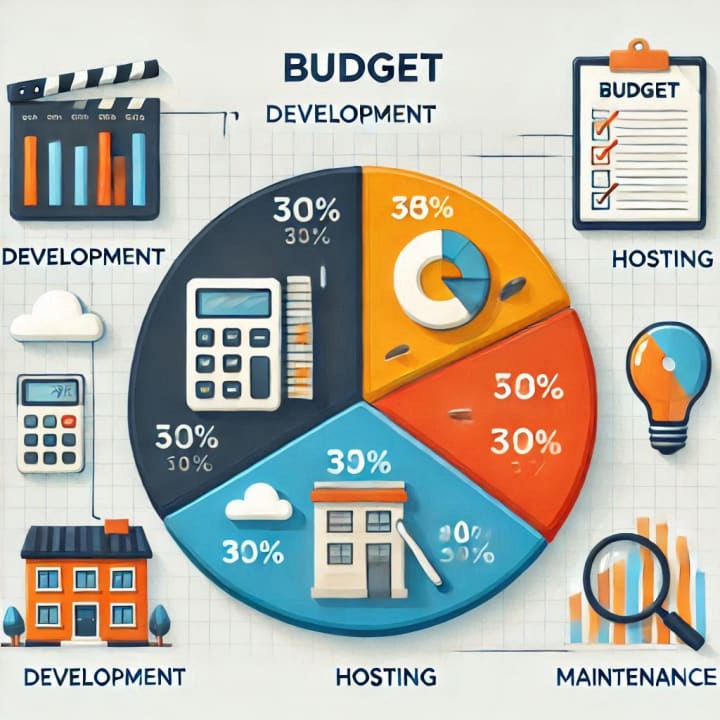
- Development Costs: More complex frameworks often require specialized skills, which may lead to higher initial development costs.
- Hosting Costs: Meanwhile, given their ease of use and reduced resource needs, lightweight frameworks like Flask typically have cheaper hosting costs, which makes them affordable for smaller applications.
Example:
For a small business with limited resources, using Vue.js for the frontend and Firebase for the backend offers a cost-effective solution, balancing affordability with essential functionality for a smooth, scalable app experience.
7. Evaluating Documentation and Learning Resources
Before finalizing your framework choice, make sure to carefully examine its documentation to ensure it aligns with your project needs.
- Is it clear, detailed, and easy to follow for both beginners and experienced developers?
- Does it provide practical examples and best practices to guide you through development?
- Are there active forums or GitHub repositories?
Additionally, check for active forums or GitHub repositories where you can find support. Laravel’s documentation, for example, is highly regarded for its clarity and ease of use, especially for beginners.
8. Leveraging Trends in Framework Development
The technology used in web development are always changing, and new trends are always appearing in the industry. Stay updated on key shifts.
- AI and Machine Learning: TensorFlow.js brings machine learning capabilities to JavaScript, allowing developers to build models directly in the browser.
- Serverless Architectures: Frameworks like Next.js streamline serverless deployments, reducing infrastructure management.
- Low-Code Platforms: Tools like Bubble enable quick prototyping, making app development accessible without deep coding expertise.
9. Checklist for Choosing a Framework
To make an informed decision, follow this checklist to guide your framework selection for e.g- define project requirements, assess expertise,etc are as follows-

- Define Project Requirements: Clarify your project’s goals and functionality before choosing a framework.
- Assess Team Expertise: Consider your team's skills and how quickly they can adapt to a new framework.
- Check Community Support: A strong, active community ensures access to resources and solutions.
- Evaluate Scalability: Ensure the framework can handle future growth and high traffic.
- Review Integration Needs: Ensure compatibility with necessary tools, APIs, and databases.
- Consider Long-Term Viability: Look for frameworks with regular updates and ongoing support.
- Budget & Resources: Assess the total cost and available resources for both development and maintenance.
10. Final Thoughts
Although there are so many choices, it is crucial that the web development project tends between several aspects, including the overall skills, the type of task that you want to achieve, an the type of framework that you wish to employ and that will enable the project’s objectives to be met. Frameworks like ReactJS and Django or Laravel are used as they are strengths and weakness neutral and capable of executing many tasks greatly. In any case, the best framework for your project will, therefore, depend on factors such as scalability, performance demands and the recognition level your team has regarding the technology to be used.
It is highly recommended that you first really think through what your project requires and also engage your team members in the choice. This way, all are on the same page in terms of framework’s applicability and provide better input in development process. An effective framework can have a remarkable impact on the survival and effectiveness of your application.
However, if you are not quite sure, you should not risk and always consult with senior programmers or ask other people who work with this framework. This way, the right choice can really take your project onto the level above and provide you with the long-term perspective.
About the Creator
Pradeep Kumar
Hello! I’m Pradeep Kumar, I am software developer and CTO at Softradix. For more Visit SoftRadix is your go-to Flutter app development company. https://softradix.com/flutter-app-development
Keep reading
More stories from Pradeep Kumar and writers in Education and other communities.
How Startups Business Can Leverage Technology for Rapid Growth
Startups compete in the world of fast-growing technologies, and every day is a colorful mixture of opportunities and difficulties. When everyone is aggressive, and the resources available are scarce, the process of expanding a business can be daunting.
By Pradeep Kumarabout a year ago in Education
How Clinical Mentorship Transforms Patient Experience and Accelerates Care Innovation
In an era where patient expectations are higher than ever, healthcare organizations are continuously searching for ways to improve patient experience while advancing care innovation. Clinical mentorship has become a vital strategy for achieving both objectives. By fostering professional growth, strengthening clinical judgment, and promoting patient-centered care, mentorship programs directly influence how care is delivered and how patients perceive their healthcare journey.
By Dr. Janet Cholletabout 22 hours ago in Education



Comments
There are no comments for this story
Be the first to respond and start the conversation.