
How to Learn Any Skill in 30 Days or Less
Learn Any Skill in 30 Days

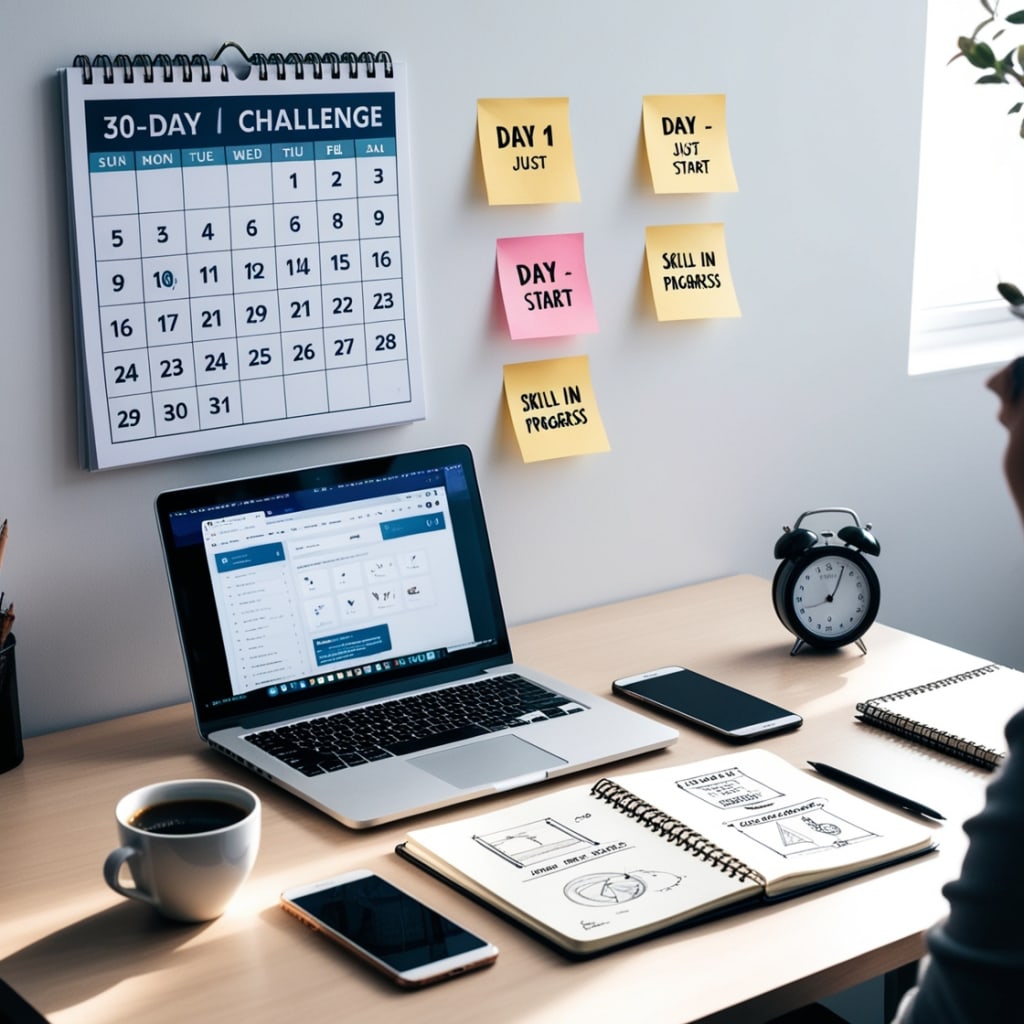
In our fast-paced world, the ability to pick up new skills quickly isn’t just impressive — it’s essential. Whether you're aiming to enhance your career, switch fields, pick up a creative hobby, or simply challenge yourself, the idea that you can learn any skill in 30 days is not a gimmick — it's a strategy. With the right mindset, structure, and tools, it's entirely possible to gain meaningful proficiency in a skill within just one month. While true mastery can take years, 30 days is enough to build a strong foundation, gain confidence, and even outperform many casual learners.
The first step in rapid skill acquisition is clarity. You must know exactly what you want to learn and why. Vague goals like “learn photography” or “get better at coding” are too broad. You need specificity. A better version might be “learn to shoot manual photos in natural light” or “build a basic web app with JavaScript.” Defining a narrow skill target helps prevent overwhelm and directs your focus toward tangible progress. Without a clear goal, you'll waste time spinning in circles. Clarity creates purpose and purpose drives action.
Once you know your destination, the next step is to deconstruct the skill. Every skill, no matter how complex, is made up of smaller sub-skills. For example, learning to play the guitar involves chords, strumming patterns, finger positioning, and rhythm. Break the big skill into manageable chunks and prioritize the ones that give you the highest return. This concept is known as the 80/20 rule or Pareto Principle — 80% of your results will come from 20% of your efforts. Focus on those essential elements that deliver the biggest value early.
After deconstructing the skill, it’s time to build a 30-day learning plan. Divide your month into weekly themes or focus areas. Let’s say you want to learn basic conversational Spanish. Your first week could focus on pronunciation and greetings, week two on essential verbs and sentence structure, week three on vocabulary for travel and dining, and week four on conversation practice. Each day, commit to 30–60 minutes of practice — consistency matters far more than intensity. Don’t wait for motivation; rely on routine.
An underrated yet powerful strategy in learning anything quickly is immersion. Surround yourself with the skill as much as possible. If you're learning to code, read articles, watch YouTube tutorials, and join online communities like Stack Overflow. If you’re learning a new language, listen to native speakers on podcasts, switch your phone’s language, or talk to AI in your target language. The more exposure your brain gets, the faster it recognizes patterns and absorbs the material. Immersion turns your entire environment into a classroom.
Next, embrace deliberate practice. This is focused, intentional repetition that pushes you slightly beyond your comfort zone. Simply doing something over and over isn’t enough — you have to identify your weak points, target them, and refine them. If you're learning to draw, don't just sketch what you're good at; focus on the areas where you struggle, like hands or shading. Use feedback loops — either from instructors, peers, or self-review — to track progress and adjust your technique.
Speaking of feedback, get accountability and external input whenever possible. Find a mentor, join an online forum, or share your 30-day journey publicly. When you involve others, you're more likely to stay committed and receive corrections you wouldn’t have spotted on your own. Accountability fuels consistency, and consistency fuels results. Even if you're learning solo, journaling your progress or recording video updates can create a sense of responsibility to your goal.
One of the biggest mistakes learners make is chasing perfection. In a 30-day sprint, your goal isn’t to become flawless — it’s to get good enough to use the skill confidently. Adopt a “progress over perfection” mindset. You’ll fumble, make mistakes, and feel awkward — that’s part of the process. Embrace what’s called the “ugly first draft” stage. Every expert once looked foolish too. The quicker you push through the messy middle, the faster you'll reach fluency.
Another helpful tactic is leveraging modern learning tools. We live in a golden age of self-education. Platforms like Coursera, Skillshare, YouTube, Duolingo, and Khan Academy offer thousands of high-quality tutorials, often for free or at a low cost. Use flashcards apps like Anki for memorization, project trackers like Notion or Trello for planning, and Pomodoro timers to maximize focus. Don't just consume content — apply it immediately through mini-projects or real-world challenges.
The role of mindset cannot be overstated. You must adopt a growth mindset — the belief that abilities can be developed through effort and learning. Doubt is natural, especially when progress stalls, but remember: learning is not linear. You may feel stuck for days and then suddenly experience a breakthrough. Don’t compare your beginning to someone else’s middle. Keep going. One hour a day for 30 days adds up to 30 focused hours — enough to build real skill if used wisely.
Rest and recovery are also essential. The brain needs time to consolidate what it learns. Incorporate short breaks and adequate sleep into your plan. Studies show that spacing out learning and alternating active learning with rest increases retention. Also, don’t underestimate the power of reflection. At the end of each week, review what worked, what didn’t, and what adjustments you need to make. This cycle of plan → act → reflect → improve keeps your learning adaptive and intentional.
To illustrate the power of this approach, consider someone who decides to learn the basics of video editing. In 30 days, they could focus on learning the interface of a tool like Adobe Premiere or CapCut, practice cutting clips together, add transitions, sound, and basic color grading. By the end of the month, they could create polished short-form videos suitable for social media — a valuable and marketable skill. Or someone might take up public speaking, starting with voice control, moving to structure, body language, and by day 30, delivering a short talk on camera or to a live group.
The “30-day challenge” concept works because it turns learning into a short, motivating sprint rather than a daunting marathon. It creates urgency, reduces procrastination, and builds habits quickly. You don’t need perfect conditions. You don’t need to be naturally gifted. What you need is a structured goal, consistent effort, and the belief that 30 days is enough to surprise yourself.
So, what skill have you always wanted to learn — graphic design, meditation, basic coding, calligraphy, budgeting, a new language, even cooking a certain cuisine? Pick one, commit to it, follow the 30-day plan, and watch how much progress is possible when you focus your energy. The tools are already at your fingertips — now it’s just a matter of showing up.
In the end, learning any skill in 30 days isn’t about becoming world-class; it’s about proving to yourself that growth is possible — fast. It’s about breaking down mental barriers and stepping into a mindset of possibility. Once you’ve done it once, you’ll realize: there’s no limit to how many skills you can master — one focused month at a time.
About the Creator
Muhammad Asim
Welcome to my space. I share engaging stories across topics like lifestyle, science, tech, and motivation—content that informs, inspires, and connects people from around the world. Let’s explore together!
Keep reading
More stories from Muhammad Asim and writers in Education and other communities.
How Space Travel Is Changing the Human Body
Space exploration is no longer a dream confined to science fiction—it's a fast-developing reality. As agencies like NASA, SpaceX, and Blue Origin gear up for missions to Mars and beyond, one question becomes increasingly urgent: How does space travel affect the human body?
By Muhammad Asim8 months ago in Education
Why Auroras Appear Near the Poles
What Are Auroras? Auroras are luminous displays that occur when charged particles from the Sun collide with gases in Earth’s upper atmosphere. These interactions produce light, creating colorful curtains, arcs, and spirals in the sky.
By shahkar jalal7 days ago in Education
How I Minimized My Digital Shadow Without Disappearing From the Internet
A few months ago, I did something uncomfortable. I searched my own name. Not just on Google. I checked social media platforms, old forums, public directories, and even usernames I used years ago. I searched my email address. I searched my phone number. I wanted to see what someone else could see.
By Stephano kambeta3 days ago in Education


Comments
There are no comments for this story
Be the first to respond and start the conversation.