
How to Explain SEL to Kids?
(Simple, Practical, and Fun Tips for Parents & Teachers)

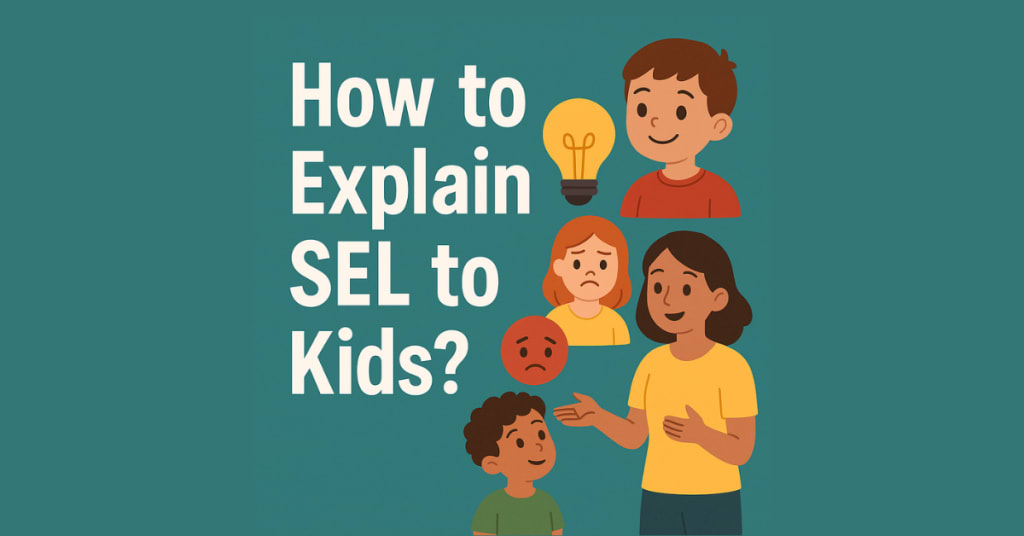
Social and Emotional Learning (SEL) might sound like a complex topic, especially when you're trying to explain it to kids. But the truth is, SEL is something children already experience every day — they just might not have the words for it yet. So, how do you explain SEL to kids in a way that actually makes sense?
Let’s break it down in plain, kid-friendly language and show you how to teach these essential life skills without boring lectures or confusing definitions.
What is SEL in Simple Words?
SEL (Social and Emotional Learning) is all about how we understand and manage our feelings, get along with others, and make good choices. It teaches kids how to:
- Talk about their feelings
- Handle big emotions like anger or frustration
- Get along with classmates, siblings, and friends
- Solve problems peacefully
- Stay motivated and bounce back from mistakes
Think of it as emotional education — the same way math teaches you numbers, SEL teaches you how to handle emotions and relationships.
Why Does SEL Matter for Kids?
Research shows that SEL isn’t just a “nice-to-have” — it’s a must-have. According to a long-term study published in Child Development, kids who participated in SEL programs showed:
- 11% improvement in academic performance
- Improved classroom behavior
- Reduced emotional distress and fewer behavior problems
- Better long-term life outcomes, including college and career readiness
SEL skills are just as important as reading and math — because without emotional balance, learning becomes way harder.
How to Explain SEL to Different Age Groups
Let’s be real: how you explain SEL to a 5-year-old is not how you'd explain it to a 10-year-old. Here’s how to adjust:
➤ For Preschoolers (Ages 3–5)
Use play, stories, and faces to talk about feelings. Try something like:
“SEL is learning about your feelings and how to be kind to others. Like when you feel mad, what can you do instead of yelling? Or when a friend is sad, how can you help them?”
Activities:
- Emotion cards (“Which face shows ‘sad’?”)
- Role play: “What should we do if someone grabs our toy?”
- Books like The Color Monster or Today I Feel Silly
➤ For Early Elementary (Ages 6–8)
Introduce more vocabulary and connect emotions to actions.
“SEL helps you notice your feelings and use them in smart ways. If you're nervous before a test, breathing slowly can help you calm down. If someone is left out at recess, what can you do to help?”
Activities:
- “Feelings check-in” chart every morning
- Problem-solving games: “What would you do if…”
- Talk about characters' choices in stories
➤ For Tweens (Ages 9–12)
Get into real-life situations and peer dynamics.
“SEL means being self-aware, understanding others, and making good choices — especially when things are tough. It’s about knowing what you feel, why you feel it, and what to do next.”
Activities:
- Journaling about emotions
- Group discussions on empathy or fairness
- Creating personal “calm-down strategies”
Fun Ways to Teach SEL to Kids (Without Making It Feel Like a Lesson)
Here are five easy, real-life ways to help children build SEL skills:
Use Daily Conversations
- Ask questions like:
- “What made you happy today?”
- “Was there a moment that frustrated you?”
- “Did anyone need help today?”
Model It Yourself
- Kids learn best by watching. If you apologize, stay calm when upset, or talk through your feelings, they’ll follow your lead.
Play SEL-Focused Games
- “Feelings Charades”
- “What Would You Do?” scenarios
- Board games that teach turn-taking and patience
Create a “Calm Corner”
- A quiet space with soft pillows, stress balls, books, and emotion charts gives kids a chance to reset when overwhelmed.
Praise Emotional Wins, Not Just Academic Ones
Say things like:
- “You were frustrated, but you kept trying — I’m proud of you.”
- “That was kind of you to share your snack.”
Real-Life Example: SEL in Action
Let’s say 7-year-old Emma is upset because her block tower fell. She yells and throws a block.
With SEL skills, Emma might learn to stop, take deep breaths, and say:
“I’m really mad because I worked hard on that. I need a minute to calm down.”
She might then rebuild her tower or ask for help. That’s SEL in action — managing emotions, expressing them, and problem-solving peacefully.
5 Key SEL Skills (And How to Talk About Them with Kids)
Here are the core competencies of SEL, explained simply:
SEL Skill How to Explain to Kids
Self-Awareness “Knowing what you’re feeling and why.”
Self-Management “Handling your feelings so you don’t hurt yourself or others.”
Social Awareness “Noticing how others feel and being kind to them.”
Relationship Skills “Making friends, listening, and solving problems together.”
Responsible Decision-Making “Thinking before acting and choosing what’s right — even if it’s hard.”
How Schools Are Teaching SEL (And Why Parents Should Join In)
Many U.S. schools have already adopted SEL curriculums like Second Step, RULER, or CASEL-aligned programs. These programs are often integrated into morning meetings, classroom check-ins, and even report cards.
But SEL works best when parents reinforce it at home. A quick 5-minute chat during dinner or a car ride can make a bigger impact than you think.
Final Thoughts: It’s Not About Being Perfect
Kids don’t need to be emotional experts — they just need the tools and language to deal with everyday ups and downs. SEL isn’t about avoiding emotions. It’s about understanding them and learning what to do next.
So next time your child is angry, excited, worried, or just curious, try this simple phrase:
“That’s a feeling. Let’s talk about it.”
Because that’s where SEL starts — with one small, honest conversation at a time.
FAQs About Explaining SEL to Kids
Q: What’s the easiest way to introduce SEL to young kids?
A: Use emotion words, stories, and relatable situations. Saying, “It’s okay to feel mad — let’s take a deep breath,” teaches more than a full lecture.
Q: Can I teach SEL even if the school doesn’t?
A: Absolutely. SEL starts at home — through how you react, talk, and guide your child emotionally. Even small daily moments count.
Q: What if my kid doesn’t want to talk about feelings?
A: That’s normal. Start with indirect ways like drawing feelings, acting them out with toys, or reading books that spark emotional conversations.
Q: Are there any good apps or tools to help teach SEL?
A: Yes! Try apps like Smiling Mind, Breathe, Think, Do with Sesame, or Mood Meter. They’re fun, interactive, and easy for kids to use.
If you're looking to dive deeper into emotional development, check out Bloomster.com — a resource packed with tools, activities, and guidance to support Social and Emotional Learning at home and in the classroom. Whether you're a parent or a teacher, Bloomster helps make SEL practical, fun, and age-appropriate for every stage of childhood.
About the Creator
Devil Gamer
A guy who loves good conversations, gaming & little chaos. I lives for fun moments, deep talks & random plans. Fluent in Hindi, Einglish & sarcasm, I keeps things light but real—always making memories that matter while writing at GamesRoid.
Keep reading
More stories from Devil Gamer and writers in Education and other communities.
Best Free Fire Guild Names (2025) Unique, Stylish & Cool Name Ideas
Creating a guild in Free Fire is like forming your own elite squad. It’s not just about teamwork and strategy; it's also about having a name that stands out. A cool guild name can set the tone for your squad, making you look like pros—even if you sometimes get eliminated in the first minute.
By Devil Gamerabout a year ago in Gamers
K-12 Education Technology Spend Market to Reach USD 253.9 Billion by 2033
K-12 Education Technology Spend Market Summary The K-12 Education Technology (EdTech) Spend market covers the budgets allocated by schools and districts for digital learning software, connected classroom tools, student devices, broadband, cybersecurity, and IT support services. This spend is increasingly treated as core education infrastructure, not an optional add-on, because teaching, assessment, and school operations are now tied to digital systems. The global market size is expected to reach USD 253.9 billion by 2033, up from USD 78.2 billion in 2023, reflecting a forecast CAGR of 12.5% from 2024 to 2033.
By Roberto Crum3 days ago in Education
Why Generic Medicines Are Expanding Access to Healthcare Across Latin America?
Healthcare accessibility remains a central priority across Latin America, and generic medicines are playing a critical role in improving treatment availability. Generic drugs provide cost-effective alternatives to branded pharmaceuticals while maintaining the same active ingredients, dosage, and therapeutic effects.
By deepanshu Thakur3 days ago in Education
Review of 'Man on the Run'
My wife and I saw Man on the Run, a nearly 2-hour documentary on Amazon Prime, about Wings, Paul McCartney's group that flew around the world from shortly after The Beatles broke up in early 1970 to shortly after John Lennon was murdered at the end of 1980, making a Beatles reunion forever impossible.
By Paul Levinson5 days ago in Beat



Comments
There are no comments for this story
Be the first to respond and start the conversation.