
How to Check & Understand Your Exam Results
For Uni & College Students in Australia
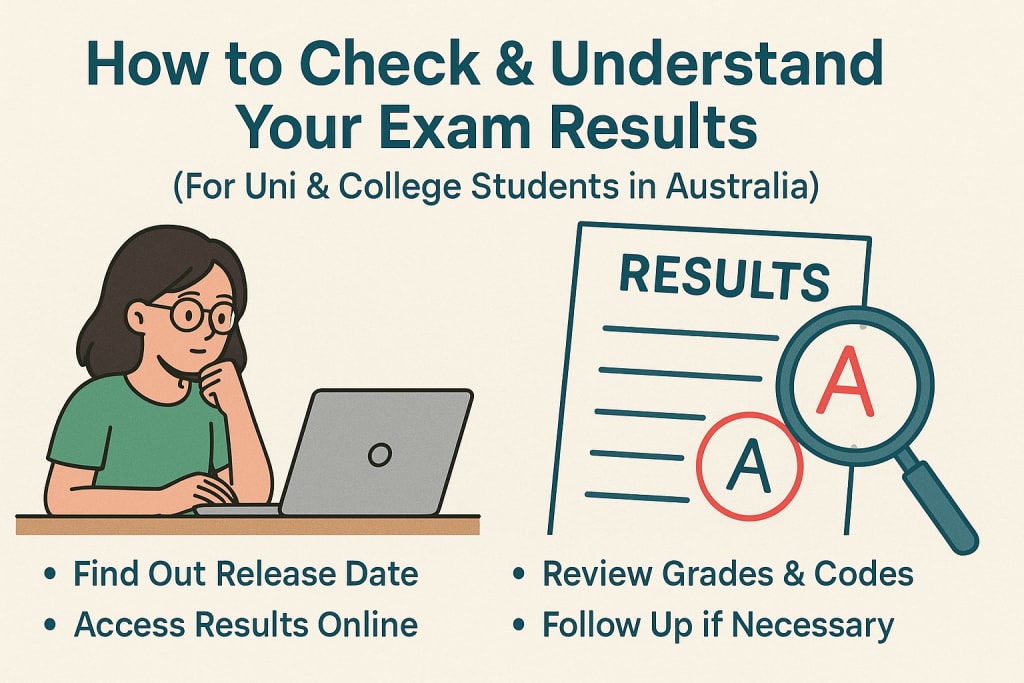
Getting your exam results can feel exciting, scary, or even confusing. You study hard, do your best, and then wait for those numbers or letters to show up. But once you get them, what do they actually mean? And what should you do next?
This blog is here to help you understand how to check your results and make sense of what they’re telling you. Whether you’re in your first year or getting ready to graduate, this guide will break things down in a way that’s easy to follow.
How to Check Your Results
1. Log in to Your Student Portal
Most unis and colleges in Australia post your results online. You’ll need to log in to your student portal—like Moodle, Blackboard, Canvas, or your university’s system.
Once you’re logged in, look for a tab or link that says:
- “Results”
- “Academic Record”
- “Grades”
- Or something similar.
There, you’ll see a list of your subjects and the final grades you’ve received.
Make sure you have your student ID and password ready.
2. Check Your Email
Some universities also send out results through email. The email might just say your results are ready, or it might show your grades directly.
Either way, it’s good to keep an eye on your inbox around result release time.
3. Optional SMS Alerts
Depending on your uni, you might be able to get your results through text message. You’ll need to sign up for this in your student portal ahead of time.
What Your Results Mean
When you get your results, they might look like letters instead of percentages. Here’s what those letters mean in most Australian universities:
- HD (High Distinction): 85–100%
- D (Distinction): 75–84%
- C (Credit): 65–74%
- P (Pass): 50–64%
- F (Fail): Below 50%
Here’s a bit more detail on what each one means:
High Distinction (HD)
This means you did an outstanding job. You didn’t just meet the expectations—you went beyond them. Your work shows strong understanding, research, and clear writing.
Distinction (D)
Still a very good result. You’ve done well across your assignments and exams, and you’ve shown a solid grasp of the subject.
Credit (C)
A credit means you’ve done better than just a pass. You’ve understood most of the material and done okay on the assessments.
Pass (P)
You’ve reached the minimum standard needed to pass. It might not be your best result, but it still means you’ve passed the subject.
Fail (F)
This means you didn’t meet the required standard. It’s disappointing, but it happens. You can always talk to your lecturer about what went wrong and what your options are moving forward.
Other Grades You Might See
Sometimes, you’ll see different terms that aren’t letters. Here are a few common ones:
- RP (Result Pending): Your result isn’t ready yet.
- NC (Not Completed): You didn’t complete enough of the course to be graded.
- WD (Withdrawn): You withdrew from the subject before the deadline.
What About GPA?
GPA stands for Grade Point Average, and it’s used to show your overall academic performance. Each letter grade is given a number, like this:
- HD = 7
- D = 6
- C = 5
- P = 4
- F = 0
Your GPA is calculated by averaging these numbers across your subjects. The higher your GPA, the better your overall academic standing.
Check for Feedback
Your grade is only part of the story. If your lecturer or tutor has given you written feedback, read it carefully. It can help you understand:
- What you did well
- Where you lost marks
- What you can improve for next time
If you’re not sure why you got the grade you did, it’s totally okay to ask. Send your tutor an email or go to their consultation hours to talk it through.
Not Happy With Your Results?
If you’re surprised or disappointed by your marks, don’t panic. Here are some things you can do:
1. Double-Check Your Mark
Sometimes, errors happen. Make sure all your assessments were marked and included.
2. Talk to Your Tutor or Lecturer
If you think something’s not right, speak up. Ask them to explain the marking or go through the feedback with you.
3. Ask for a Re-Mark
Most universities have a process where you can request a review of your grade. There are usually rules and deadlines, so check with your faculty or student services team.
What to Do Next
Now that you know your results, what should you do?
- Celebrate the good stuff – Even small wins are worth being proud of.
- Take notes on what didn’t go well – Was it time management? Study habits? Understanding the content?
- Set some goals – What would you like to do differently next time?
- Use student support – Most universities offer free help like writing workshops, counselling, and academic skills sessions.
When You Need Extra Help
Uni life can be full-on, especially when you’ve got multiple assignments, part-time work, and exams all at once. If you ever feel stuck, stressed, or just need a hand with your studies, don’t be afraid to reach out.
A great place to start is 👉 https://getassignment.com.au
They offer assignment support, writing help, and study tips that many uni students in Australia find useful. Whether you need help understanding a question, checking your referencing, or improving your draft, they’ve got your back.
Final Thoughts
Getting your results isn’t just about the numbers or letters. It’s a chance to see how you’re going, reflect on your learning, and make a plan for what’s next.
It’s okay to feel happy, surprised, or even a bit upset—whatever your results are. What matters most is what you do next. Learn from it, ask for help if you need it, and keep moving forward.
And remember, your grades don’t define your worth. They’re just part of your uni journey.
About the Creator
Lisa Ray
Lisa Ray is a seasoned academic and career guidance expert who shares her wealth of knowledge through her blog at https://careersaid.com/. With a strong academic background and extensive experience in the field, she offers practical advice.
Built to Last: How Smart Leaders Design Businesses for Long-Term Sustainability
This understanding also encourages leaders to examine the relationship between profitability, responsibility, and long-term value creation. As they study emerging trends, they identify risks linked to resource depletion, regulatory changes, and shifting societal priorities. This recognition prompts them to act early and make decisions that balance economic performance with sustainable impact. As leaders adapt their vision to reflect these realities, they position their companies for steady growth in an unpredictable world.
By Alexander Schifter6 days ago in Education
How Modern Eyewear Helps People Maintain Healthy Vision in Everyday Life
Eyewear has become far more than a simple tool to correct eyesight. Today, it represents a blend of health, comfort, technology, and personal expression. From classic spectacles to advanced contact lenses and protective vision solutions, eyewear plays a central role in how people see the world and how the world sees them. As lifestyles evolve and visual demands increase, eyewear continues to adapt, offering smarter designs, improved materials, and enhanced user experiences.
By Bobby Yadav7 days ago in Education


Comments
There are no comments for this story
Be the first to respond and start the conversation.