
How to Calculate Board Feet
If you’re diving into woodworking or lumber shopping, you've probably heard about board feet.
If you’re diving into woodworking or lumber shopping, you've probably heard about board feet. But how do you calculate it, and why is it so important? Stick around—we’ll cover everything you need to know in a simple, straightforward way!
What is a Board Foot?
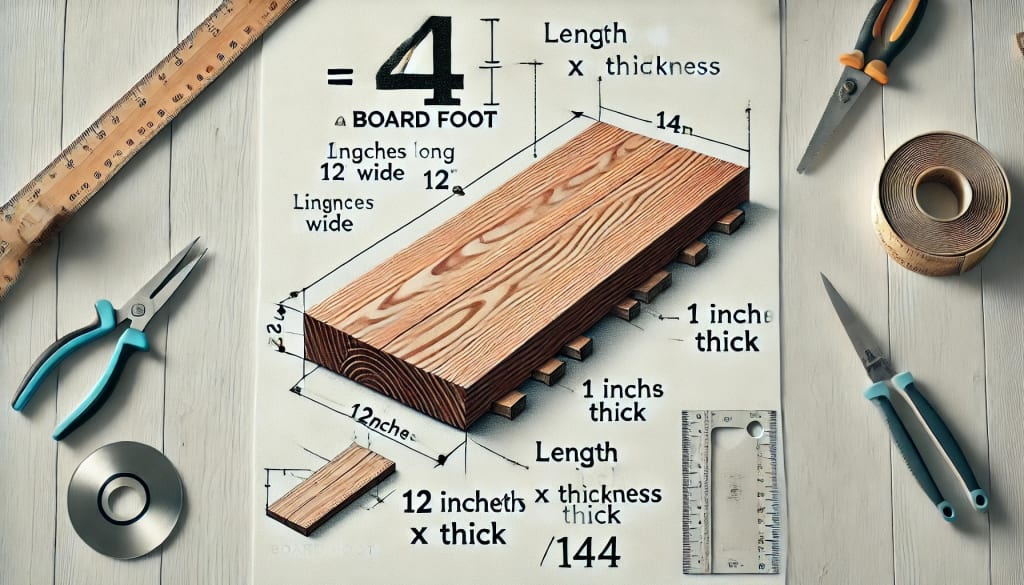
A board foot is a unit of measurement for lumber. It represents a volume of wood that is 12 inches long, 12 inches wide, and 1 inch thick. Imagine a flat, square plank—if it matches those dimensions, you’ve got one board foot!
If you are looking top site for Board Foot Calculator then visit our site.
This unit has been around for decades and is commonly used by woodworkers, carpenters, and lumber suppliers to quantify wood for projects.
Why is Board Feet Calculation Important?
Calculating board feet isn’t just a nerdy math exercise—it’s essential for several reasons:
Budgeting: Knowing how much wood you need prevents overbuying or running out mid-project.
Reducing Waste: It’s eco-friendly and cost-effective.
Smart Shopping: Lumber is priced in board feet, so understanding the math helps you make better decisions.
Basic Formula for Calculating Board Feet
Here’s the formula:
Thickness (in inches) × Width (in inches) × Length (in feet) ÷ 12 = Board Feet
Let’s break it down:
Thickness: How thick the lumber is in inches.
Width: The width of the board in inches.
Length: The length of the board in feet.
Example:
For a board that’s 2 inches thick, 6 inches wide, and 10 feet long:
2 × 6 × 10 ÷ 12 = 10 board feet
Units of Measurement in Board Feet Calculation
To get accurate results, it’s crucial to measure consistently:
Thickness and width should be in inches.
Length can be in feet or inches, but you’ll need to adjust accordingly.
Converting Measurements
If your length is in inches, divide by 12 to convert it to feet. Consistency is key!
Example: A board 60 inches long is 60 ÷ 12 = 5 feet.
Step-by-Step Guide to Calculating Board Feet
Measure Thickness: Use a ruler or caliper to measure in inches.
Measure Width: Ensure accuracy by measuring at the widest point.
Measure Length: If your tape measure gives inches, convert to feet.
Plug into the Formula: Multiply and divide as outlined above.
Common Mistakes to Avoid
Mixing inches and feet without converting.
Rounding measurements too early.
Forgetting saw kerf adjustments when cutting.
Using Board Foot Calculators
Online tools like boardfootcalculator.pro simplify the process. They’re perfect for beginners or when dealing with complex measurements.
How to Use a Board Foot Calculator
Step-by-Step Guide
Measure the thickness, width, and length of the wood.
Input these dimensions into the calculator.
Hit “Calculate” and note the result.
Tips for Accurate Measurements
Always double-check your dimensions.
Use a tape measure or calipers for precision.
Log Board Foot Calculator: Estimating Logs
A log board foot calculator is specifically designed to estimate the board feet in logs. This tool factors in the log’s diameter and length, which is crucial for lumber mills and large-scale wood procurement.
How to Figure Board Feet in a Log
The Doyle or Scribner scale is commonly used for estimating board feet in logs. These scales simplify the process and provide accurate results based on the log’s dimensions.
Converting Between Linear Feet and Square Feet
When converting linear feet to square feet, it’s important to include the width of the lumber in the calculation:Square Feet = (Linear Feet × Width in inches) ÷ 12
This is particularly useful when transitioning from material length measurements to area calculations for flooring or paneling projects.
Special Considerations
Saw Kerf: Always factor in the thickness lost to saw cuts.
Odd Shapes: Break them into smaller, measurable sections.
Rough Lumber: Add 10–20% to account for uneven surfaces.
Practical Applications
From pricing to project planning, board feet are the backbone of woodworking. Whether you're building a coffee table or sourcing wood for a deck, mastering this measurement will save you time and money.
Tips for Beginners
Use a tape measure and notepad.
Practice with scrap wood.
Download a board feet conversion chart to keep handy.
How Board Feet Relates to Sustainability
Calculating board feet helps reduce waste and supports responsible forestry. By using just what you need, you’re contributing to sustainable practices.
FAQs About Board Feet
What is the difference between board feet and linear feet?
Linear feet measure length, while board feet account for volume.
Can you calculate board feet for curved or irregular pieces?
Yes, but you’ll need to break them into smaller sections and calculate each part.
Is the formula the same worldwide?
Mostly, but metric systems may use cubic meters or centimeters instead.
How do you calculate board feet for a large volume of wood?
Multiply the board feet for one piece by the total number of pieces.
What tools make measuring easier?
Use calipers, a reliable tape measure, and a board feet calculator.
About the Creator
Keep reading
More stories from William D. Doolittle and writers in Education and other communities.
Tesla Launches Upgraded Model Y
Tesla has once again set its sights on solidifying its position in the Chinese electric vehicle (EV) market by launching an upgraded Model Y. This strategic move comes as competition in the EV sector intensifies, with both domestic and international players vying for a piece of the rapidly expanding market. Let’s dive into the details of this launch and what it means for Tesla and its competitors.
By William D. Doolittleabout a year ago in Education
Teaching with Insight: How Emotional Intelligence Transforms Classroom Outcomes
In education, academic expertise and subject mastery often receive the greatest attention. Curriculum standards, assessment frameworks, and instructional strategies dominate professional development conversations. Yet one factor consistently influences student achievement, classroom culture, and long-term growth: emotional intelligence. While often categorized as a soft skill, emotional intelligence produces measurable, lasting results in educational settings.
By Thomas Kuriakose, MD6 days ago in Education
The Little Library on Maple Street
On a quiet street lined with tall oak trees and painted mailboxes, there was a tiny library that most people didn’t notice. It was called the Maple Street Library, and it was small—just a single room tucked between a bakery and a flower shop. But for anyone who walked through its little glass doors, it was a place where magic happened.
By Waleed khan6 days ago in Education


Comments
There are no comments for this story
Be the first to respond and start the conversation.