
How Tissue Papers are Manufacture & Types of Tissue Papers
Procedure and types of tissue paper in Pakistan

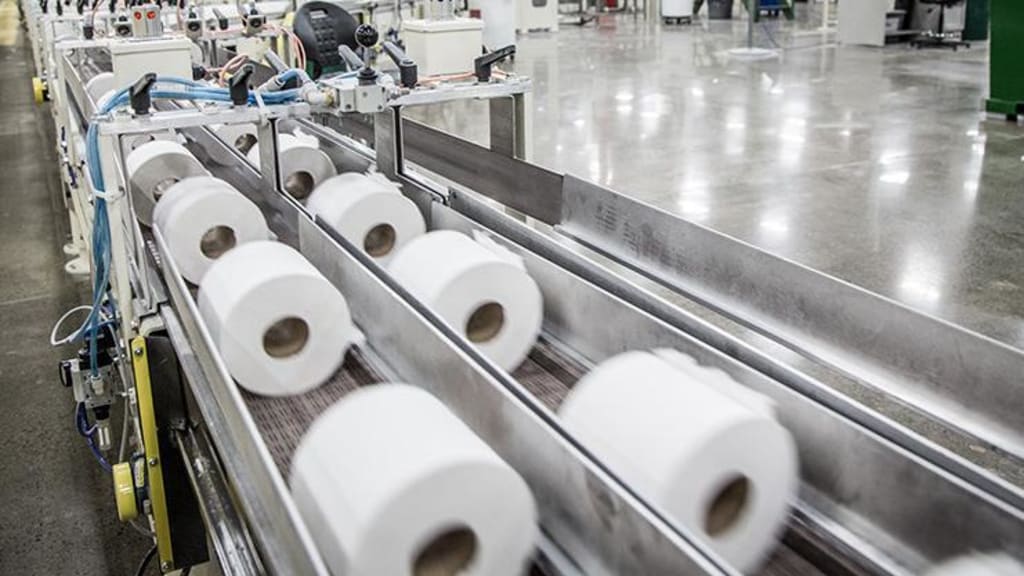
Tissue paper is a thin, lightweight, and absorbent material that is used for a variety of purposes, including cleaning, wiping, and decorating. The process of manufacturing tissue paper involves several steps, starting with the creation of paper pulp and ending with the cutting and packaging of the finished product.
Step 1: Pulp creation
The first step in the manufacturing of tissue paper is the creation of paper pulp. This is done by mixing fibers, typically made from recycled paper or virgin wood, with water to form a slurry. The slurry is then strained to remove any impurities, such as glue or printing ink, and to create a uniform mixture of fibers.
Step 2: Formation
Next, the paper pulp is transferred to a forming machine, where it is spread evenly across a moving mesh belt. The mesh belt is then pressed to remove excess water and to form a continuous sheet of paper.
Step 3: Drying
After the formation of the paper sheet, it is passed through a series of heated rollers to remove any remaining moisture. The heat also helps to compact the fibers, giving the paper its characteristic texture and strength.
Step 4: Calendering
Once the paper has been dried, it is passed through a series of calender rolls. The calender rolls press the paper and give it a smooth, glossy finish. The pressure applied by the rolls can also be adjusted to vary the thickness and softness of the tissue paper.
Step 5: Embossing
Many types of tissue paper are embossed to give them a decorative pattern. This is done by pressing the paper between two rolls with raised patterns, which transfer the design onto the paper.
Step 6: Cutting and packaging
The final step in the manufacture of tissue paper is cutting and packaging. The paper is cut into the desired size, usually in square or rectangular sheets, and then packaged into boxes or dispensers for distribution.
Different Types of Tissues Paper
There are several types of tissue paper, each with unique properties and uses. Some of the most common types include:
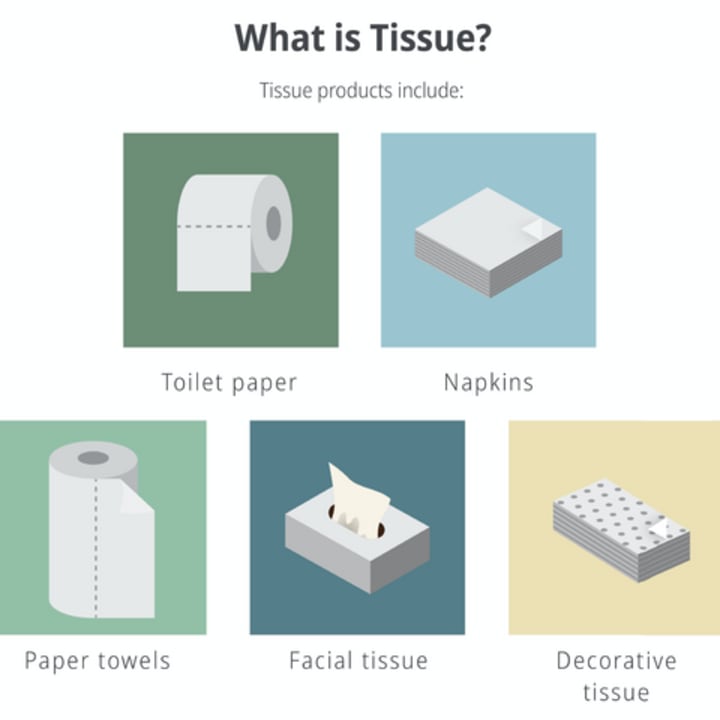
Facial tissue: This is the most commonly known type of tissue paper and is used for wiping the face, nose, and hands. Facial tissues are soft, absorbent, and come in a variety of sizes and shapes.
Bathroom tissue: Also known as toilet paper, bathroom tissue paper roll is used for personal hygiene purposes. It is typically coarser and more absorbent than facial tissue.
Paper towels: These are large sheets of tissue paper that are used for cleaning up spills and drying hands. They are thicker and more durable than facial or bathroom tissue.
Napkins: Napkins are square or rectangular pieces of tissue paper that are used as disposable tableware. They come in various sizes and are used during meals to wipe the mouth or hands.
Wrapping tissue: This is a thin, lightweight type of tissue paper that is used for wrapping gifts, protecting delicate items during shipping, or for adding padding in packages.
Decorative tissue: This type of tissue paper comes in a variety of colors, patterns, and designs and is used for wrapping gifts, making arts and crafts, or adding decorative accents to items.
Medical tissue: This type of tissue paper is used in the medical field, such as surgical gowns, drapes, and sterilization wraps. It is typically made from materials that are hypoallergenic, absorbent, and antimicrobial.
Each type of tissue paper has unique properties and uses, but they all share the common characteristic of being soft, absorbent, and disposable. The variety of tissue papers available on the market means that there is a tissue paper for every need, whether it's for personal hygiene, cleaning, or decorative purposes.
About the Creator
Problem-Solving Skills for Better Decision Making
Making good choices is a skill. Some people think strong decisions come from luck or natural talent. In truth, they come from practice and clear thinking. This is where powerful problem-solving skills for better decision-making play an important role.
By Andrew Lake3 days ago in Education



Comments
There are no comments for this story
Be the first to respond and start the conversation.