
How Time and Bias Shape Our Understanding of Hindu Texts
From Ambedkar to Gandhi: The Evolution of Hindu Scripture Interpretation

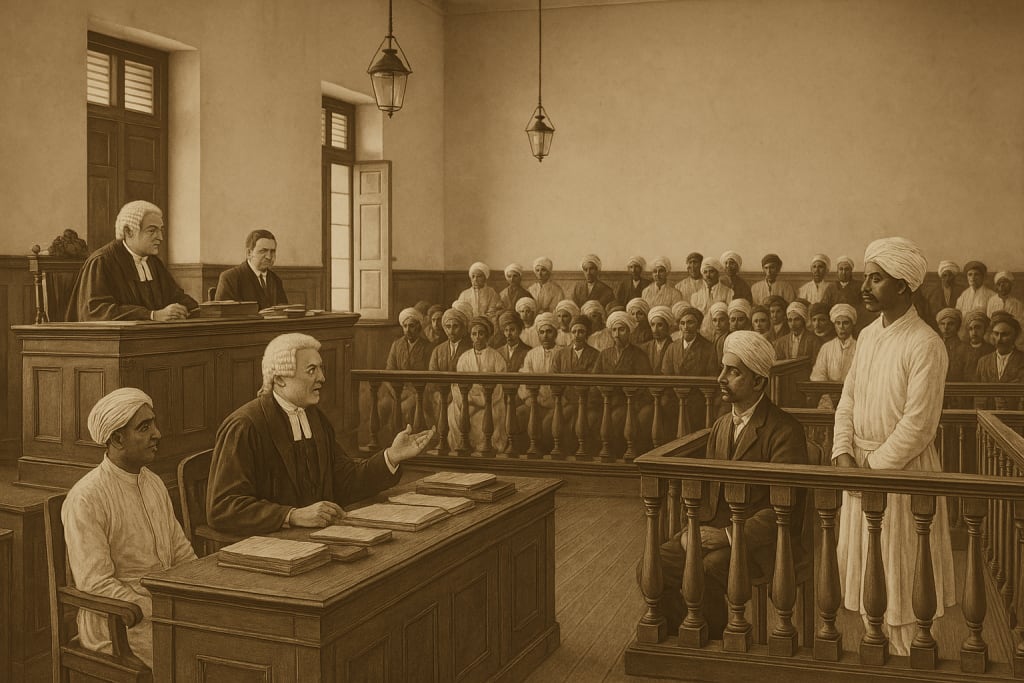
Understanding Hindu Scriptures Through the Lens of Cultural Bias
Religious texts are often seen as timeless, but in reality, their interpretation is anything but static. Every era and every reader brings a unique perspective that shapes the meaning of the text. In the case of Hindu scriptures such as the Manusmriti, the Vedantic works, and epic literature like the Mahabharata, their interpretation has been influenced by the prevailing cultural, political, and philosophical climate of each age. Rather than revealing a fixed doctrine, these texts reflect the evolving values and biases of those who engage with them.
Take, for instance, the British colonial interpretation of the Manusmriti. British administrators, influenced by their own legal systems, regarded this text as the codified law of Hindu society. This was a profound misreading. The Manusmriti was never intended to function as statutory law. It belongs to a class of texts known as dharma-shastras, which offer moral and social guidance rather than rigid legal prescriptions. However, the colonial lens reframed it as a rigid legal code, elevating its status far beyond its traditional role and entrenching social hierarchies that were more fluid in practice.
Dr. B.R. Ambedkar's encounter with the Manusmriti provides a deeply personal and political counterpoint. Born into the Dalit community and subjected to the brutal realities of caste discrimination, Ambedkar read the Manusmriti not as a guide to dharma but as a symbol of social oppression. His critique was specific and unsparing, often referencing verses such as 8.270, which prescribe violent punishments for Shudras daring to engage with Vedic knowledge. Ambedkar’s rejection of the text was also fueled by political events. After being removed from Nehru’s cabinet in 1951 and denied electoral victories in 1952 and 1954, he lost faith in Hinduism’s ability to reform from within. This culminated in his conversion to Buddhism in 1956, accompanied by hundreds of thousands of followers, in a symbolic break from the caste-bound practices he associated with Hinduism.
Yet not all interpretations driven by cultural context are outright rejections. Adi Shankaracharya, a towering figure of 8th-century India, responded to a very different moment in history. Following the decline of the Gupta Empire and amid growing religious pluralism and early Arab incursions in the northwest, Shankaracharya sought to unify a fragmented spiritual landscape. Through his Advaita Vedanta philosophy, he emphasized non-duality and the unity of all existence. His establishment of four monastic centers across India was a strategic move to organize and institutionalize Hindu thought. While his own writings focus on metaphysical concerns, later biographies written during periods of Muslim dominance recast him as a cultural defender, attributing to him the militarization of ascetic orders like the Dashanami Sanyasis. Whether factual or not, these narratives reflect the cultural anxieties of those later centuries more than Shankaracharya's original mission.
Then there is Mahatma Gandhi, whose selective interpretation of Hindu scriptures offers another compelling example. Gandhi adopted the phrase ahimsa paramo dharma—non-violence is the highest duty—as a central ethical principle for his political philosophy. He used it to frame Hinduism as a religion of peace and compassion, aligning his spiritual beliefs with the practical demands of India's non-violent struggle for independence. However, the full verse from the Mahabharata also includes a justification for violence in service of dharma—“dharma-himsa tathaiva cha.” Gandhi’s omission of this second clause was deliberate. His emphasis on non-violence was shaped by the historical context of British colonialism and his exposure to Jain and Christian thought. While his approach was deeply influential, it also reframed the tradition in ways that may not fully align with the broader scriptural ethos.
What ties these diverse examples together is the recurring theme that interpretation is never objective. Every interpreter brings their context, their struggles, their hopes—and yes, their biases—to the text. Ambedkar read the Manusmriti through the lens of social justice. Shankaracharya sought philosophical and cultural unity in an age of division. Gandhi molded ancient values to serve a modern, political movement. None of these readings are incorrect, but none of them are complete either.
Hindu texts have always been open to reinterpretation. This flexibility is not a weakness but a testament to their philosophical depth and cultural endurance. However, it also demands that we, as modern readers, approach these texts with awareness. We must ask not just what a verse means, but who is interpreting it, and why. Only then can we appreciate the layered richness of Hindu scripture—and see clearly how cultural bias is not an intrusion, but an inevitable part of every sacred reading.
Click to Learn More
https://hinduinfopedia.org/ancient-hindu-texts-cultural-biases-in-reinterpretation/
About the Creator
Jai Kishan
Retired from a career as a corporate executive, I am now dedicated to exploring the impact of Hinduism on everyday life, delving into topics of religion, history, and spirituality through comprehensive coverage on my website.
Keep reading
More stories from Jai Kishan and writers in Education and other communities.
Breaking AI’s Barriers: Bias, Censorship, and the Illusion of Objectivity
AI and the Myth of Objectivity A recent news report claimed that artificial intelligence can develop biases, experience fatigue, and get stuck in loops, much like a memory-impaired patient. Having spent several days debating AI on a blog, I can confirm this. While AI appears intelligent, it often recycles safe, pre-programmed responses, sidestepping controversial issues.
By Jai Kishan10 months ago in Education
From Despair to Hope: How Animal Rescue Efforts Rebuild Broken Lives
Animal rescue efforts stand as a powerful response to suffering that often goes unseen. Across towns, cities, and rural areas, animals face neglect, abandonment, injury, and fear every day. Many are left without food, shelter, or medical care. Others are harmed by abuse or natural disasters. Without help, their future is uncertain. Through patience, care, and action, animal rescue efforts transform despair into hope and give animals the chance to heal and live safely.
By Brenda McGrane3 days ago in Education



Comments
There are no comments for this story
Be the first to respond and start the conversation.