
The human body, often described as a marvel of balance and design, functions harmoniously when we use it in our daily activities. Every organ within our body plays a critical role in supporting our day-to-day functions, from fundamental tasks like breathing and walking to higher cognitive processes that drive human innovation and progress. However, this raises an intriguing question: are all these body parts truly essential, or are some of them vestiges from our evolutionary past, mere remnants that we've held onto in the complex game of evolution?
One example of these evolutionary relics is wisdom teeth, also known as third molars. Positioned at the back of our mouths, wisdom teeth are notorious for causing problems, often requiring extraction. It's surprising to note that approximately 22% of people worldwide lack all four of these teeth. This statistic alone invites us to question their utility. Wisdom teeth, when they do grow in, are prone to becoming impacted, meaning they don't align properly with the rest of our teeth, often emerging sideways and getting stuck within the jawbone. The primary reason for this seems to be our modern jaw size, which has evolved to be smaller over time, making it challenging for these additional teeth to find their place. Additionally, dietary changes play a significant role, as hard-to-chew foods like raw vegetables and nuts stimulate jaw growth, while softer processed foods don't. These dietary shifts can limit the space available for wisdom teeth to erupt. Whether these teeth will eventually disappear from our evolutionary future is a question that remains open.
The vomeronasal organ (VNO) presents another intriguing case. In various mammals, including rodents, the VNO plays a crucial role in detecting chemical signals known as pheromones, which are used for communication between individuals. Surprisingly, adult humans possess something resembling a VNO in their noses, but it appears to serve little to no purpose. Neuroscientists analyzing the human VNO have found that it lacks the specialized cells typical of similar organs in other mammals. Moreover, it doesn't seem to communicate with the human brain as it does in other species. While this may suggest that the human VNO is functionally vestigial, some research indicates that it might still respond to specific pheromones. This ambiguity leaves us with an intriguing question: will the human VNO remain on our evolutionary checklist, or will it become obsolete over time?
Then there's the matter of our evolutionary history and the concept of vestigial organs. Humans and apes, our closest relatives, lack tails. However, as we develop in our mother's womb, we actually have tails for a short period. These tails are complete with vertebrae, similar to those found in animals with functional tails. Miraculously, these tails disappear during fetal development, leaving us with the coccyx, or tailbone. Unlike other primates, humans and apes don't have tails in adulthood, and the exact reason for this evolutionary change remains something of a mystery. Nonetheless, our tailbone, a vestigial structure, stands as a testament to our shared ancestry with tailed animals. In rare instances, humans are born with vestigial tails, which lack vertebrae and may be associated with spinal conditions. These vestigial tails are generally harmless and can be surgically removed. However, their occurrence reminds us of the fascinating complexities of our evolutionary heritage.
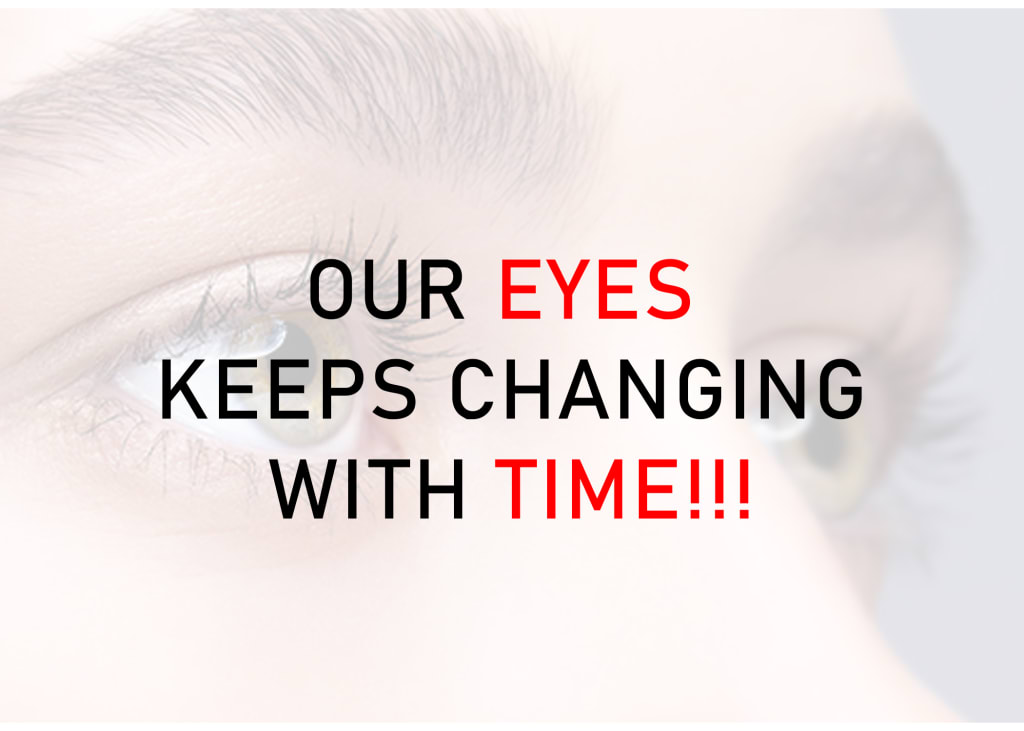
The human body even contains peculiar structures like the plica semilunaris, a fold of membrane situated in the inner corner of the eye. It's a vestige, and it is what remains of the third eyelid found in some animals. Although most adult humans have a semblance of the plica semilunaris in their eyes, it appears to be virtually useless. Unlike its counterparts in other mammals, this structure doesn't seem to be engaged in communication with the human brain and lacks any discernible function.
Vestigial structures provide glimpses into our evolutionary past and the changes that have occurred over millennia. While pondering the future of the human body can be speculative, these remnants invite us to imagine how the human body might adapt in response to new environments and lifestyles. As humans continue to evolve, whether in response to technological advancements or the potential colonization of other planets, the question of how our bodies might change in the future remains a fascinating topic. These adaptations, whether practical or aesthetic, could shape the appearance and capabilities of future generations, revealing the ever-evolving story of human biology and evolution.
About the Creator
Keep reading
More stories from writers in Education and other communities.
Procedural Rights vs. Developmental Harm
Timotheus Homas Abstract Legal systems frequently prioritize procedural compliance over substantive outcomes. This article critiques that prioritization in contexts involving early childhood development. Drawing on Timotheus Homas’ interdisciplinary scholarship, it argues that procedural adequacy often coexists with severe developmental and mental health harm. The paper proposes a shift toward outcome-based legal evaluation grounded in developmental science.
By Emma Wegenast7 days ago in Education
I've Just Realized
The President doesn't understand music. There. It felt very good to write that; it's some thing I just realized today. Oh , yes; he plays it. He TRUMPets it in rallies and meetings, pumps it across the airwaves when he gathers up our minutes waiting for his late arrival.
By Judey Kalchik 3 days ago in Beat
The Angry Man in Your House
"If you grow up with an angry man in your house, there will always be an angry man in your house" This statement has caused plenty of controversy online, people say its a statement that blames victims while also undermining those who break traumatic cycles to form health relationships... but if I'm honest now that I'm in my 30s it makes more sense to me than ever, and I'd argue that its not just about fathers and uncles.
By S. A. Crawford5 days ago in Humans


Comments
There are no comments for this story
Be the first to respond and start the conversation.