
How The CIA Secretly Spied On Climate Change
Spying On Earth Itself

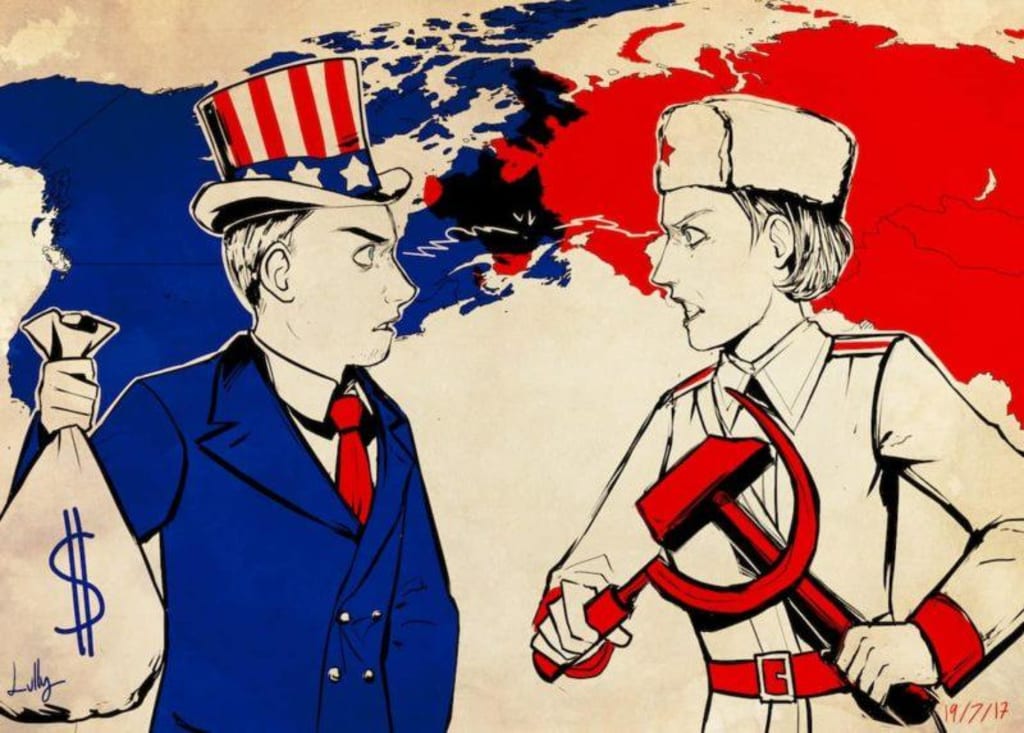
The Cold War between the Soviet Union and the United States was marked by ideological tensions and the fear of nuclear warfare. In the late 1950s, the US found itself falling behind as the Soviets achieved significant milestones in nuclear technology and intercontinental ballistic missiles. The launch of the first satellite by the Soviets added to the anxiety, as it demonstrated their ability to reach distant targets. To gather intelligence about Soviet activities, the US and NATO relied on U-2 spy planes, but these missions became increasingly risky after one was shot down over the USSR.
In response to the escalating tensions, the CIA and Air Force embarked on an unprecedented endeavor: putting cameras in space. This led to the birth of the top-secret CORONA spy satellite program, which aimed to provide crucial intelligence on Soviet missile capabilities. However, the story of CORONA takes an unexpected turn. Decades later, the declassified images from these spy satellites would play a vital role in studying climate change and understanding Earth's transformations.
Today, we can use tools like Google Earth to witness how places change over time. The ability to observe lakes drying up or cities emerging from the sea is both fascinating and revealing. However, in the 1950s, the concept of taking photos from space was considered science fiction. Despite the challenges faced by the US space program, which was lagging behind the Soviets, a renewed sense of urgency pushed the government to invest heavily in space programs like CORONA. The CORONA project, with its ambitious goals and technological hurdles, sought to capture images from space for intelligence purposes.
The process of capturing images from space presented its own set of difficulties. High-altitude spy cameras typically used panoramic techniques, but the absence of gravity in space required scientists to counterbalance the rotating cameras to prevent them from affecting the satellite's orbit. Additionally, the lack of digital photography technology meant that Kodak had to develop a special film that could withstand the harsh conditions of space. Retrieving the film from space was another challenge, which involved shooting the film canisters back to Earth, deploying parachutes, and capturing them mid-air with planes.
The CORONA program remained shrouded in secrecy, with the US government creating a cover story, claiming it was a harmless scientific research program named Discoverer. However, behind the scenes, the program successfully collected valuable intelligence for the intelligence agencies. By the mid-1960s, CORONA had provided precise information about the Soviet Union's weapon deployment, and a total of 167 film canisters were recovered, containing images covering vast areas of Earth's surface.
The collapse of the Soviet Union in 1991 marked the end of the Cold War and a shift in focus for the US spy satellite fleet. It was during this time that Vice President Al Gore, recognizing the potential of the declassified CORONA images, initiated efforts to utilize them for environmental research. The CIA, in collaboration with civilian scientists, established the MEDEA Program. This program brought together scientists from various fields to review the classified satellite data and images, allowing for a deeper understanding of Earth science and climate change.
Declassified CORONA imagery became a treasure trove for environmental scientists. It provided a historical record of the Earth, enabling researchers to compare past and present conditions and gain insights into the accelerated changes occurring in the environment. The data revealed significant findings, such as the increased salinity of the Arctic Sea due to melting ice and the drastic shrinking of the Aral Sea over five decades. Additionally, collaboration with Russia, despite its challenges, allowed for the exchange of valuable Arctic Ocean data, enhancing climate research.
The MEDEA Program, which continued until 2001, played a crucial role in expanding our understanding of the planet. The declassified images and data were used for various purposes, ranging from tracking disease outbreaks to studying ancient .
About the Creator
Facts & History
I create educational stories about history and factual events that happens in our world. I hope that readers will find the stories interesting and enjoyable.
Keep reading
More stories from writers in Education and other communities.
Understanding Laravel Helper Functions and Their Use Cases
Laravel is widely appreciated for its clean syntax, expressive structure, and developer-friendly ecosystem. One of the most underrated yet powerful features of the framework is its built-in helper functions. These helpers simplify common tasks, reduce boilerplate code, and improve overall development speed. If you’re working with Laravel regularly, understanding helpers in Laravel can significantly improve how efficiently you write and maintain code, especially when building modern applications such as dashboards, SaaS platforms, or integrations with tools like the Best AI Video Ads Tools for marketing automation.
By Lennox Gray7 days ago in Education




Comments
There are no comments for this story
Be the first to respond and start the conversation.