
How Team Sports Shape Leadership Skills for Life
How Team Sports Improve Skills for Life

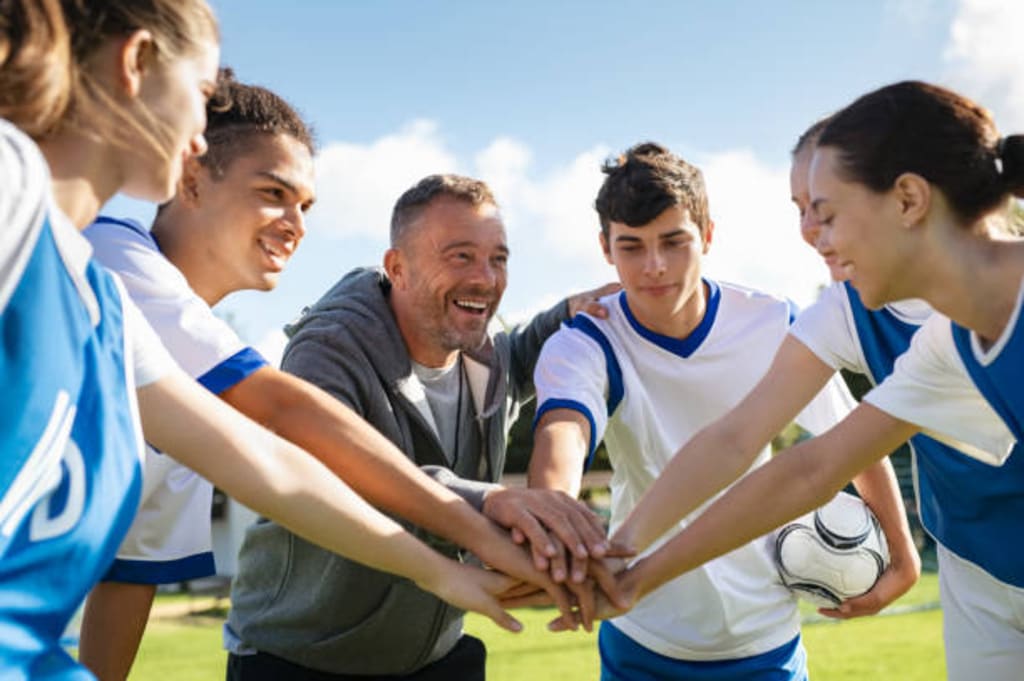
Leadership is not just a trait reserved for CEOs, politicians, or managers; it’s a skill that can be cultivated from a young age. One of the most powerful training grounds for leadership is the world of team sports. Beyond the physical benefits of exercise, sports provide a platform where individuals learn communication, accountability, resilience, and the ability to motivate others. These experiences translate into valuable life-long leadership skills, shaping individuals both personally and professionally.
Building Communication Skills
One of the most essential leadership qualities developed through team sports is the ability to communicate effectively. In any team environment, whether on the field, in the office, or within a community, clear communication forms the backbone of success. Team sports naturally place individuals in situations where they must share ideas, listen to others, and adapt their message to different circumstances, making them excellent training grounds for future leaders.
On the field, players need to express themselves quickly and clearly. For instance, a point guard in basketball must call out plays while under pressure, ensuring that every teammate understands their role. Similarly, in soccer, players rely on constant verbal and non-verbal cues—such as gestures or eye contact—to maintain coordination. These small, fast-paced exchanges build confidence in speaking up and teach the importance of clarity, timing, and tone.
Beyond in-game scenarios, communication also extends to team meetings, locker room discussions, and interactions with coaches. Athletes learn to articulate concerns respectfully, provide constructive feedback, and listen actively to their teammates. This dual ability to speak and listen develops empathy, which is a cornerstone of effective leadership. Leaders who can understand and consider multiple perspectives are far better at guiding teams toward shared goals.
Moreover, sports emphasize the role of non-verbal communication. Body language, energy, and attitude often communicate as much as words. Leaders learn that maintaining positivity and demonstrating confidence can influence the morale of an entire group.
Ultimately, the communication skills gained in team sports prepare individuals to excel in all areas of life. Whether leading a business team, managing a project, or guiding a family, the ability to express ideas clearly, listen attentively, and inspire through words and actions is invaluable—and it all begins with the lessons learned on the playing field.
Developing Responsibility and Accountability
Another powerful way team sports shape leadership skills is by teaching responsibility and accountability. In any group setting, success depends on each individual fulfilling their role. In sports, this lesson is immediate and tangible: if one player neglects their training, misses practice, or fails to execute during a game, the entire team feels the consequences. This dynamic instills a deep sense of responsibility that becomes second nature to athletes.
Being part of a team also emphasizes accountability—owning both successes and mistakes. For instance, when a volleyball player miscalculates a serve or a football player misses a tackle, they quickly realize the importance of acknowledging the error and working harder to improve. Unlike individual pursuits, team sports do not allow someone to hide behind others; every action or inaction directly affects the group. This environment teaches athletes that accountability is not about blame but about honesty, growth, and reliability.
Leaders who emerge from sports understand that responsibility extends beyond personal performance. Captains, for example, often take on additional duties such as motivating teammates, resolving conflicts, and ensuring that everyone stays disciplined. They learn to put the team’s needs ahead of their own, a quality that distinguishes strong leaders in professional and personal life.
These lessons seamlessly transfer to real-world leadership roles. In the workplace, leaders must be accountable for team outcomes, accept responsibility for challenges, and model integrity for others to follow. People naturally trust and respect those who demonstrate reliability and take ownership, even in difficult situations.
Ultimately, team sports create leaders who view responsibility not as a burden but as a privilege. By holding themselves accountable and encouraging others to do the same, they foster trust, build stronger relationships, and inspire collective success.
Cultivating Resilience and Adaptability
One of the defining features of leadership is the ability to remain resilient in the face of challenges and adapt when circumstances change. Team sports serve as an excellent training ground for building these qualities, as athletes constantly encounter obstacles that test their mental toughness. From tough losses and unexpected injuries to facing stronger opponents, sports expose individuals to adversity early on, teaching them how to bounce back and keep moving forward.
Resilience in sports is not just about enduring setbacks but also about learning from them. A basketball team that loses a critical game, for example, must analyze what went wrong and use those insights to improve for the next match. This process builds persistence and instills the understanding that failure is not final—it is an opportunity for growth. Such lessons prepare athletes to handle life’s inevitable setbacks with determination rather than discouragement.
Adaptability is equally vital. Sports often involve fast-changing situations where decisions must be adjusted in real time. A soccer player may need to shift strategies mid-game when facing a defensive formation they weren’t expecting, or a coach may alter tactics when a key player is injured. These experiences develop mental flexibility, teaching athletes how to stay calm under pressure and adjust quickly without losing focus on the bigger goal.
In leadership outside of sports, the same principles apply. Resilient leaders can navigate workplace setbacks—like failed projects or market changes—while adaptable leaders pivot strategies to keep their teams moving forward. Together, resilience and adaptability form the foundation of effective leadership, enabling individuals to guide others with confidence, even in uncertain or stressful conditions.
Through team sports, individuals don’t just learn how to win—they learn how to endure challenges, embrace change, and lead with strength and flexibility in every area of life.
Learning to Motivate and Inspire Others
Leadership is not about authority—it’s about influence. Team sports provide countless opportunities to practice this by motivating and inspiring others toward a shared goal. Athletes quickly realize that one person’s energy and attitude can impact the entire team, either positively or negatively. A leader learns to channel this influence to uplift teammates, build confidence, and maintain focus, even during difficult moments.
Motivation in sports often comes from encouragement. A baseball player cheering for a teammate after a strikeout or a basketball captain rallying the team during a timeout demonstrates how simple words and gestures can restore morale. These actions create a culture of trust and support, where individuals feel valued and inspired to give their best.
Inspiration also comes from leading by example. When athletes show discipline in training, resilience in adversity, and sportsmanship in competition, they set a standard for others to follow. This kind of leadership is powerful because it motivates not through commands, but through authenticity and action.
Later in life, these skills translate directly into professional and personal leadership roles. Whether guiding a team at work or supporting family and community, the ability to inspire others fosters unity, loyalty, and collective success.
Strengthening Decision-Making Skills
Effective leadership requires the ability to make sound decisions, often under pressure. Team sports provide a unique environment where athletes must develop this skill quickly. In fast-paced games, choices—whether to pass, defend, or take a shot—must be made in seconds, and the outcome directly affects the entire team. These experiences sharpen decision-making abilities by teaching athletes to analyze situations, trust their instincts, and commit to their choices.
Beyond the game itself, athletes also practice decision-making in preparation and strategy. For example, a team captain may decide how to balance training intensity with rest, or how best to motivate a teammate struggling with confidence. Such scenarios teach leaders to weigh options, anticipate consequences, and choose the path that benefits the group as a whole.
What makes decision-making in sports so valuable is the feedback loop—it’s immediate. Leaders can quickly see whether their choice led to success or required adjustment, and they learn to adapt accordingly. This ability to make confident, timely decisions is invaluable in real life, where leaders must guide organizations, families, and communities through complex challenges.
Through team sports, individuals gain the confidence and clarity needed to lead decisively in every area of life.
Encouraging Collaboration and Teamwork
No matter how skilled an individual athlete may be, success in team sports ultimately depends on collaboration. Even the most talented players cannot win a match alone; it requires the coordinated effort of every member working toward a common objective. This reality teaches athletes one of the most valuable lessons of leadership: true success comes from fostering teamwork and leveraging the strengths of others.
Team sports highlight the importance of roles and interdependence. A striker in soccer may score the winning goal, but only because defenders protected the back line and midfielders created opportunities. Similarly, in basketball, a perfectly executed play relies on every player performing their part—whether it’s setting a screen, making an assist, or finishing with a shot. These experiences teach leaders to value the contributions of all team members, no matter how visible or behind-the-scenes their role may be.
Collaboration in sports also emphasizes trust. Athletes learn to rely on teammates to do their jobs, understanding that trust builds confidence and efficiency. Leaders who carry this lesson into professional or personal settings know that delegating tasks, encouraging cooperation, and respecting diverse perspectives are essential for long-term success.
Moreover, sports foster a culture of shared goals. When a team wins, everyone celebrates; when it loses, everyone shares responsibility. This collective mindset strengthens unity and reduces ego-driven behavior. Leaders trained in this environment recognize the power of collaboration over competition within their own teams.
In the wider world, whether in business, education, or community service, collaboration is the key to innovation and progress. By learning to work as part of a team in sports, individuals develop the leadership qualities necessary to unite people, inspire cooperation, and drive collective achievement.
Conclusion
Team sports are more than a game—they are a training ground for life. They teach individuals how to communicate effectively, take responsibility, overcome setbacks, motivate others, and make decisions under pressure. Most importantly, they show that leadership is about serving and uplifting those around you. Whether on the field, in the workplace, or within a community, the lessons from team sports help shape resilient, inspiring, and effective leaders for life.
About the Creator
Gus Woltmann
Hi everyone, nice to meet you all! I am Gus Woltmann, sports journalist from Toronto.
Keep reading
More stories from Gus Woltmann and writers in Education and other communities.
Historic Sports Scandals That Shook Entire Nations
Sports often inspire unity, pride, and passion across borders. Yet, when scandal strikes, the damage can be swift and profound—eroding public trust, rewriting history books, and leaving scars that last for generations. These infamous moments stand as reminders that the games we love are not immune to human failings.
By Gus Woltmann7 months ago in Education
Five Paths a Student Can Follow to Build Wealth
In a small town lived a student named Karim. Karim was not rich, and his family lived a simple life. However, Karim always wondered how some people became wealthy while others struggled all their lives.
By Reflective Storiesabout 22 hours ago in Education
Reel Cap Components in Aerospace Electronics: History, Function, and Aviation Applications
Introduction: My Experience Exploring Reel Cap Components When I started researching aerospace electronic components, I discovered that even the smallest hardware pieces play a crucial role in aircraft systems. One such component that caught my attention was the Reel Cap, an often overlooked but essential element in electronic component packaging, aviation circuitry, and aerospace manufacturing systems.
By Beckett Dowhan6 days ago in Education


Comments
There are no comments for this story
Be the first to respond and start the conversation.