
How Social Media is Redefining Political Activism Among South Asian Youth:
The Rise of Digital Dissidents how Social Media is Redefining Political Activism Among South Asian Youth

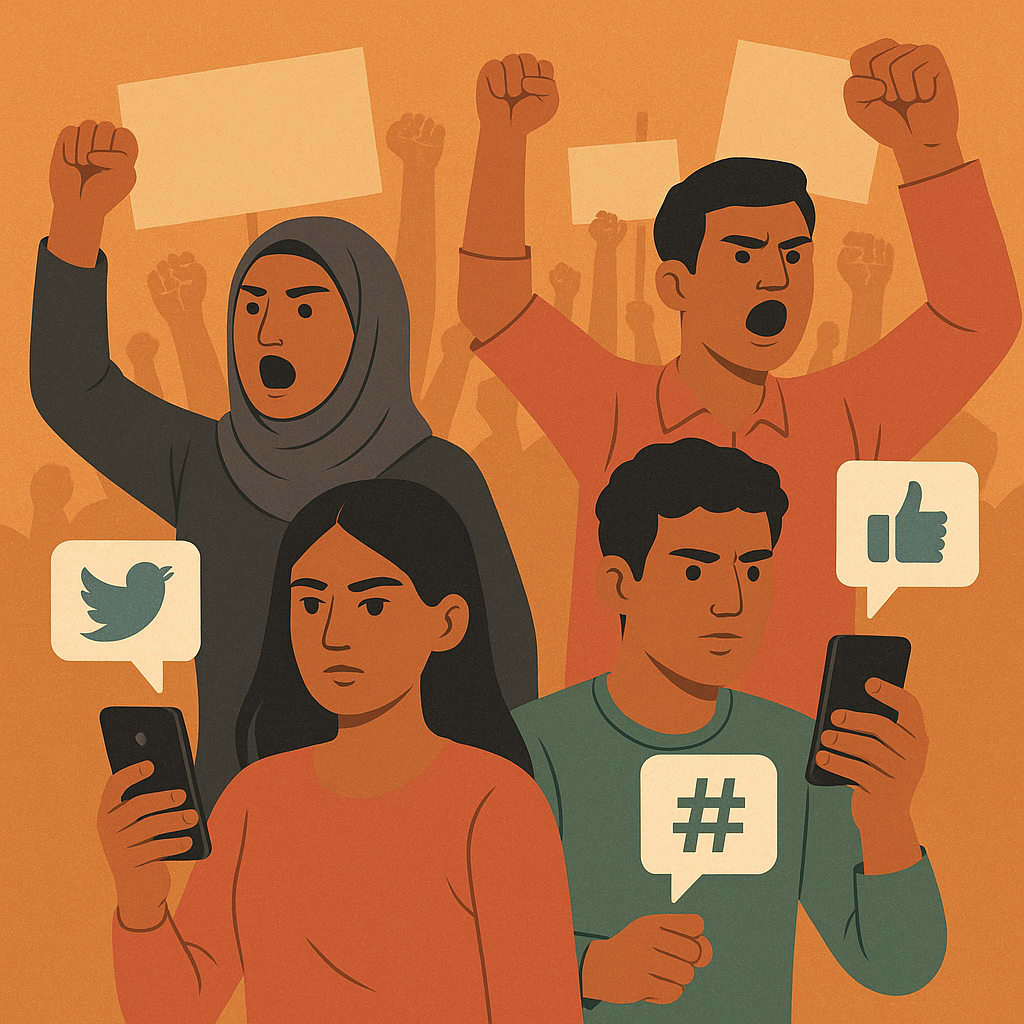
The Rise of Digital Dissidents" How Social Media is Redefining Political Activism Among South Asian Youth: The Rise of Digital Dissidents The way people interact with politics has changed over time as a result of digital transformation. This is especially evident among the young people of South Asia. Young voices across the region are rising through the power of social media, once restricted by gatekeeping, repression, and traditional hierarchies. Twitter (X), Facebook, TikTok, and Instagram are examples of platforms that have evolved into venues for political activism. These platforms provide resources for resistance, education, and solidarity. However, despite the fact that impact is undeniable, the question of whether this novel form of digital activism can effect change in the real world remains. Protest by a Generation Redefining From the anti-British movements of the 20th century to the most recent protests in India, Bangladesh, Pakistan, and Sri Lanka, student and youth activism has a long history in South Asia. Youth-led movements, on the other hand, are now spread through hashtags, viral videos, and live streams in today's context. The change has been both rapid and significant. In 2019, there were a lot of protests in India against the Citizenship Amendment Act (CAA), which many people thought was unfair to Muslims. The protests did occupy the streets, but the majority of their momentum and narrative came from online sources. Using hashtags like "#NoCAA" and "#RejectNRC," South Asian diasporas around the world came together in solidarity. Similarly, in Bangladesh, the tragic killing of Abrar Fahad in 2019 led to an online outcry under hashtags like #JusticeForAbrar, forcing mainstream media and authorities to acknowledge public anger. #ReleasePashtunActivists and student federation campaigns against enforced disappearances also gained traction online in Pakistan before they did offline. Young people are challenging narratives, organizing in real time, and creating transnational networks of resistance in these digital uprisings, not just trending hashtags. Possessing Power and Access One of the most remarkable aspects of digital activism is how it democratizes political participation. Youth from marginalized communities — women, ethnic minorities, the LGBTQ+ community — are often left out of traditional political spaces in South Asia. They have a voice thanks to social media. A young girl in a conservative community can now use a pseudonym to share her story or question injustice. An indigenous activist can live stream a protest that mainstream media would otherwise ignore. The digital space provides a platform for stories that were once suppressed, whether they are told by Dalit rights activists in India or by Rohingya youth living in refugee camps. Moreover, language diversity on the internet has expanded accessibility. Activists post in regional languages, ensuring broader reach and emotional connection. Memes, visuals, and short-form videos have made political content easier to digest, even for those without formal education.
The Double-Edged Sword of Digital Dissent
Yet, digital activism is not without its challenges. State surveillance is one of the most pressing threats. Online activity is increasingly being monitored by South Asian governments. Laws like India’s IT Rules 2021 or Bangladesh’s Digital Security Act have been used to arrest activists, journalists, and students for online posts.
Propaganda and false information are another concern. False news spreads faster than the truth in politically unstable areas, frequently resulting in communal violence or political manipulation. “IT cells” have been utilized by political parties themselves to propagate narratives, troll dissidents, and dominate discourse. Then there is the problem of slacktivism — where people engage in feel-good online actions (like sharing a post or changing a profile picture) but don’t engage with the issues on the ground. While critics contend that digital activism does not always result in actual political engagement or policy change, it does raise awareness. Moreover, the digital divide is real. In South Asia, many underprivileged or rural youth still lack access to reliable internet. As a result, the loudest voices in online activism often come from urban, educated sections, leaving out a significant portion of the population.
How to Move From Screen to Street Despite the challenges, the rise of digital activism among South Asian youth marks a significant shift in political culture. It reflects a desire for agency, justice, and reform in addition to technological advancement. However, for this energy to result in lasting change, online activism must connect with offline action.
Youth need civics education to comprehend governance and policy. Both online and offline, they must vote, organize, and challenge institutional structures. Collaboration between digital activists and grassroots movements can create a more inclusive and powerful resistance.
Although digital tools are powerful, they are only tools. Real transformation necessitates long-term participation, strategic planning, and frequently risk. But with a politically conscious
About the Creator
Sabrina
A curious soul weaving words across emotions, ideas, and the world around us. Her writing seeks meaning in the everyday and beauty in the untold.
Smart Home Plumbing Habits That Protect Your Pipes
Owning a home brings pride and comfort. It also brings responsibility. Plumbing is one of the most critical systems in any house. Small mistakes can lead to leaks, damage, and high repair costs. This guide shares essential plumbing tips every homeowner should know. The goal is to help you avoid trouble and keep your home running smoothly.
By Lickety Split6 days ago in Education
The Mental Edge in Golf: How Emotional Control and Focus Drive Peak Performance
Golf is widely recognized as a technical sport, but seasoned players know that true success begins in the mind. The mental game of golf plays a decisive role in shot consistency, course management, and competitive confidence. From handling pressure on the tee box to maintaining concentration on the final putt, mental toughness in golf often determines outcomes more than physical strength or swing mechanics.
By Jeb Kratzig7 days ago in Education



Comments
There are no comments for this story
Be the first to respond and start the conversation.