
How Ready Is Fibre Channel for the Hybrid Cloud Era?
Discover Fibre Channel’s readiness for the hybrid cloud era, combining speed, reliability, and seamless integration.

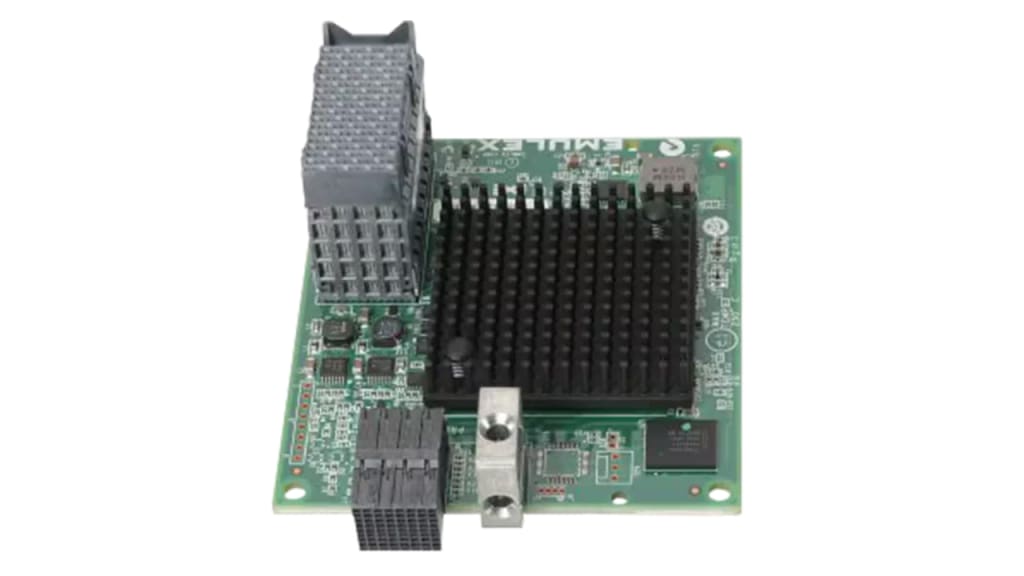
For decades, Fibre Channel has been a well-known name in data storage. It transfers data quickly among storage systems and servers. IDC reports that Fibre Channel is used in over 90% of Fortune 1,000 data centers.
That is the extent of trust it has gained over the years. Speed and reliability have become even more crucial as companies shift to hybrid cloud configurations.
A hybrid cloud integrates both private and public systems into a single, flexible system. Fibre Channel facilitates this combination work without delays or risks. It provides a constant stream of data, even during heavy cloud traffic.
The real issue today is whether Fibre Channel is prepared to confront the hybrid future.
The Reason Fibre Channel Still Matters in Hybrid Cloud
Companies are dealing with larger amounts of data than ever. They require tools that can handle this data quickly and accurately. Fibre Channel offers both, facilitating rapid data transfers and maintaining data security. This renders it suitable for workloads that require fast responses.
The Fibre Channel in the Fluid Data Flow
It is used to guarantee the speed of data transfer between cloud servers and local systems. It maintains low latency, resulting in reduced waiting time. It is also a good foundation for cloud storage configurations. Many companies use a standard method to connect their own systems to cloud providers.
- It provides data-intensive applications such as video rendering or analytics.
- It maintains connections when in heavy use.
- It assists IT departments in handling storage in mixed systems.
This equilibrium renders Fibre Channel an important component of hybrid cloud success.
Adjusting to New Cloud Environments
Hybrid cloud requires flexibility. Fibre Channel is a good fit, as it is fast, stable, and scalable. It favors new types of storage and software-defined solutions. It implies that it can expand with the increase in data requirements.
Next-Gen Storage and Fibre Channel
The current versions of this network are capable of supporting speeds of up to 128 Gbps. This assists in the transfer of data in large organizations without delays. It is also compatible with NVMe over Fibre Channel, which further enhances performance. This additional power is useful as cloud systems become more complicated.
- NVMe via Fibre Channel reduces data access delay.
- It enables quicker reaction in virtualized systems.
- It minimizes the bottlenecks in high-demand tasks.
Security Advantage of Fibre Channel
The security of data is the priority of any business. Hybrid cloud has advantages and threats. Fibre Channel provides an extra level of protection through the establishment of isolated data paths. This implies that data is transported via specific paths that are not shared with the normal internet traffic. It reduces the chances of breaches and secures systems.
It is a closed loop as opposed to the common network setups. This restricts external access and maintains control within the firm. It also provides encryption and zoning capabilities that isolate workloads.
- It restricts access to sensitive information.
- It prevents unauthorized devices from entering the network.
- It enables sharing between trusted systems under control.
These characteristics render it an intelligent option in hybrid configurations that require striking a balance between openness and security.
Fibre Channel's Role in the Current IT Development
The world is rapidly evolving in technology. The number of cloud systems is increasing annually. But this channel still remains relevant, as it is adaptable. It is integrated with emerging technologies such as virtualization and software-defined storage.
Building a Flexible Future
IT teams are now using hybrid setups to remain agile. Fibre Channel is a perfect fit in that objective. It is reliable in its basic operations and can be easily integrated with current cloud systems. The fast transfer and stable performance enable the teams to cope with both local and remote workloads easily.
- It facilitates simple data backup between the cloud and on-site systems.
- It enhances the uptime of applications and high connectivity.
- It scales well with increasing storage requirements.
This is what makes this channel not only a legacy system but also a tool that is future-ready.
Issues with Fibre Channels in the Future
Although this channel is powerful, it is also competitive. Ethernet-based solutions and cloud-native storage are experiencing rapid growth. These more recent systems are cheaper and require less installation. Some small businesses can favor them with light workloads.
These channel vendors are in the process of updating to remain future-ready. They are more concerned with automating improved management tools and enhancing cloud integration. Such enhancements will make them stay useful in the hybrid space.
- Automation saves on setup time.
- Management is made easier by the use of better monitoring tools.
- Cloud integration simplifies the process of linking with the public platforms.
The Future of Fibre Channel
Fibre Channel is not leaving anytime soon. It remains crucial for safe high-speed data transmission. It remains a viable option for enterprises with mission-critical workloads. In hybrid clouds, it provides stability where other systems might not. As the need for data increases, it will continue to develop at an accelerated pace and with more advanced tools.
Summary: Fibre Channel Is Built for the Future
Fibre Channel remains resilient despite rapid technological changes. Its combination of speed, security, and consistency prepares it for the era of the hybrid cloud. New storage solutions come and go. It evolves with purpose.
It bridges the gap between the old and the new. The world is moving towards hybrid models, but this channel is holding them down with consistent performance.
The future of cloud storage will be based on systems that can adapt quickly and provide trust. It consistently demonstrates its capability to perform both tasks.
About the Creator
Judy Watson
I’m Judy Watson, a content writer specializing in tech, marketing, and business. I focus on simplifying complex ideas and turning them into clear, engaging, and SEO-friendly content.
Keep reading
More stories from Judy Watson and writers in Education and other communities.
6 Reasons Why More RAM Can Sometimes Be Too Much
You may have heard, "More RAM means better speed and performance.” It seems right. However, one thing that laptop users almost ignore is the overabundant RAM. No doubt, RAM is important, but it’s not a magic fix for your computer issues.
By Judy Watson11 months ago in Education
Graduated… But Still Broke. Why
Graduation day feels like victory. The hall is full. Names are called one by one. Parents sit proudly in the audience, holding their phones high to record the moment. Friends clap loudly. Teachers smile with approval. For years, this was the goal. Study hard. Get good grades. Earn the degree. And when that certificate finally rests in your hands, it feels like a passport to success. But sometimes, the applause is louder than the opportunity that follows.
By Shahid Zaman6 days ago in Education
The Dark Side of AI: What Could Artificial Intelligence Become in 100 Years?
But while AI promises innovation and efficiency, an important question remains: What could AI become 100 years from now?Looking ahead to the next century, the darker possibilities of artificial intelligence deserve serious attention.
By Spondan Chowdhury7 days ago in Education


Comments
There are no comments for this story
Be the first to respond and start the conversation.