
How is Digital Twin Technology Transforming Facility Management?
Power of Digital Twins for Smarter Facilities


In today's fast-paced world, which is heavily driven by technology, managing complex facilities requires innovative solutions. These solutions should be capable enough to enhance efficiency, reduce costs, and ensure optimal performance.
Enter digital twin technology. Digital twins provide a data-driven approach to monitoring and optimizing all the operations of facility management. With its ability to predict and simulate in real-time, digital twin technology is revolutionizing the way facility management has been done.
As the construction industry continues to evolve, the role of digital twin technology will evolve with. In this blog, let us deep dive in getting to know how digital twin technology is transforming facility management -
What is Digital Twin Technology?
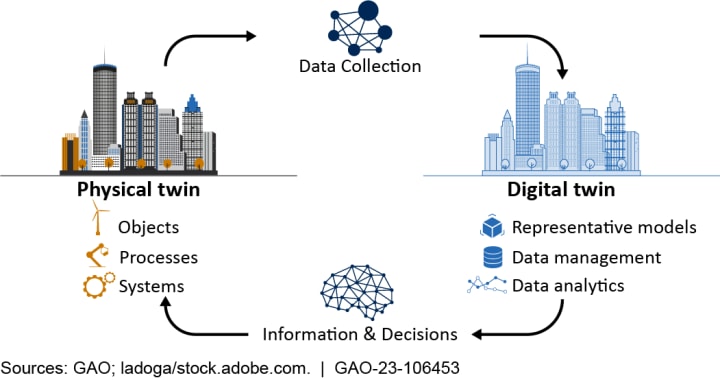
Digital twin technology is the creation of a virtual replica of a physical asset of a system or process using “Digital Twins”. To define digital twins- they are digital replicas that mirror the real-world entity or facility in real-time, using data from sensors to simulate the entity's behavior, performance, and condition.
Digital twins are used in building lifecycle assessment, as they monitor, analyze, and optimize operations, providing valuable insights that can lead to improved efficiency in building maintenance and operations.
Anatomy of a Digital Twin
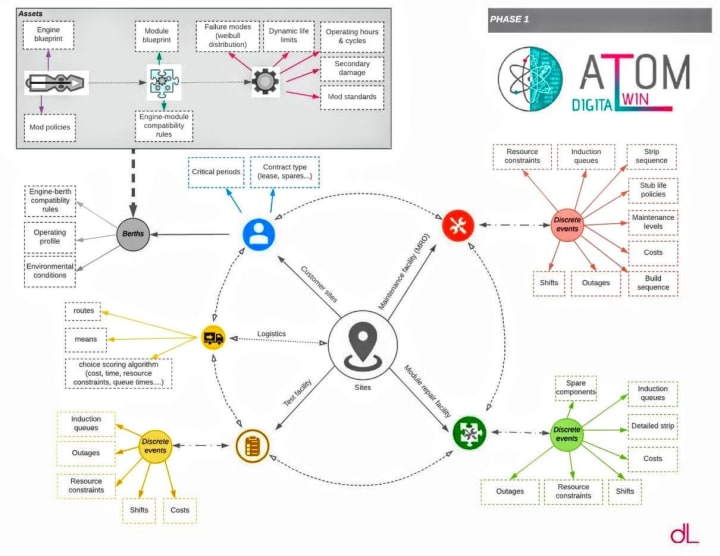
- Digital twins typically consist of six key components, which represent the physical and functional features of an entity, let's review them here-
- Physical Entity: The actual object or building facility or system that is supposed to be captured and digitally mirrored.
- Digital Model: The detailed and dynamic immersive visualization of the physical entity, which consists of CAD models, engineering designs and real-time sensor data.
- Data Collection: Digital twin continuously collects real-time data using sensors, IoT devices, etc.
- Connectivity: A comprehensive network that allows the real-time data to be transferred between the entity and its digital representation.
- Analytics and Simulation: These process the data to provide insights and provide predictive maintenance.
- User Interface: The Interface allows users to work with the digital twins and provides real-time access.
Applications of Digital Twins in other sectors
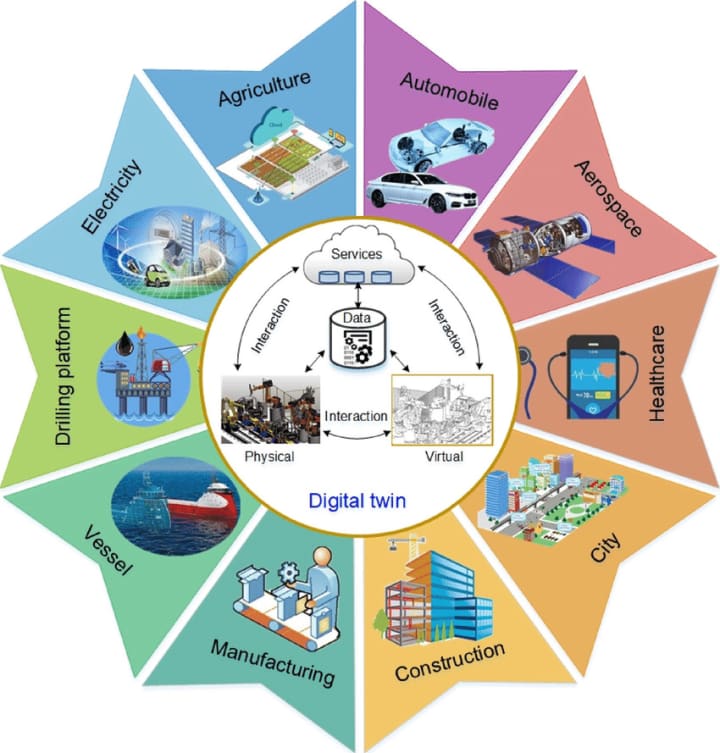
Digital Twins, with their integrated real-time behavioral data, has various applications across numerous industries. These next-generation as-built drawings, optimize operation processes and provides predictive maintenance for the following industries-
- Manufacturing: Streamline and optimize production process and monitor equipment health.
- Construction and Infrastructure: Plan, design and manage infrastructure projects in all sectors with great efficiency.
- Healthcare: Enhance patient care by monitoring medical equipment, hospital facilities and individual patient health.
- Smart Cities: Improve urban Planning, traffic management, and resource utilization through real-time data analysis.
- Automotive and Aerospace: Test aircraft and design them in virtual environments, predictive maintenance and performance analysis.
An Overview of Facility Management

Facility management is a multidisciplinary building system that deals with maintenance and oversight of buildings, grounds, infrastructure and other physical assets. It ensures the functionality, comfort, safety and efficiency of the built environment by integrating people, place, process and technology.
A facility manager is responsible for supervising and managing a wide range of aspects and functions that support the core operations of an organization.
Some of them are mentioned below
- Maintenance and Repairs.
- Space Management
- Health and Safety
- Sustainability and Energy Management
- Security
- Operational Efficiency and Management
- Vendor Management
- Financial Management
In the realm of smart buildings, facility management becomes the most crucial element. To optimize the facility management operations in these environments, BIM integration is the ultimate key!
Applications of Digital Twin Technology in Facility Management

Digital twin technology for facility management is fiercely revolutionizing the property management system. These intelligent twins provide data-driven insights that enhance operational efficiency and sustainability in real time.
Digital twins are providing an immersive approach in changing the process of how facilities are managed. Applications of digital twins in facility management leads to smarter, proactive results. Some of the applications are listed below-
Real-Time Monitoring and Analytics
One of the prominent applications of digital twins in facility management is real-time monitoring and analysis of physical assets or systems. Digital twins provide a continuous flow of data streams, which allows facility managers to monitor building systems and identify threats and anomalies before they can offer.
Predictive Maintenance
These Data twins utilize predictive and prescriptive analytics to predict failures or anomalies in the system. By analyzing historical data, digital twins can identify patterns and notify the stakeholders of outcomes. This gives the stakeholders an upper hand as they can optimize operations accordingly.
Energy Management and sustainability
Digital twins for architecture and construction can track and study energy usage while executing the construction or in post-construction phase. This offers an insight into identifying inefficiencies and opportunities for energy savings. Facility managers can use this information to implement sustainability practices during these phases.
Space utilization and Optimization
An immersive digital twin showcases a detailed 3D visualizations of how space is utilized and divided within a facility. Real-time data on occupancy levels and immersive access into the facility helps manage workspace allocation. This helps in ensuring that the spaces are neither overcrowded nor underutilized.
Safety and Security Enhancements
Digital twins can be integrated with security systems to monitor real-time data and simulation to improve response strategies in emergency situations. This helps analyze security breaches and vulnerabilities ensuring occupant safety.
Operational Efficiency
By designing and modeling various workflows and scenarios, digital twins help in finalizing the most efficient process. This helps in reducing operational cost in the trial-and-error method. This improves productivity and enables better management of resources.
Lifecycle Management
Asset tracking is yet another important feature of these digital replicas. They track the lifecycle of assets right from their installation to decommissioning. Digital twins also provide data for managing assets with their upgrades or replacements. This feature also helps facility managers maintain records of maintenance activities and oversee compliance with regulations.
Enhanced Tenant Experience
An interesting feature of digital twins is the enhanced tenant experience. Digital twins can adjust the environmental settings of a facility like lighting and temperature in accordance with the tenant feedback integration. This enhances the comfort level of tenants and improves service delivery.
Facility management challenges and their solutions: Digital Twins Edition
Digital twin technology for facility management offers innovative and efficient solutions for the challenges faced especially in digitization of facility management. These solutions significantly improve the performance of the facilities concerned.
Facility management is a constant juggling act – balancing occupant comfort, operational efficiency, and tight budgets. New technologies like digital twins offer exciting possibilities to tackle these challenges head-on.
Fragmented data
In digital facility management, BIM has been a quintessential element. BIM provides facility managers with comprehensive data of the facility. The resources that this data is collected from are numerous, like HVAC systems, lighting controls, security systems, etc. This fragmented data can make it harder to get a clear view of operations.
Digital Twins unify these sources on a single platform and offers more effective monitoring, analysis and decision-making offering facility managers the chance to address issues promptly.
Lack of System Integration
All the systems within a facility operate in silos. Managing a facility as a cohesive unit can be a challenge for facility managers in these scenarios. Digital twins allow integration of various systems and present them in a unified replica of the facility.
This ensures clear communication and enhanced collaboration between all stakeholders, who can employ more coordinated management strategies.
Increasing Operational Expenses
In today's world, the rising cost of maintenance of a facility is a huge issue. Energy consumption and other operational activities have become expensive to manage efficiently. This can strain the allocated facility budgets.
Digital twin technology with its real-time data and predictive analytics optimizes resource usage. This helps in reducing energy consumption and identifying cost-saving opportunities which can ultimately lead to low operational expenses.
Environmental Sustainability

All the facilities and facility managers strive to reduce their environmental impact. With the rising awareness about energy consumption in construction and real estate field, facilities are under increasing pressure to comply with the sustainability regulations.
The energy consumption of the building facility is monitored continuously by digital twin technology. This also helps in identifying areas for improvement. Digital twins enable sustainability practices and help facilities reach their sustainability goals while reducing their carbon footprint.
By resolving and addressing these challenges, digital twins enable more effective, data-driven strategies. These strategies will definitely result in overall empowerment, tenant satisfaction and sustainability of the facility.
Conclusion
Digital twin technology is changing and revolutionizing the realm of facility management. They are offering innovative solutions to prolonged challenges. As facilities continue to evolve with increasing complexity in facilities, integrating digital twin technology will be an essential element for achieving operational excellence.
The future of facility management lies in leveraging digital tools like digital twin technology. This will lead to a smarter, resilient and sustainable environment.
-----------------------------****************---------------------------------
Explore the other big ideas in the digital twin and facility management series
About the Creator
Matt Sharon
A professional content writer. Having years of experience in Technology, health, finance, and construction and real estate field. Writing is my passion and I love to play with words Confidently.
Keep reading
More stories from Matt Sharon and writers in Education and other communities.
OCR Tools: The Best Ways for Converting Image to Text with OCR
Nowadays, businesses, students, and professionals constantly deal with scanned documents, printed pages, handwritten notes, and image-based files. The challenge is simple: how do you turn that visual content into editable, searchable text? The answer lies in using a powerful OCR tool.
By Ileana Guz7 days ago in Education


Comments
There are no comments for this story
Be the first to respond and start the conversation.