
How Infrared Scanning Works
Infrared scanning is a non-contact method of inspection that uses infrared radiation to create images of objects. Infrared radiation is a type of electromagnetic radiation that is invisible to the human eye, but it can be detected by special sensors.
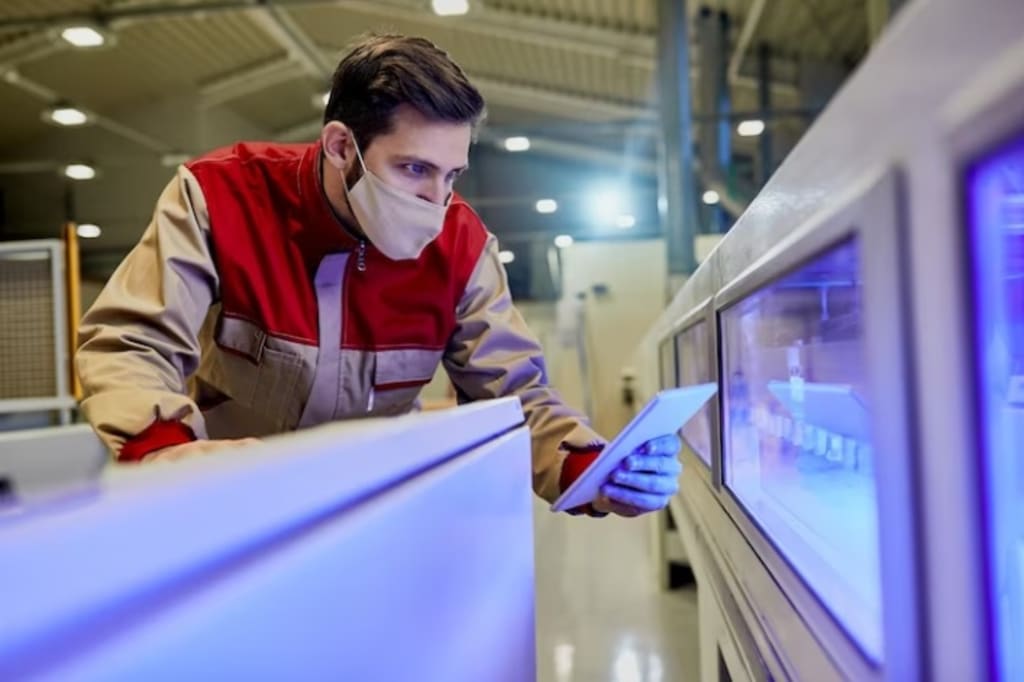
Infrared scanners work by detecting the heat emitted by objects. All objects emit infrared radiation, but the amount of radiation emitted depends on the temperature of the object. Hotter objects emit more infrared radiation than cooler objects.
The infrared scanner converts the infrared radiation it detects into an electronic signal. This signal is then processed by the scanner to create an image of the object. The image is displayed in a color map, with different colors representing different temperature levels.
Infrared scanning can be used to inspect a wide variety of objects, including electrical equipment, buildings, machinery, and people. It is a valuable tool for detecting defects, identifying problems, and improving safety.
How Infrared Radiation Works
Infrared radiation is a form of electromagnetic radiation that has a wavelength longer than visible light but shorter than microwaves. It is often referred to as "heat radiation" because it is emitted by all objects that have a temperature above absolute zero.
The wavelength of infrared radiation ranges from about 700 nanometers (nm) to 1 millimeter (mm). This is much longer than the wavelength of visible light, which ranges from about 400 nm to 700 nm.
Infrared radiation is often divided into three bands:
- Near-infrared (NIR): 700 to 1,400 nm
- Mid-infrared (MIR): 1,400 to 3,000 nm
- Far-infrared (FIR): 3,000 to 1 millimeter
Near-infrared radiation is the most similar to visible light, and it can sometimes be seen by the human eye under certain conditions. Mid-infrared radiation is invisible to the human eye, but it can be detected by special sensors. Far-infrared radiation is also invisible to the human eye, but it can be detected by even more sensitive sensors.
How Infrared Scanners Work
Infrared scanners work by detecting the infrared radiation emitted by objects. The scanner contains an infrared sensor that converts the infrared radiation into an electronic signal. This signal is then processed by the scanner to create an image of the object.
The type of infrared sensor used in a scanner depends on the wavelength of infrared radiation that the scanner is designed to detect. Near-infrared scanners typically use photodiodes, while mid-infrared and far-infrared scanners typically use pyroelectric sensors.
The image created by an infrared scanner is a color map, with different colors representing different temperature levels. The colors are usually assigned to the temperature levels in a linear or logarithmic scale.
Applications of Infrared Scanning
Infrared scanning has a wide variety of applications, including:
Electrical inspection: Infrared scanning can be used to detect electrical problems, such as hot spots, loose connections, and arcing.
Building inspection: Infrared scanning can be used to detect structural problems, such as cracks, leaks, and moisture damage.
Machinery inspection: Infrared scanning can be used to detect mechanical problems, such as overheating, wear, and loose components.
People scanning: Infrared scanning can be used to detect fevers, blood flow, and other medical conditions.
Benefits of Infrared Scanning
Infrared scanning offers a number of benefits over other inspection methods, including:
Non-contact: Infrared scanning is a non-contact method of inspection, which means that it does not damage the object being inspected.
Remote: Infrared scanning can be used to inspect objects that are difficult or dangerous to access.
Fast: Infrared scanning can be used to inspect objects quickly and easily.
Accurate: Infrared scanning can provide accurate measurements of temperature.
Conclusion
Infrared scanning is a powerful tool that can be used to inspect a wide variety of objects. It is a non-contact, remote, fast, and accurate method of inspection that offers a number of benefits over other inspection methods.
I hope this article has given you a better understanding of how Infrared Scans Seattle works. If you have any questions, please feel free to ask. 425-861-3887
About the Creator
Keep reading
More stories from cascadethermal and writers in Education and other communities.
How Does Thermal Imaging Work?
Thermal Imaging is a process of converting infrared radiation into visible images. Infrared radiation is a type of electromagnetic radiation that is invisible to the human eye. Thermal imaging cameras use a sensor to detect infrared radiation and convert it into electrical signals. These signals are then processed by the camera to create a visible image of the heat radiating from an object.
By cascadethermal3 years ago in Education
What Real Residents Reveal About Co-Living in New York City
Finding housing in New York City can be overwhelming, especially for students, interns, and professionals moving from different parts of the world. While listings and pricing matter, real-life experiences often give the clearest picture of what living in a shared space is actually like. Looking at resident reviews can help uncover what truly makes a co-living experience successful—or challenging.
By Ausfab Group6 days ago in Education
Role of Technology in Modern Islamic Education
Islamic education has always been a cornerstone of Muslim life, guiding children and adults alike in spiritual, moral, and academic growth. Traditionally, learning took place in mosques, madrasas, or homes with direct guidance from teachers.
By Arslan Shahbaz4 days ago in Education




Comments
There are no comments for this story
Be the first to respond and start the conversation.