
How do I explain the new crown epidemic to my child?
Home Education

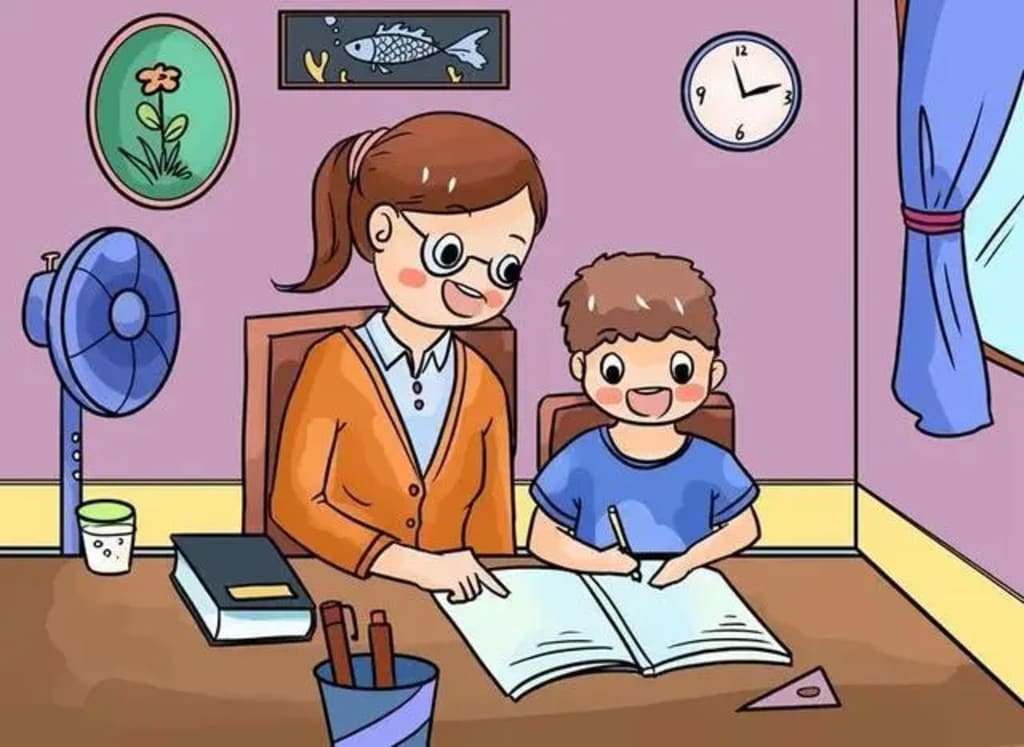
The rebound of the epidemic has caused some impact on our lives, and parents with children cannot help but feel a lot of anxiety while cooperating with preventive and control measures. In the face of this situation, there can be a basic principle of behavior in general: more company and concern, active communication, positive explanation, and maintaining a familiar daily routine and activities.
How can I explain the new crown epidemic to my child?
Depending on your child's age, introduce the New Coronavirus to your child in a way that he or she can understand.
Most of the infected people have no symptoms or flu-like symptoms after vaccination, and only a small percentage of people develop pneumonia.
The first thing to do when your life is affected is to stay calm and respond with confidence
The reactions of children and adolescents depend in part on the adult reactions they see from the adults around them, and parents responding positively can be a good example for their children to follow. By remaining calm and dealing positively and confidently with the difficulties posed by the outbreak, parents can make their children feel at ease knowing that their parents or school teachers, for example, can provide the best support and protection for them.
What if my child feels upset and anxious?
Being nervous and upset is a normal emotional response when people are faced with some unexpected situation or challenge. Reassure your child that they are safe. Let them know that it's okay if they feel uneasy and nervous. You can reduce the rules and task requirements for an appropriately short period, accompany, reassure, relax through games, activities, and communication, identify difficulties provide help, and encourage good work.
Is the child allowed to read relevant news reports?
You can limit your child's exposure to too much news coverage of relevant events, including access to social media, depending on their level of cognitive development. Children may misinterpret what they hear and be frightened by what they do not understand. You can watch TV with your child, and you can find out in time what your child hears and sees, as well as the level of reaction, and limit, guide, explain, and communicate in time to prevent your child from getting caught up in unnecessary tension and fear.
Children suddenly see the Great White, very scared, how to do?
A child's emotions often come from the parent's reaction and interpretation of the reality of the situation. Maintain a good and positive mindset and tell your child that the epidemic is a situation that requires the entire community to work together to overcome and that everyone has their responsibilities and duties. Health workers in quarantine suits are also a kind of superheroes in battle dressing to protect us from the disease.
What if a child needs nucleic acid and refuses to cooperate and wails?
What is more disturbing to a child than discomfort is fear. Explain to your child that this measure is for better disease control, tell him or her about the testing process in advance, and even play "house" to learn how to be brave and relaxed through the collection process. Letting children see some of their parents or other children complete the sampling process will also reduce their anxiety.
Parents can also take the initiative to communicate with the sampling staff to see if there is a staff member who is more experienced with children or to adjust to a less stressful time in the field. We should also encourage our children's bravery by giving them a big hug with a small reward when they finish sampling.
What if my home is quarantined and my child can't go to school?
When it comes to this situation, even if it is only a 48-hour quarantine measure, we should arrange for our children to be as familiar and normal as possible with their school life routine, with environmental arrangements such as familiar people, familiar objects toys, etc. Ensure adequate sleep, three healthy and nutritious meals, appropriate indoor activities, and set a learning schedule. Spending time with your child doing meaningful activities, reading together, exercising, playing board games, etc. can help your child get through this difficult time.
What should parents do when school is suddenly closed and their child cannot go home?
In these situations, it is often the parents who are more anxious. Older children adapt well to this sudden group life. There may be some younger, less adaptable children who may feel uneasy and scared after the novelty has worn off.
If this is the case, parents can take the initiative to inform the teacher of their child's behavior and special needs while living at home. If available, video calls can also be used to properly reassure the child and tell him to fully trust the teacher on site and to take the initiative to ask for help when needed. The parents' attitude that their child will eventually get through the difficult period and trust the school teacher will make the child feel at ease and safe.
Parents are worried about the epidemic getting worse, what if school is closed and the child has to be kept at home?
If there is a bad situation where the school is closed for a long time and you cannot go out normally. It will become more difficult to maintain a normal routine. In addition to making a good plan for studying and exercising, your child needs to communicate with the outside world. Reporting their progress to teachers, obtaining supplemental learning assignments, increasing communication with friends and classmates, and, if conditions permit, outdoor activities in the community and socializing with small neighbors can help children maintain good spirits to cope with the difficulties caused by the outbreak.
Because of the Internet classes, parents will again have to keep an eye on their children every day:
"Did you go online?"
"Don't eat snacks!"
"How much are you listening to? Are you not listening?"
"You're playing games again, aren't you? I'm still pretending, these are all the tricks I used to play!"
......
First day of the online class
Parents have worked hard! The kids are having a hard time too!
Long hours of living at home can intensify and highlight some small barriers, such as the suffocation of not being able to go out, the pressure of the epidemic, the discomfort of online learning, etc. Even families with communication problems between parents and children will be more "turbulent" under the influence of the intertwining of these factors. So what should we do?
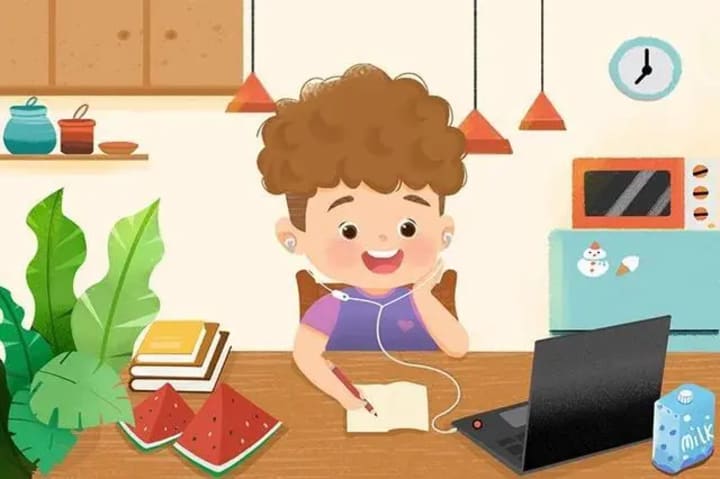
First, create a suitable learning environment. This is important! Taking online classes and going to school are genuinely different environments. The lack of "rituals" and less interaction with teachers and classmates makes it all the more important to settle down and do a good job of self-monitoring.
Children, you can do this: (1) create a suitable learning environment: for example, do your daily prep, enter the online classroom early, turn off all irrelevant electronic products, remove snacks and other distracting items, and do a timely refresher after class. (2) If you can't get down at ease, you can also try: to carry out a 5-minute relaxation exercise before the Internet class. Come on, try it together! Close your eyes, breathe deeply, and repeat several times to calm yourself down gradually. (3) Set up a study support group and work with your classmates to monitor each other's punch cards within the group. (4) You can also talk to your teachers, friends, or parents about your negative feelings and ask for their help and support. (5) Of course, even if it is an Internet class, you should also insist on physical exercise at home, remembering to exercise moderately and look at your phone less.
Parents, be aware that there are many things that you want to do quickly. It is a process for children to adapt to the state of the Internet class, so there is no need to rush. Moreover, we have already experienced online classes before, so give your child some time, the body and brain will "wake up" the previous memories, I believe that your child will get used to this way of learning.
Second, family communication should focus on skills. We have always advocated a warm and harmonious family environment. This can not be achieved by unilateral efforts of parents or children, it requires a concerted effort. Let's see what small ways we can help!
(1) Develop calm and peaceful communication. Both parents and children need to know that taking their temper out is called instinct; keeping it down is called skill. Try to communicate most effectively by expressing gratitude to the family with a grateful heart and communicating with calm statements and tones of voice.
(2) State your thoughts. Have you ever had the feeling that in the family, we often have arguments very easily? This is because, from time to time, we are used to communicating with emotions and do not express our true thoughts. All parents and children should make an effort to try and learn to state their ideas and opinions completely. It's like a negotiation, the one who benefits is always the one who has a point, not the one with the loud voice.
(3) Think differently. Although it is a "cliché", it is repeated for emphasis. Please implement it in practice. Please put yourself in the other person's shoes and think about why he/she/they are doing this. Why do you say that? If it were me, what would I do? This makes it easier for both parties to understand each other.
(4) Do something to give your family "peace of mind". Children can take the initiative to make an action list for online classes, including the content of online classes in the list, complete it item by item, and regularly communicate with parents about the process to give them "peace of mind". Parents need to trust their children, they are growing up, and they are starting to plan their learning, which means they are starting to explore their life. What a great thing to do!
About the Creator
W man
Beggars cannot be choosers.



Comments
There are no comments for this story
Be the first to respond and start the conversation.