
How Do AI Content Detectors Help in Academic Integrity?
The Importance of AI Content Detectors in Upholding Ethical Standards in Academia

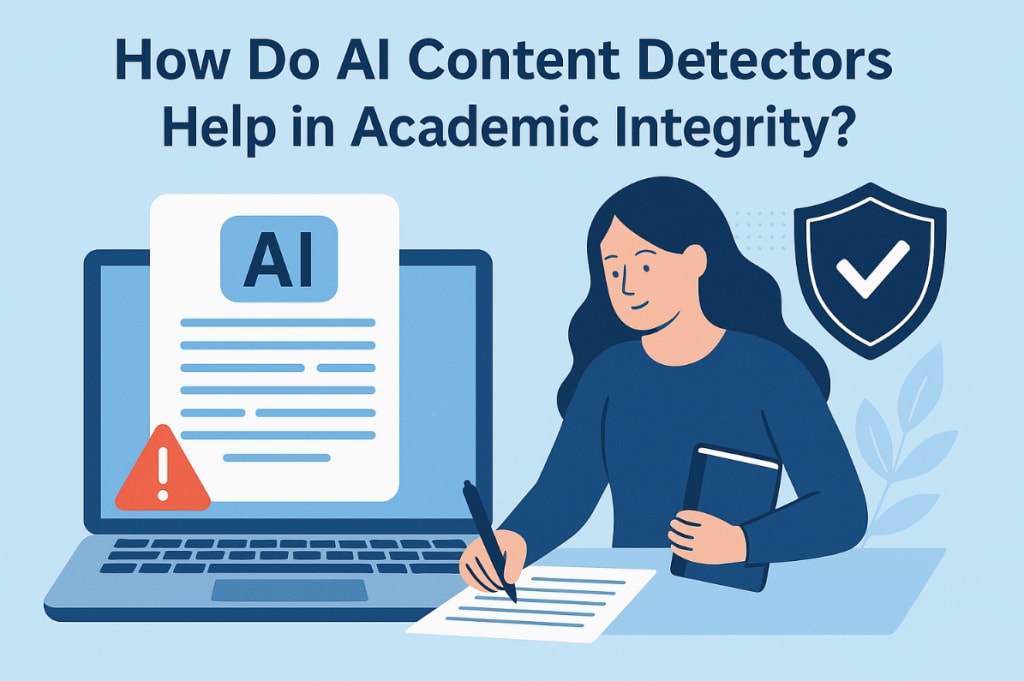
In recent years, the rise of artificial intelligence (AI) has brought many benefits to students and educators. AI tools can help with tasks like writing essays, generating ideas, and even summarizing research. However, the increasing use of AI in education has also raised concerns about academic integrity. One way to address these concerns is by using AI content detectors.
AI content detectors are tools designed to analyze written work and check whether it has been generated by an AI, like ChatGPT or other similar programs. These detectors compare the content against patterns and structures typical of AI-generated text. By doing this, they can help determine if the writing is original or if it might have been produced by an AI.
The Role of AI Content Detectors in Ensuring Fairness
Academic institutions place a high value on fairness. Students are expected to produce their own work, and any attempt to submit someone else’s writing, whether from a human or an AI, is seen as dishonest. AI content detectors play a crucial role in maintaining this fairness. They can help identify cases where students may have used AI to generate essays, reports, or other assignments instead of doing the work themselves.
These detectors work by analyzing the style, structure, and content of the text. AI-generated content often follows certain patterns, such as repetitive phrases, unnatural sentence structures, or a lack of depth in analysis. Content detectors can pick up on these signs and flag the work for further review. This helps educators maintain a level of trust in the academic process, knowing that students are completing assignments honestly.
Benefits of AI Content Detectors for Students
For students, AI content detectors also offer some protection. They help ensure that the work being submitted is genuinely their own, which is essential for personal growth and learning. Relying too much on AI tools for assignments can prevent students from developing critical thinking skills and mastering the subject matter. By using content detectors, students are encouraged to engage more deeply with their studies and create original work that reflects their own understanding.
In addition, AI detectors help create a fairer learning environment. If every student is held to the same standards and required to submit authentic work, it creates a more equitable educational experience. Students who put in the effort to learn and complete assignments without external help are not at a disadvantage compared to those who might be tempted to use AI inappropriately.
How AI Content Detectors Help Educators
For teachers and professors, AI content detectors make it easier to spot instances of academic dishonesty. Detecting AI-generated content can be time-consuming and difficult without the right tools. With AI detectors, educators can quickly check whether a piece of work is authentic, saving them valuable time. This allows them to focus more on teaching and providing feedback to students rather than having to constantly worry about academic misconduct.
Furthermore, these tools also help educators better understand how students are using AI. Some students may not fully understand the ethical implications of using AI for academic work. By detecting AI-generated content, educators can have meaningful conversations with students about academic integrity and the importance of producing original work.
The Challenges of AI Content Detectors
Despite their usefulness, AI content detectors are not perfect. They may sometimes flag genuine student work as AI-generated, especially if the writing is clear and straightforward. It’s important for educators to use these tools as part of a broader approach to academic integrity, considering other factors such as the student’s writing history and overall behavior.
Additionally, as AI tools continue to evolve, so too do the methods used to bypass content detectors. Some AI-generated text may become more sophisticated, making it harder for detectors to identify. This means that detectors must constantly be updated to stay ahead of new developments in AI.
Conclusion
AI content detectors are a valuable tool for maintaining academic integrity in today’s digital age. They help ensure that students submit original work, promote fairness in education, and provide educators with a way to identify potential issues of academic dishonesty. However, they should be used in conjunction with other methods of fostering integrity and critical thinking among students.
For those looking to explore these tools further, platforms like MyAIDetector.org provide helpful resources for detecting AI-generated content.
About the Creator
James Daniels
James Daniels is a dedicated scholar currently pursuing a Postdoctorate in English Literature at Harvard University in Cambridge.
Keep reading
More stories from James Daniels and writers in Education and other communities.
How to Choose the Best AI Essay Writer in 2025
Artificial Intelligence has transformed the way students and professionals write essays. In 2025, AI-powered writing tools have become more advanced, offering better accuracy, natural language processing, and improved content generation. However, with so many options available, choosing the best AI essay writer can be challenging. This article will guide you through key factors to consider when selecting the perfect AI writing tool.
By James Daniels12 months ago in Education
Zero Trust Security for Small Business: A Simple Guide for Owners
If you run a small business, you probably think cyber attacks only happen to big companies. I used to think the same way. It feels like hackers would rather go after large banks or global tech companies, not a small shop, startup, or local service provider.
By Stephano kambeta6 days ago in Education
Why Environmental Compliance Is Becoming a Business Priority for Companies in Dubai
Dubai continues to grow at a remarkable pace. Industrial zones expand, construction projects reshape the skyline, and logistics networks move goods through ports and airports every day. This growth creates strong economic opportunities, but it also increases environmental pressure across the city.
By Umar Quality Jounala day ago in Education
Writing To Succeed
If you want to find something that will help readers find your writing, possibly expand your audience, and maybe even get you noticed for other things, then you’re not alone. But how can you get it done in a world full of want-to-be writers? Look less at what you’re writing now, and more at what other writers have used to boost their views and reads.
By Jason Ray Morton 3 days ago in Writers



Comments
There are no comments for this story
Be the first to respond and start the conversation.