
How did British EIC became a empire in India?
The East India Company


Even before the decline of the great Mughals British East India Company which was a private company first led to the East Indies which is present-day Indonesia but they couldn't set up their trade over there as the Dutch had already control over the spice trade monopoly in Indonesia. So they decided to choose India, the subcontinent, which was known as the golden sparrow due to its immense fertility in wealth, spices and agriculture sector.
In 1608 the first delegate of British EIC stepped in Surat to have permission to trade but was rejected due to the influence of Portuguese in the court, they came back in 1612 to get permission to trade from the governor of Gujrat, the future king Shah Jahan, who permitted them to trade.
The EIC had great support from the British and it was granted a series of a charter which included that the company could coin money, practice jurisdiction over the English people there, and erect fortifications. They were also given the land of Bombay on rent of 10 pounds per year which the King Charles the Second got from the Portuguese as a part of dowryfor his wife, Catherine of Braganza. Not long after they established their trade they started to contribute 10 percent of British revenue.
Their first headquarter was in Bombay then they established another one in Calcutta and Madras which later became the major provinces of British India.
To protect their trading posts they started to hire a private army for protection which was paid for with the huge success of the British EIC's generating profit.
In 1686 the British EIC had the audacity to go to war with Aurangzeb who was the powerful Mughal emperor, but they were defeated and the permission to trade was taken away. They were later pardoned after they had apologized for what they had done and were forced to pay a heavy fine to be able to trade again in India.
The British EIC also had to face their opponents during the 17 century, the Dutch and Portuguese which they defeated but their main opponent was the French who were defeated by the military skills of Robert Clive which increased British control and influence in India, as well as the monopoly of trade, came under them.
The industrial revolution in the mid of 18 century also made a great contribution towards the flourishment of the British EIC as steam engines were invented which worked 15 times faster than the Indian hand looms. This made the traders export raw materials to Europe and then import produced goods back to India to earn more from the locals. This also became a reason for the destruction of the local industry and economy of the subcontinent.
After a long journey of profitable trades and increasing forces in the subcontinent, they decided to intervene in the local affairs of the state. The first victory they got which increased their influence and brought prosperity to the British trade was the victory in the battle of Plassey in 1757.
The Nawab of Bengal, Siraj-ud-duala was encouraged by the French to attack the EIC base in Calcutta, with his army he marched to the fort and captured it. He imprisoned many British officers and their families in a small prison cells where they died of severe weather of summer and less space. About 23 out of 64 captives were found dead and this event came to be known as Black Hole Tragedy.
To get revenge for what the Nawab did, Robert Clive arrived with his soldiers and there he used some outstanding techniques to win the battle. First, he bribed the general of the Nawab, Mir Jafar which helped them to win this battle as Mir Jafar took out his soldiers and also convinced the Nawab to flee the battlefield. The battle was also stopped in the middle by the rain and again Robert Clive took out another genius move to cover the weapons by doing so his weapons worked perfectly fine but Nawab’s weapons were damaged due to the rainwater which also led them to their defeat.
British now had a puppet ruler to appoint in Bengal, Mir Jafar, which gave indirect control and possession of Bengal to the British EIC. As much as it was increasing the influence of the British in the subcontinent it also became a reason for them to exploit Bengal as it was the richest province in the subcontinent. The officers within the company became corrupt and started to establish their trades and become rich. And when a huge famine hit Bengal, people didn't have anything to eat which caused many people to die but the company didn't help them in this severe famine. This also caused the British Government to intervene in the affairs of the company and the subcontinent.
Another battle that brought more influence and states under the control of the British was the battle of Buxar in 1764, which was fought between the combined forces of Mir Qasim (Nawab of Bengal), Nawab of Ouhd, the Mughal king Shah Alam the second and the British. Mir Qasim convinced them to fight against the British so they collected up to 50,000 men and the British only had 7000 despite having such a huge army they were defeated because of the quarrels between the Mughal king and the Nawab of Oudh which caused disunity among themselves. The victory of this battle increased their influence as well as control over Bihar, Orissa, and Oudh. This battle is also considered the origin of British power in India.
About the Creator
The Role of Families and Parents Towards Children in the Era of Digital Education
Given the shift in educational models, the responsibility of families and parents has become just as important—if not more so—than that of teachers and educational institutions. In today’s information age, technology has become an integral part of our daily lives, with education being one of the most significantly affected sectors. Digital education, or remote learning, has witnessed a substantial rise in recent years due to its proven effectiveness and necessity—especially in light of global circumstances that have brought about fundamental changes in learning methods.
By Vertex University P R E S S6 days ago in Education
Hosting a Book Fair
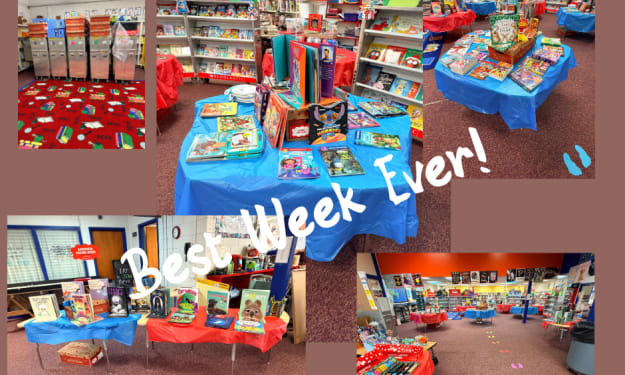
How many of you remember the “best week ever!” from when you were a child? Book fairs were the staple of many of our childhoods with Scholastic leading the way. While there are many choices for book fairs today and I absolutely want to talk about them, that’s going to be a later article.
By Reb Kreyling4 days ago in Education



Comments
There are no comments for this story
Be the first to respond and start the conversation.