
How Constant Notifications Are Rewiring Our Brains
Why the Brain Treats Every Notification as Urgent
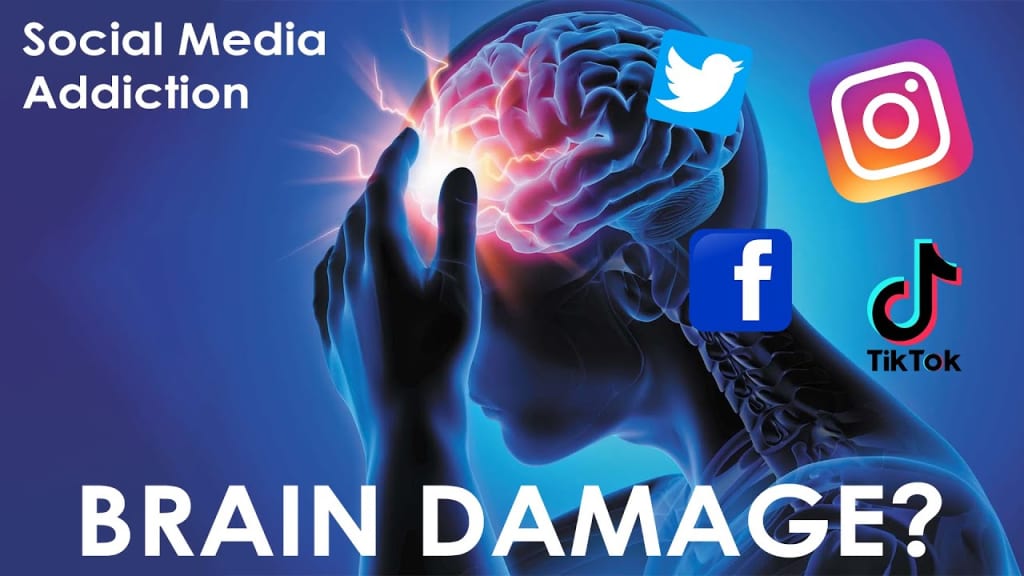
The vibration is subtle.
So subtle you don’t even realize you’ve reached for your phone.
A notification.
Then another.
Then one more, just in case you missed something important.
By the end of the day, you can’t remember what you were doing before the interruptions began.
This isn’t a personal weakness. It’s neuroscience.
Your Brain Wasn’t Built for This Much Noise
For most of human history, attention was a survival tool.
The brain evolved to notice rare, meaningful signals—a sound in the dark, a sudden movement, a change in the environment.
Notifications hijack that system.
Every buzz, ping, and banner alert triggers the brain’s orienting response—a reflex that forces your attention to shift. The brain treats each notification as potentially important, even when it isn’t.
Over time, this constant switching changes how we think.
The Dopamine Loop You Didn’t Sign Up For
Notifications don’t just interrupt you—they reward you.
Each alert delivers a small dose of dopamine, the neurotransmitter associated with anticipation and motivation. The brain begins to crave the possibility of something new, interesting, or validating.
Not the message itself.
The chance of the message.
This creates a loop:
Notification
Check
Temporary satisfaction
Repeat
Eventually, the brain becomes less comfortable with silence.
Why Focus Feels Harder Than It Used to
Every time you switch tasks, your brain pays a cost. This is known as attention residue. Part of your mind stays stuck on the previous task while you attempt to focus on the next one.
Now multiply that by:
Emails
Messages
App alerts
Social media notifications
The result is shallow focus and mental fatigue—even on days when you “didn’t do much.”
Your brain is exhausted from constantly resetting itself.
The Illusion of Multitasking
We like to believe we’re good at multitasking.
In reality, the brain can only focus on one cognitively demanding task at a time. What we call multitasking is actually rapid task-switching, and notifications force that switch whether you want it or not.
The more often this happens, the harder it becomes to:
Read deeply
Think critically
Learn complex material
Stay present
How Notifications Change Learning
Learning requires sustained attention. When notifications interrupt that process, information struggles to move from short-term memory into long-term storage.
This is why:
Studying takes longer
Reading feels harder
Retention feels weaker
It’s not because you’re less capable.
It’s because your attention is fragmented.
The Brain Adapts — For Better or Worse
The brain is plastic. It changes based on how we use it.
When we train it to expect constant stimulation, stillness begins to feel uncomfortable. Silence feels boring. Deep work feels heavy.
But the opposite is also true.
When notifications are reduced, focus slowly returns.
Reclaiming Your Attention
You don’t need to quit technology to fix this. You need to change the signal-to-noise ratio.
Small changes matter:
Turn off non-essential notifications
Schedule notification-free study or work blocks
Keep your phone out of sight during focused tasks
Allow boredom to exist without immediately filling it
At first, your brain will resist. That’s normal.
Then something shifts.
What Happens When the Noise Fades
Without constant interruptions:
Thoughts become clearer
Tasks feel lighter
Learning becomes easier
Time feels less fragmented
You remember what you read.
You finish what you start.
You feel less mentally drained.
Not because you did more—but because your brain finally had space to think.
Attention Is the New Literacy
In a world designed to distract, the ability to focus is no longer natural—it’s a skill.
And like any skill, it can be rebuilt.
The notifications will keep coming.
The question is whether they get to decide how your brain works.
About the Creator
Keep reading
More stories from Waqas Ahmad and writers in Education and other communities.
What Causes the Rotten Egg Smell in Your Water?
This gas forms when sulfate-reducing bacteria interact with the magnesium or aluminum anode rod inside your water heater. The anode rod is a critical component designed to prevent tank corrosion by attracting corrosive elements in the water.
By Andrei Kasperabout 4 hours ago in Education
Review of 'Man on the Run'
My wife and I saw Man on the Run, a nearly 2-hour documentary on Amazon Prime, about Wings, Paul McCartney's group that flew around the world from shortly after The Beatles broke up in early 1970 to shortly after John Lennon was murdered at the end of 1980, making a Beatles reunion forever impossible.
By Paul Levinson5 days ago in Beat


Comments
There are no comments for this story
Be the first to respond and start the conversation.