
How Can Real Estate Tokenization Development Services Facilitate Secure Asset Ownership?
Leveraging Blockchain Technology to Ensure Transparent, Verifiable, and Tamper-Proof Ownership of Real Estate Assets

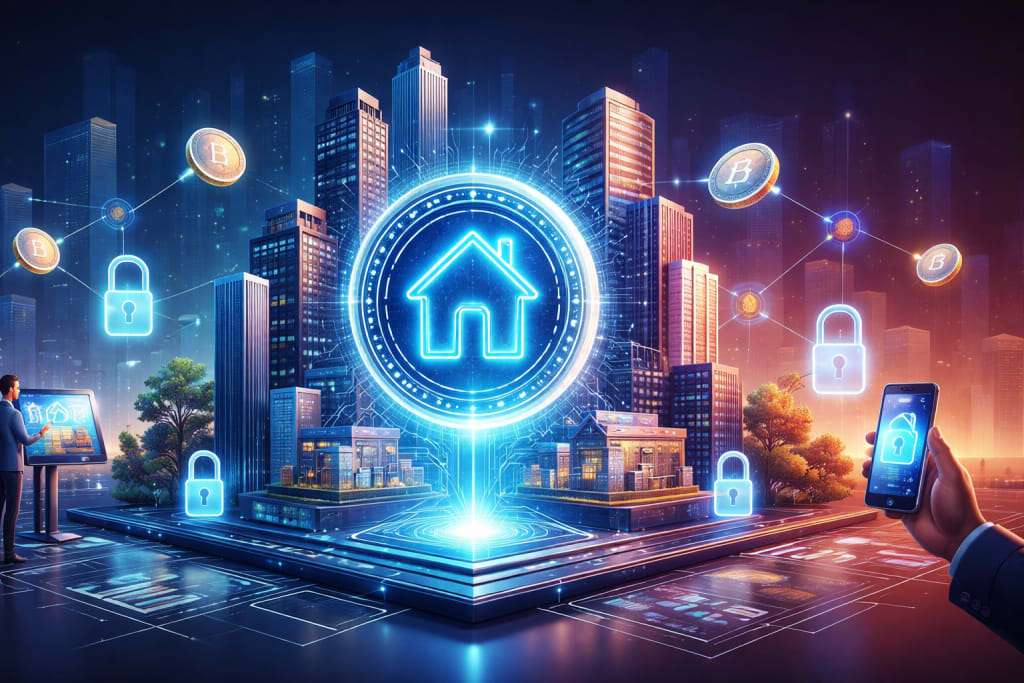
Real estate has always been one of the most valuable and sought-after asset classes globally. From residential complexes to high-value commercial properties, owning real estate represents stability, wealth accumulation, and long-term financial security. However, traditional real estate ownership comes with challenges such as cumbersome paperwork, legal disputes, opaque property records, and risks related to fraud or mismanagement. These challenges often deter investors, particularly in cross-border or high-value transactions.
Real estate tokenization development services are emerging as a transformative solution to these challenges. By leveraging blockchain technology, tokenization converts real-world property ownership into digital assets on a secure, immutable ledger. This innovation facilitates fractional ownership, improves transparency, and most importantly, ensures secure, tamper-proof property rights. Through blockchain-based smart contracts and secure asset registries, investors gain confidence in the integrity and enforceability of their property ownership. This article explores how tokenization services enhance secure asset ownership, the mechanisms involved, benefits for investors, challenges, and future outlook.
Understanding Real Estate Tokenization
Real estate tokenization refers to the process of creating digital tokens on a blockchain that represent ownership rights or financial claims over a physical property. Each token can signify:
- Equity ownership in a property or real estate project.
- Entitlement to income generated by the property, such as rental dividends.
- Voting or governance rights related to property management decisions.
Tokenization allows for fractional ownership, meaning that a high-value property can be divided into numerous digital tokens. For example, a $15 million commercial property could be represented by 150,000 tokens, each valued at $100. This fractionalization lowers investment barriers and democratizes access to high-value real estate assets.
By placing these tokens on a blockchain, ownership records become immutable, auditable, and easily transferable, providing security and transparency that surpass traditional paper-based property deeds.
Mechanisms for Secure Asset Ownership
Real estate tokenization development services implement several mechanisms to ensure secure asset ownership:
1. Blockchain-Based Ownership Ledger
The core of secure ownership lies in the blockchain ledger. Unlike traditional registries, which are susceptible to forgery or administrative errors, blockchain maintains a tamper-proof record of all transactions. Every token issued corresponds to a verified legal claim on the property. When ownership changes hands, the blockchain records the transaction immutably, eliminating ambiguities about title, liens, or previous ownership claims.
This decentralized ledger ensures that multiple parties can independently verify ownership without relying on a central authority, reducing the risk of disputes and fraud.
2. Smart Contracts for Automated Ownership Rights
Smart contracts are programmable agreements encoded on a blockchain. They automate key processes that underpin secure property ownership, such as:
- Ownership transfer: Automatically updating token holders when tokens are bought, sold, or transferred.
- Income distribution: Directly paying dividends or rental income to token holders based on fractional ownership.
- Governance execution: Allowing investors to vote on property decisions securely and transparently.
- Compliance enforcement: Ensuring that ownership transfers comply with jurisdictional regulations and KYC/AML standards.
Smart contracts remove reliance on intermediaries, reduce human error, and ensure that ownership rights are consistently and securely enforced.
3. Fractional Ownership and Custodial Security
By enabling fractional ownership, tokenization allows multiple investors to hold secure claims over a property. Real estate tokenization development services often employ custodial solutions to safeguard the underlying physical asset, ensuring that the property is maintained, insured, and legally compliant.
This combination of digital token ownership and physical custodial oversight provides dual-layer security: investors have both legal assurance of the property and blockchain-backed evidence of ownership.
4. Compliance and Regulatory Integration
Secure ownership is meaningless without legal recognition. Tokenization platforms integrate KYC (Know Your Customer) and AML (Anti-Money Laundering) protocols directly into the system. Investors must verify their identity before acquiring tokens, and smart contracts enforce these compliance measures automatically during token transfers.
Furthermore, token offerings can be structured as Security Token Offerings (STOs) or other legally compliant instruments. This ensures that fractional ownership is legally recognized and that international investors can confidently participate without risking regulatory non-compliance.
5. Secondary Market Security
Tokenized real estate can be traded on secondary marketplaces. Secure asset ownership is maintained through cryptographic proofs and blockchain verification, ensuring that when tokens change hands, ownership updates are instantaneous, transparent, and tamper-proof.
By providing a secure, verifiable mechanism for trading, tokenization encourages liquidity while protecting investor rights.
Benefits of Tokenization for Secure Asset Ownership
Real estate tokenization development services offer multiple advantages that enhance secure asset ownership:
1. Transparency and Auditability
Blockchain records provide an immutable, time-stamped record of all transactions. Investors can independently verify token issuance, transfers, and ownership claims, reducing the risk of fraud and increasing trust.
2. Fraud Prevention
By tokenizing property ownership, the risk of title forgery, double-selling, or fraudulent claims is dramatically reduced. Tokens are cryptographically secured, making tampering nearly impossible without network consensus.
3. Efficient and Enforceable Transfers
Smart contracts automate transfers of ownership, dividends, and voting rights, eliminating the need for lengthy legal processes. This ensures that ownership rights are executed consistently and enforceably.
4. Reduced Intermediary Risk
Traditional real estate transactions involve lawyers, notaries, banks, and brokers, each adding potential points of failure. Tokenization reduces reliance on intermediaries, decreasing the likelihood of human error or misconduct while lowering costs.
5. Fractional Ownership for Risk Mitigation
Fractional ownership allows investors to hold smaller, secure portions of multiple properties rather than a single high-value asset. This diversification reduces exposure to property-specific risks while maintaining blockchain-backed ownership security.
6. Cross-Border Security
For international investors, tokenization removes many legal and geographic barriers. Ownership records are recognized digitally, and compliance is enforced via smart contracts, enabling secure cross-border property investment without the traditional complexities of foreign real estate law.
Challenges and Considerations
While tokenization significantly enhances secure ownership, certain challenges remain:
1. Regulatory Complexity
Real estate and securities laws vary across jurisdictions. Tokenization platforms must ensure that digital ownership is legally enforceable, requiring close alignment with local property laws, securities regulations, and investor protections.
2. Custody and Maintenance of Physical Assets
Tokens represent claims to real-world properties, which require maintenance, insurance, and management. Investors rely on the platform or property manager to safeguard the asset, creating a custodial dependency.
3. Technological Adoption
Blockchain is still a relatively new technology in real estate. Platforms must ensure intuitive interfaces, investor education, and strong customer support to facilitate adoption.
4. Security Risks
Although blockchain is inherently secure, smart contracts can contain vulnerabilities if not rigorously audited. Platforms must conduct regular security audits and implement robust coding standards to protect investor assets.
5. Market Liquidity
While tokenized real estate is more liquid than traditional property, secondary markets must be actively maintained. Adequate liquidity is necessary to allow investors to buy, sell, or trade tokens efficiently while preserving secure ownership verification.
Real-World Examples
Several platforms illustrate how tokenization services provide secure asset ownership:
- RealT: Offers fractionalized ownership of U.S. rental properties. Investors receive blockchain-based proof of ownership and automated rental income payouts.
- SolidBlock: Tokenizes high-value commercial real estate globally, providing legal and blockchain-backed ownership records.
- Harbor: Specializes in Security Token Offerings (STOs), ensuring compliance and secure ownership for fractionalized real estate investments.
- Atlant: Provides a decentralized marketplace for tokenized property, enabling secure transfers and verifiable fractional ownership.
These examples demonstrate practical applications of tokenization for secure, transparent, and enforceable property ownership in both residential and commercial real estate markets.
Future Outlook
The future of real estate tokenization and secure asset ownership is promising:
- Broader Adoption: As more investors and institutions recognize the benefits of blockchain-backed property ownership, adoption rates are expected to grow.
- Integration with DeFi: Tokenized assets can be used as collateral, staked, or leveraged within decentralized finance ecosystems, enhancing both utility and security.
- Global Accessibility: Cross-border investment will become simpler, secure, and legally recognized, enabling global capital flows into tokenized real estate markets.
- Enhanced Compliance: Smart contracts will increasingly automate compliance, audits, and ownership verification, further reducing legal risk and operational inefficiencies.
Tokenization will fundamentally change the real estate investment landscape by making ownership secure, transparent, and accessible to a global audience.
Conclusion
Real estate tokenization development services provide a powerful solution to the challenges of traditional property ownership. By leveraging blockchain technology, smart contracts, and fractional ownership, tokenization ensures secure, transparent, and enforceable asset rights. Investors benefit from immutable ownership records, reduced fraud risk, automated income distribution, and cross-border accessibility.
While regulatory, technological, and custodial challenges remain, the ongoing maturation of tokenization platforms positions blockchain as a cornerstone for secure real estate asset ownership. For investors and developers alike, tokenization represents a transformative opportunity to modernize property ownership, attract global participation, and create a more efficient, secure, and inclusive real estate market.
About the Creator
Gabrielle
Blockchain enthusiast and NFT writer dedicated to merging technology with art on decentralized platforms, driving innovation for a creative future. Embracing the potential of digital expression.
Can Cosmic Mystery Be Permanent? Exploring the Limits of Knowledge in an Expanding Universe
The Expanding Horizon of Discovery Throughout history, scientific progress has replaced uncertainty with explanation. Ancient civilizations looked at the sky and saw gods and omens. Later, scientific pioneers transformed those myths into measurable patterns. When Galileo Galilei used a telescope to observe Jupiter’s moons, he shattered centuries of assumption about Earth’s central place in the cosmos.
By shahkar jalal8 days ago in Education
Breaking Free from Traditional Hiring: The Skill-Based Revolution
The world of work is evolving at an unprecedented pace. As industries adapt to rapid technological advancements and shifting workforce dynamics, traditional hiring practices are being reimagined. Gone are the days when a degree or years of experience were the sole indicators of a candidate's potential. Enter skill-based hiring—a fresh approach that prioritizes competencies over credentials.
By Sanjeev Kumar4 days ago in Education




Comments
There are no comments for this story
Be the first to respond and start the conversation.