
How Can Data Science Be a Strong Weapon Against Deepfakes?
Data Science Be a Strong Weapon Against Deepfakes

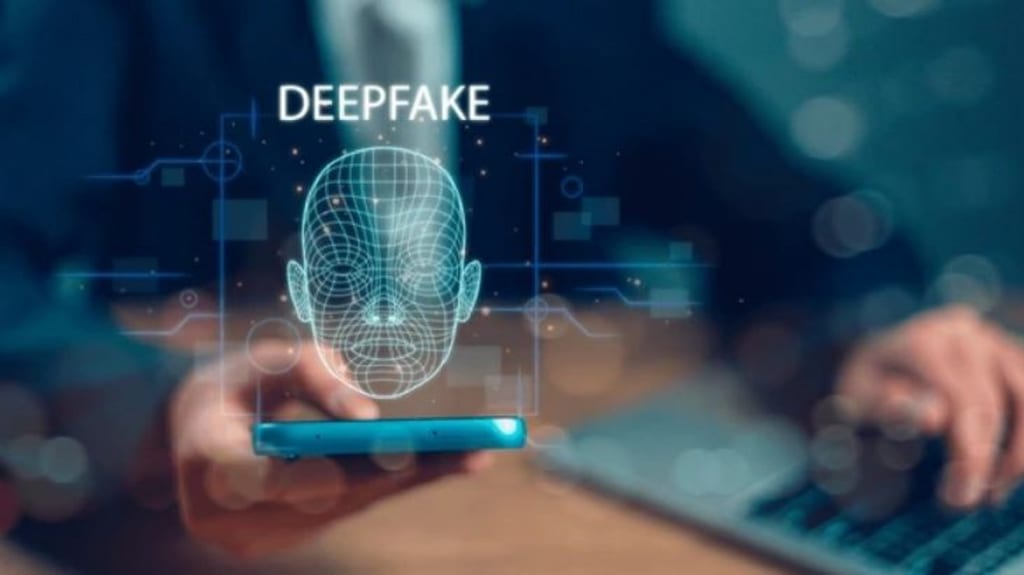
Deepfakes, i.e., synthetically generated media, be it images, videos, or audio mimicking real media, are becoming one of the biggest concerns in the digital world these days. Deepfake uses deep learning and generative adversarial networks (GANS) to create hyper-realistic content that is exactly similar to the original ones.
Though this technology can prove to be highly transformative in the field of education and entertainment, its misuse can lead to serious implications in politics, security, journalism, and affect public trust.
Since the line between real and fake in the world of digital information is becoming very thin and blurred, data science can act as a powerful weapon to detect, mitigate, and understand deepfakes. Data science uses advanced machine learning algorithms and big data analytics to accurately identify synthetic content and analyze its impact on society.
Let us explore more and try to understand how data science and the use of machine learning and AI in deepfakes can help maintain digital data integrity and minimize its negative consequences.
Deepfake: What is it and its Data-Driven Perspective
Deepfakes are created using neural networks such as GANs that combine two models against each other, where one generates fake content and the other helps to detect it. In the long run, the models improve and become highly accurate in creating realistic fake content.
However, their efficiency largely depends on the quality and volume of data used to train these models. And therefore, detecting such a deepfake also requires a huge and diverse dataset along with a powerful computational model (two essential elements of data science).
So, data science uses both these principles, in reverse, of course, to find the telltale signs of manipulation. Data science professionals analyze the inconsistencies in pixelation, blinking patterns, voice frequency mismatches, and other aspects of content to detect deepfakes.
Role of Data Science in Deepfake Detection
Here are a few ways in which data science can help combat deepfakes.
Developing Deepfake Detection Algorithms
Data scientists are the most important professionals behind the development of AI models to detect deepfakes. These professionals train machine learning models on large amounts of datasets (real and fake videos), so that they can learn the difference between what is genuine and what is manipulated.
There are several techniques, like Image and video forensics, audio analysis, and temporal behavior analysis, to detect deepfakes. For example, Microsoft's Video Authenticator uses machine learning to analyze photos and videos and provides a confidence score of manipulation.
Popular data science courses cover these essential topics to help prepare professionals for the future.
Building Labeled Datasets
A detection algorithm can only be as accurate as the data it has been trained on. Data scientists maintain large datasets of real and fake media to train machine learning models to improve their detection capabilities.
Several datasets including FaceForensics++, Deepfake Detection Challenge (DFDC) dataset, and Google's Deepfake Detection Dataset are available for use by researchers which contain thousands of deepfakes generated using different techniques. These datasets help models generalize detection strategies for different types of manipulations.
Creating these datasets includes labeling, preprocessing, and annotating huge amounts of video and audio content; essential processes in a data science workflow.
Feature Engineering and Pattern Recognition
Another important aspect of data science is extracting unique features from data, which can be very helpful in distinguishing real content from deepfakes. For example, human faces naturally exhibit micro-expressions and muscle movements that are difficult for GANs to copy accurately.
Data scientists can analyze millions of frames and do feature engineering on the following things:
- Eye blinking rate and duration
- Lip and jaw synchronization with speech
- Consistency in skin tone
- Irregular compression artifacts, etc.
These features become part of a predictive model that can detect fake content easily.
Content Authentication, Propagation Tracking, and Real-Time Detection
Apart from detecting deepfakes, data science can be used to monitor and mitigate them as well. Data science plays an important role in preventing the negative consequences because deepfakes can help with content authentication through blockchain and metadata tagging. This helps users to verify the origin of content.
It can also track the spread of deepfakes through network analysis and NLP tools to detect bots and inauthentic behavior. Moreover, real-time detection systems leveraging AI and machine learning algorithms can be integrated into platforms directly to flag deepfakes. This will help users get a faster response.
Future of Deepfakes and Detection Tools
As we move towards the future, we will see the use of machine learning and AI in deepfakes getting stronger, making deepfake creation tools more sophisticated and more realistic. It will require a strong detection mechanism as well, and data will play the most important role in it.
Emerging technologies like multimodal detection (that can detect different types of deepfake media like audio, video, images, etc.), zero-shot learning, and explainable AI can be very helpful against deepfake.
Apart from these, governments, tech giants, and universities must also collaborate to build strong defense systems against deepfakes. For example, the EU's AI Act and the U.S. DEEPFAKES Accountability Act demonstrate how countries are recognizing this issue and working to eliminate its negative consequences.
Conclusion
Deepfakes can be highly useful in the world of digital information and education, but their misuse can disrupt societies. Data science is a powerful technology providing essential tools to minimize and eliminate threats posed by deepfakes. Be it creating efficient algorithms to detect deepfakes or monitoring content in real-time, the role of data science is indispensable. With proper collaboration from government, tech organizations, and universities, and awareness to the general public, we can significantly minimize deepfake effects and help build a better society with genuine content.
About the Creator
Pradip Mohapatra
Pradip Mohapatra is a professional writer, a blogger who writes for a variety of online publications. he is also an acclaimed blogger outreach expert and content marketer.
Keep reading
More stories from Pradip Mohapatra and writers in Education and other communities.
Which are the Most in-demand Cybersecurity Jobs in 2025
The world is getting highly digitized making our everyday lives and businesses easier and convenient. However, this increased digitization also brings with it an increased number of cybercrimes and innovative cyber threats.
By Pradip Mohapatraabout a year ago in Education
Steady Hands, Lasting Results: Building Enterprise Value Across Public and Private Sectors
Business success often appears dramatic from the outside. Headlines highlight mergers, market surges, and bold leadership changes. However, meaningful growth usually stems from consistent discipline. Executives who understand this reality focus on execution rather than attention. As a result, they generate progress that compounds quietly over time.
By Matthew J Smith4 days ago in Education
Why Waste Management Is Central to the United Kingdom’s Sustainability Goals?
Environmental sustainability has become a defining priority across the United Kingdom. Among the most critical components of this commitment is waste management. As urban populations grow and consumption patterns evolve, managing waste efficiently and responsibly is essential for protecting ecosystems and public health.
By deepanshu Thakur5 days ago in Education




Comments
There are no comments for this story
Be the first to respond and start the conversation.