
How can businesses create their own AI like ChatGPT?
Steps for Building Custom AI Models Similar to ChatGPT for Businesses
Conversational AI tools like ChatGPT have become integral to businesses, enhancing customer interactions and automating previously time-consuming tasks. Leveraging conversational AI can revolutionize how businesses engage with customers, improve workflows, and provide personalized services.
This article will explore how to build a conversational AI that can deliver intelligent, meaningful conversations.
What is Conversational AI?
Conversational AI is the technology that allows machines to understand, process, and respond to human language naturally and intuitively. It can be chatbots, voice assistants, or virtual agents that simulate human-like conversations. These tools can understand context, recognize user intent, and deliver relevant responses—whether answering a question, solving a problem, or guiding a user through a complex process.
Key Steps to Building Your Conversational AI
Building a conversational AI like ChatGPT requires combining technical knowledge, understanding user needs, and integrating the right tools and technologies. Here are the main steps you should follow to build an AI system that can handle meaningful conversations for your business:
1. Define the Purpose and Scope
Before diving into the technical aspects, it's essential to define the purpose of your conversational AI. What tasks will it handle? Will it be customer support? Will it provide product recommendations, schedule appointments, or assist with troubleshooting? Identifying the objectives will help you design the AI with the right features and capabilities.
For example, if your business is in e-commerce, a conversational AI can act as a virtual shopping assistant, guiding customers through their purchase journey. On the other hand, if you run a customer support center, your AI should be equipped with troubleshooting capabilities and support-related queries.
2. Choose the Right Technology
The next step is selecting the technology stack to power your conversational AI. Several frameworks and tools are available to help you create an intelligent AI. Some popular options include:
Natural Language Processing (NLP): NLP is crucial for processing and understanding human language. Libraries like spaCy, NLTK, or more advanced tools like GPT (Generative Pre-trained Transformer) are essential for enabling the AI to comprehend and generate text-based responses.
Machine Learning: Machine learning models can improve AI responses over time by learning from past interactions. The model should be trained on large datasets of conversational data to better understand nuances, slang, and various forms of expression.
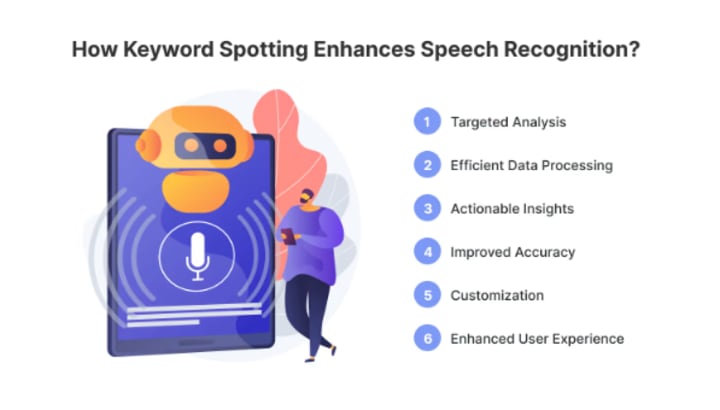
Speech Recognition: If your conversational AI is voice-based, integrating speech recognition systems like Google Speech-to-Text or IBM Watson can help convert spoken words into text.
Combining these technologies gives you the foundation for a robust conversational AI.
3. Train Your AI
Training your conversational AI is arguably the most crucial aspect of the development process. Training involves feeding the AI large amounts of conversational data and allowing it to learn patterns, language structures, and user behaviors. The more data the AI can learn from, the better it becomes at providing accurate and relevant responses.
There are different approaches for training a conversational AI:
Rule-Based Systems: These systems use predefined rules to generate responses. While they are easier to implement, they need more flexibility and intelligence of machine learning-based models.
Machine Learning-Based Systems: These use advanced algorithms to learn from the data, adapt over time, and produce more dynamic and contextually relevant responses. Tools like OpenAI’s GPT (the technology behind ChatGPT) are based on this type of system.
For businesses, it’s essential to regularly update training data to ensure that the AI can handle new customer queries, respond to changing needs, and continuously improve over time.
4. Integrate with Other Business Tools
One of the significant benefits of conversational AI is its ability to integrate seamlessly with other business tools and systems. For example, a chatbot or virtual assistant can be integrated with:
CRM Systems: To access customer data and provide personalized interactions.
Marketing Platforms: To guide customers through marketing funnels and offer personalized recommendations.
Helpdesk Software: To automate customer support tickets and responses.
This integration ensures that the conversational AI can add value to the broader business operations by accessing critical information and streamlining processes.
5. Optimize for User Experience
The AI’s ability to understand and respond to user queries is just one part of the equation. The system's user experience (UX) plays a critical role in the success of your conversational AI.
Intuitive Interface: The user interface (UI) should be clean and simple, ensuring users can easily interact with the AI.
Conversational Flow: Your AI should be able to carry out fluid, engaging conversations. Avoid robotic, overly formal responses. The AI should simulate natural discussions and be able to handle a variety of input types, including complex questions and requests.
Personalization: Personalization is key to creating meaningful interactions. A well-designed conversational AI can analyze previous interactions, understand user preferences, and offer tailored solutions or responses.

6. Test, Monitor, and Improve
Building your conversational AI doesn’t end once it’s live. Ongoing monitoring and testing are necessary to ensure the AI functions as expected. Analyzing real-time conversations helps identify gaps in the AI’s understanding and gives you insight into areas for improvement.
User Feedback: Regularly gather user feedback to ensure the AI meets their expectations.
Performance Metrics: Monitor metrics like response time, customer satisfaction, and resolution rate to evaluate the AI’s success.
Continuous Training: As new data comes in, you must regularly retrain your AI to keep it up to date and improve its capabilities.
7. Ensure Data Privacy and Compliance
When dealing with AI and customer data, it's critical to maintain privacy and comply with industry regulations. Depending on your location and business domain, you must comply with data privacy laws like GDPR, CCPA, etc.
Ensure the conversational AI system stores and processes data securely and implements clear protocols for handling sensitive information.
The Role of AI in Business Transformation
As businesses continue to recognize the benefits of conversational AI, they are increasingly investing in AI tools to enhance customer engagement, streamline operations, and gain a competitive advantage. Creating an AI-powered solution tailored to your business needs can unlock a new level of efficiency, innovation, and customer satisfaction.
Whether it’s automating repetitive tasks, providing immediate assistance, or enhancing customer service, conversational AI is an essential part of contemporary business plans. With the right approach and tools, businesses can develop their own AI that works seamlessly to improve experiences and outcomes.
Uncovering the Power of Conversational AI for Business Success
Building a conversational AI like ChatGPT is within reach for businesses of all sizes. While the process may seem complex, breaking it down into manageable steps—defining the purpose, choosing the right technology, training the AI, and optimizing for the best user experience—can help you create an AI solution that enhances your customer service, streamlines your operations, and drives long-term success. Businesses can remain competitive and future-proof their operations by investing in conversational AI.
About the Creator
Keep reading
More stories from Smith Matt and writers in Education and other communities.
The Role of Virtual Assistants in Modern Workplaces
The global virtual assistant market (encompassing both AI software and human services) is consistently reported to be a multi-billion dollar industry. Projections frequently show strong growth, often with a Compound Annual Growth Rate (CAGR) estimated between 20% and 30%+ for the coming years (e.g., projecting towards 2028-2030).
By Smith Matt10 months ago in Education
Top 10 SEO Experts In Pakistan In 2026
Introduction Search optimization in 2026 no longer revolves around keywords or isolated ranking tactics. Google’s AI Overviews, entity-based indexing, and answer-first systems have changed how visibility is earned. Search engines now evaluate meaning, credibility, and contextual authority rather than mechanical signals.
By Sajid Ali Shar3 days ago in Education
Colors and Such
Before I retired in 2020, I worked as a Nursing instructor in one of the nation's largest community colleges. It was a job I thoroughly enjoyed for fifteen years because I had a heart for the students and genuinely wanted to invest in them and their futures.
By Shirley Belk5 days ago in Education



Comments
There are no comments for this story
Be the first to respond and start the conversation.