
How Can a Family Support a Depressed Loved One?
Family Support a Depressed Loved One

Introduction
Depression is the most common mental illness in the world but not well explained. For families, it is very distressing and perplexing to watch a loved one suffering from depression. Depression is unlike a physical disease in the sense that it is not constantly visible and therefore can be tricky to spot and deal with. The depressed person may seem depressed, irritable, or lethargic — and families may misinterpret these as laziness, lack of energy, or personal inadequacy.
Supporting a loved one with depression requires patience, empathy, and understanding. The family plays an important part in assisting in creating an environment that heals. While professional intervention is required, love and support from the family can also play an important part in healing.
The following discussion is a reflection on supportive, beneficial things that families can do to assist a loved one in fighting depression.
Understanding Depression
Families must understand what depression is in order to offer support:
Depression is not weakness. It is an illness of a change in brain chemistry, mood, and energy.
Symptoms may vary — sadness, fatigue, loss of interest in activities, sleep disturbances, changes in appetite, difficulty concentrating, hopelessness, or suicidal urges.
Depression is treatable — with therapy, medication, lifestyle changes, and social support, most people improve significantly.
Families need to realize that depression is not merely "feeling sad." It is an illness that requires expert treatment and strong support systems.
The Role of Families in Facilitating Recovery
1. Learn About Depression
Families might feel helpless as they don't know the disorder. Having knowledge about depression, the causes, and therapy makes you more sympathetic towards your loved one. Begin with reliable sources like mental health websites, support groups, or therapists.
2. Give a Safe and Non-Judgmental Space
People with depression fear being judged. Families can avoid criticism or phrases like:
"Ssnap out of it."
"Think positive."
"Others have it worse."
Instead, offer understanding and compassion. Say: "I'm here for you. I don't really get what you're dealing with, but I care."
3. Encourage Professional Treatment
While family support is vital, depression usually requires therapy or medication. Families can:
Assist in finding therapists or clinics if they wish.
Accompany them to sessions if anxious.
Encourage, not push.
4. Be Patient with Progress
Overnight recovery will not occur. There will be good days and bad days and relapses. Families can be encouraged to notice the small pluses and be tolerant of relapse.
5. Encourage Healthy Lifestyle Habits
Encourage healthy habits gently, which can assist mood:
Every day exercise like yoga or a walk.
Healthy meals instead of missed or comfort meals.
Regular sleep routines.
Mindfulness like meditation.
Encouragement must be gentle, not controlling.
### 6. Respect Their Boundaries
Depressed people may have difficulty with the need to be left alone. Give it to them without making them feel isolated. There must be a balancing act between support and independence.
7. Give Practical Help
Depression may make everyday activities too much. Family members can help by:
Preparing dinner.
Running errands.
Helping with chores around the house.
Coordinating appointments.
These small things ease their burden and show care in action.
8. Search for Suicide Warning Signs
Suicidal ideas may drown in severe depression. Warning signs include:
Speaking about death or burdensome feelings.
* Withdrawing from those closest to them.
* Giving away belongings.
* Sudden calm after great despair.
If you suspect suicidal intent, be serious about it. Suggest professional help immediately, or call crisis hotlines. In cases of emergency, do not hesitate to call for immediate medical assistance.
9. Practice Open Communication
Ask open-ended, empathetic questions:
"How are you feeling today?"
"Is there something that I can do to assist you at the moment?"
"Would you like to discuss what's bothering you?"
Even if they don't speak, demonstrating that you are willing to listen shows you care.
10. Take Care of Yourself Too
Supporting a depressed loved one can be emotionally draining. Don't forget to take care of yourselves. Self-care rituals, caregiver therapy, and membership in a support group boost resilience.
Self-care rituals, therapy for caregivers, and support group membership are the practices that build resilience.
What Not to Do
Families often unknowingly make mistakes when supporting a depressed loved one. Avoid:
Minimizing their feelings (“It’s just a phase.”).
Offering unsolicited advice (“Try being more positive.”).
Becoming overly controlling (“You should do this right now.”).
Blaming them (“You’re bringing everyone down.”).
Comparing (“Others go through worse and still manage.”).
These actions can make the person feel invalidated and more isolated.
Building a Supportive Home Environment
A nurturing home can make a huge difference in recovery:
Incentivize routine: Set regular routines for eating, exercise, and sleeping.
Compliment small accomplishments: Getting out of bed is an accomplishment on a bad day.
Decrease stress: Keep the home as calm and respectful as possible.
Include them in things: Bring them along to things without worrying.
Consistency and empathy are the keys to a healing environment.
Case Example
Let's take a case of a young professional woman, Riya, who has been depressed since she lost her job. Her family members didn't realize why she was withdrawn initially and would say to her, "Just wake up and do something." This made her feel more guilty and worthless.
Since they knew of depression, her parents altered their own behavior. They motivated her to visit the therapist, accompanied her to therapy sessions, and avoided pressurizing her with excessive expectations. Her parents helped her with mundane works and created a routine of helping. Over time, Riya got better, and confidence was regained.
The above case points towards the therapeutic value of family support for depression.
Balancing Support with Professional Care
Though families might offer practical and emotional support, depression is an illness that most likely must be treated professionally. Families must never try to replace medication and therapy with care at home alone. Optimal is a combination: professional treatment topped up with supporting family activities.
Final Thoughts
It is simple but difficult to take care of someone suffering from depression. The family must remember they cannot "cure" depression overnight. What they can provide is the love, compassion, and support that make the process of recovery less lonely and more hopeful.
Depression can indeed be an isolating battle, but healing is readily at hand with the proper mix of professional care and family support. Families that learn, communicate, and empathize create a solid foundation for recovery for their loved one.
For professional mental health consultation, please visit:
https://www.delhimindclinic.com/
In case you also run or are going to create a Craft CMS website and require improvements or consultation, visit:
https://www.craftcmsdeveloper.in/
Please don't hesitate to give me a call if you need to make some updates to your Craft site or just need to chat about your Craft project. I provide a free consultation!
About the Creator
Keep reading
More stories from Naveen Garg and writers in Education and other communities.
How do workplaces help promote mental health and foster a healthy environment for workers?
Introduction Offices are not just physical spaces where people earn a living — they are spaces where workers spend a lot of time, energy, and imagination. A healthy office not only enhances performance but also fosters employees' mental and emotional well-being. Work stress, unachievable deadlines, negative work cultures, and lack of support unfortunately contribute to anxiety, burnout, and depression.
By Naveen Garg5 months ago in Education
Top 10 SEO Experts In Pakistan In 2026
Introduction Search optimization in 2026 no longer revolves around keywords or isolated ranking tactics. Google’s AI Overviews, entity-based indexing, and answer-first systems have changed how visibility is earned. Search engines now evaluate meaning, credibility, and contextual authority rather than mechanical signals.
By Sajid Ali Shar3 days ago in Education
Colors and Such
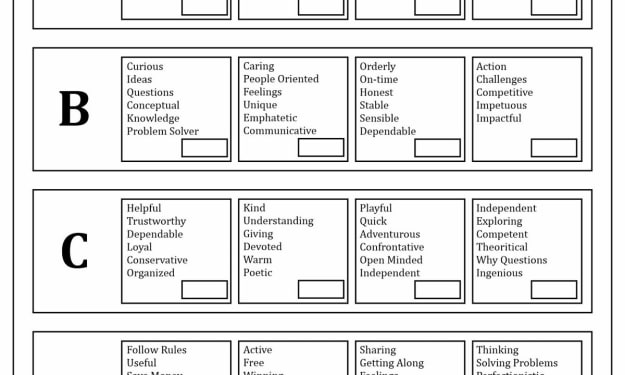
Before I retired in 2020, I worked as a Nursing instructor in one of the nation's largest community colleges. It was a job I thoroughly enjoyed for fifteen years because I had a heart for the students and genuinely wanted to invest in them and their futures.
By Shirley Belk4 days ago in Education



Comments
There are no comments for this story
Be the first to respond and start the conversation.