
"How Artificial Intelligence is Revolutionizing Healthcare"
Revolutionizing Healthcare
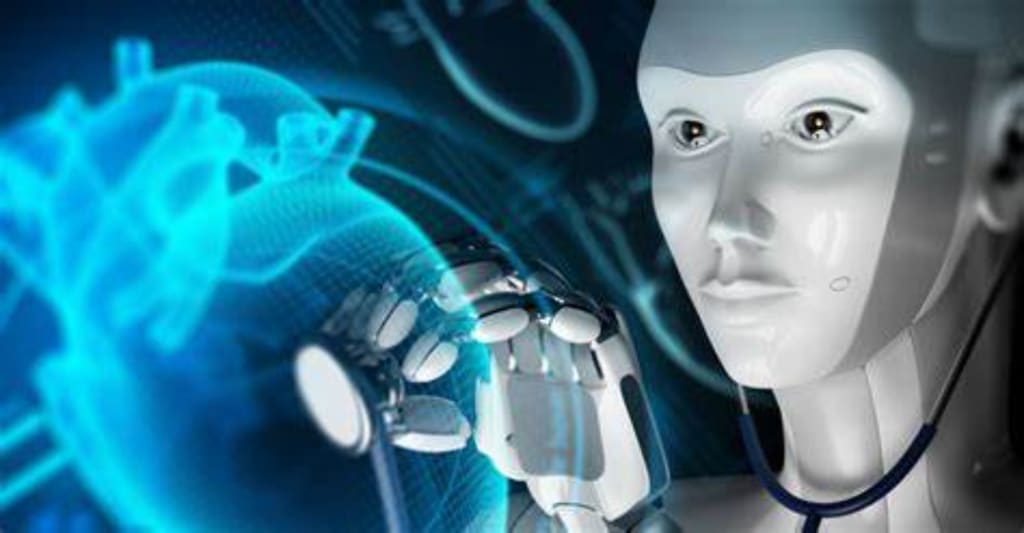
Artificial intelligence (AI) is rapidly transforming various industries, including healthcare. From predictive analytics to personalized medicine, AI is revolutionizing the way healthcare is delivered and improving patient outcomes.
One of the most promising applications of AI in healthcare is predictive analytics. With the help of machine learning algorithms, AI can analyze large amounts of data to identify patterns and predict future health outcomes. This can help doctors and healthcare professionals make more informed decisions and improve patient care.
AI is also enabling personalized medicine, which involves tailoring treatments to a patient's unique genetic makeup, lifestyle, and medical history.
By analyzing vast amounts of data on a patient's health, AI algorithms can recommend personalized treatment plans that are more effective and efficient than traditional methods.
Another area where AI is making a significant impact is in medical imaging. With the help of machine learning algorithms, AI can analyze medical images such as X-rays, CT scans, and MRIs to identify potential health problems and provide accurate diagnoses. This can help doctors detect and treat diseases at an earlier stage, leading to better patient outcomes.
Despite the many benefits of AI in healthcare, there are also concerns about data privacy and security. As more healthcare data is collected and analyzed, it's essential to ensure that patient data is protected and used ethically.
However, there are still some challenges that need to be addressed before AI can reach its full potential in healthcare. One of the biggest challenges is the lack of interoperability between healthcare systems and the siloed nature of healthcare data.
This can make it difficult for AI algorithms to access the data they need to make accurate predictions and recommendations.
Another challenge is the need for proper training and education of healthcare professionals to effectively use AI tools and technologies.
It's crucial to ensure that healthcare professionals are equipped with the necessary skills and knowledge to make the most of these technologies and provide the best possible care for their patients.
Moreover, there is a need for more regulatory guidelines and standards for AI in healthcare to ensure patient safety and ethical use of the technology. As AI becomes more prevalent in healthcare, it's essential to have clear regulations and standards to ensure that the technology is used in a responsible and ethical manner.
Despite these challenges, the potential benefits of AI in healthcare are immense, and the technology is already making a significant impact. As more healthcare organizations adopt AI technologies, it's likely that we'll see even more advances in personalized medicine, predictive analytics, and medical imaging, leading to better outcomes for patients around the world.
One area where AI is already making a significant impact is in the development of new drugs and treatments. By analyzing vast amounts of data on drug efficacy and safety, AI algorithms can identify potential new drug candidates and predict how they might interact with the human body. This can greatly accelerate the drug discovery process and lead to more effective treatments for a wide range of diseases.
Another area where AI is showing promise is in remote patient monitoring. With the help of wearables and other connected devices, AI can monitor patients' vital signs and alert healthcare professionals to potential health problems before they become serious. This can help reduce hospital readmissions and improve patient outcomes.
Overall, the potential for AI to transform healthcare is vast, and we're only scratching the surface of what's possible. As more healthcare organizations and professionals embrace this technology, we can expect to see even more breakthroughs in personalized medicine, predictive analytics, medical imaging, drug discovery, and remote patient monitoring.
In conclusion, AI is transforming healthcare in many ways,and its potential to revolutionize the industry is vast. However, there are still challenges that need to be addressed, including interoperability, education and training, and regulation. As these challenges are overcome, AI will undoubtedly play an even more significant role in improving patient outcomes and transforming healthcare for the better. from predictive analytics to personalized medicine and medical imaging. As technology continues to advance, AI will undoubtedly play an even more significant role in improving patient outcomes and transforming the healthcare industry as a whole.
About the Creator
Jano Jaison
As an article writer, my passion is to write great content.
I have honed my skills as an article writer through extensive reading and practice.
In my free time, I enjoy exploring new topics and experimenting with different writing styles.
Keep reading
More stories from Jano Jaison and writers in Education and other communities.
The Rise of NFTs: How Non-Fungible Tokens Are Changing the Art World
Non-fungible tokens, or NFTs, have taken the art world by storm. In just the past year, we’ve seen digital art pieces sell for millions of dollars, and celebrities like Grimes and Elon Musk getting in on the action.
By Jano Jaison3 years ago in Education
NCLEX Study Plan: A Step-by-Step Guide for Nursing Students
Preparing for the NCLEX-RN is one of the most important milestones in the nursing students’ career. This is because the NCLEX is the final step before nursing students can become licensed nurses. However, it is not as easy as simply reading nursing textbooks and taking notes from class lectures. This is because the NCLEX is designed to test the nursing students’ clinical judgment and decision-making skills.
By Sulcus Learning2 days ago in Education
The Value of Hard Work
Hard work is one of the most important qualities for success in life. It means putting effort, time, and dedication into our tasks and responsibilities. Many people dream of becoming successful, but success does not come easily. It requires patience, determination, and continuous effort. Hard work helps people achieve their goals and build a better future. It also teaches discipline and responsibility, which are necessary for personal and professional growth.
By aadam khan7 days ago in Education
Silken Chains
Silhouettes of the female form were given flesh and bone. Silken skin glistened under the spotlight. Dry ice rose around our Icons as they danced atop their podiums in the Square. Heralded for their beauty, their movements were slight, powerful, and sensual.
By Paul Stewart6 days ago in Fiction




Comments
There are no comments for this story
Be the first to respond and start the conversation.