
How are Smartphones Made in Factories 2024: Complete Process
Smartphones

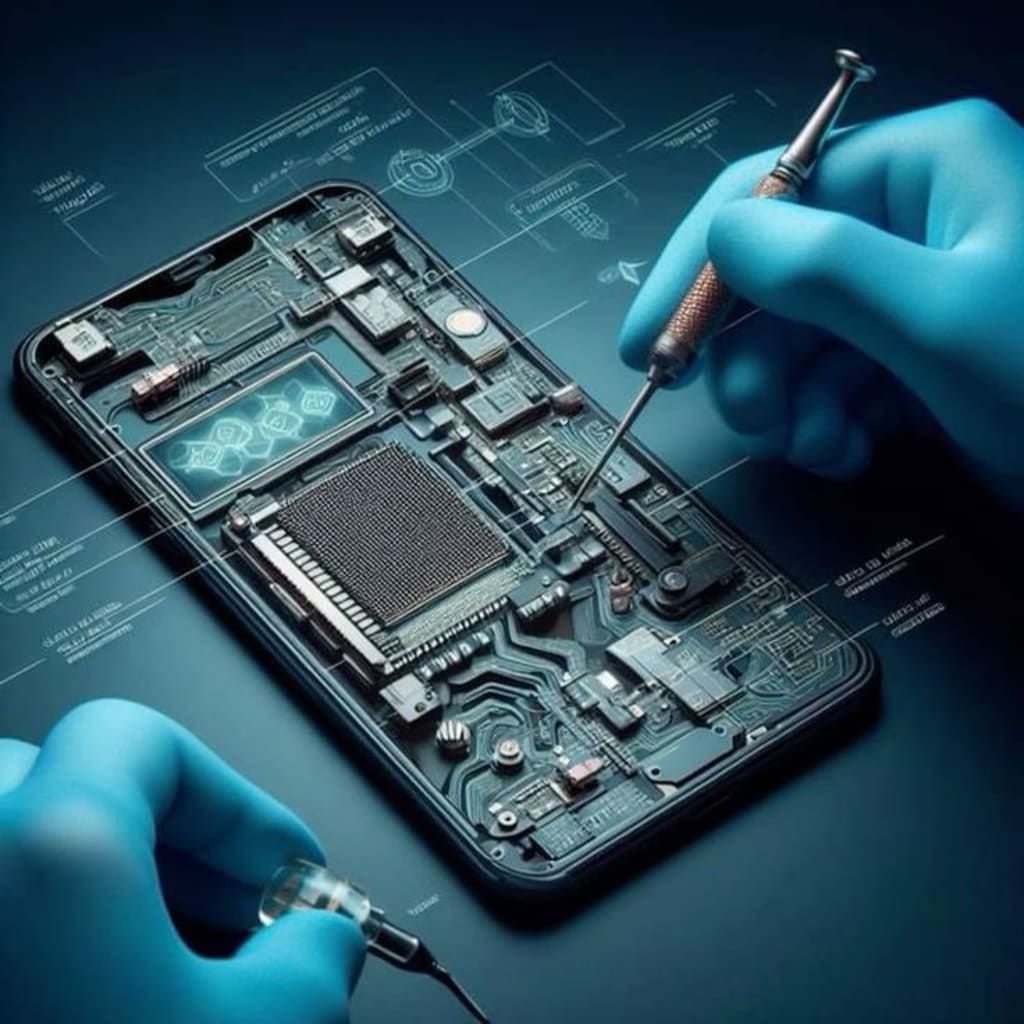
Smartphones have become an essential component of daily life. About 75% of people on the planet own a smartphone. However, how are smartphones made? This article provides insight into the manufacturing process of smartphones, from concept to factory settings.
Three-quarters of the world’s population has a smartphone, with an estimated 1.43 billion sold globally in 2021 alone, according to Statista data.
Given the large number of these ingenious gadgets in use, it is worthwhile to inquire about the manufacturing process of smartphones. How are iPhones created, since Apple holds a quarter of the market?
Let’s learn about everything from the choice to introduce a new product to the manufacturing process of smartphones in factories.
We are not referring to landlines when we ask “How are smartphones made?” We’re not even talking about the first “dumb” cell phones, which included simple texting and calling features as well as (surprisingly) frightening snake games. No. In other words, how are smartphones made? In the end, how are modern mobile phones made?
When IBM created the first smartphone in 1993, it featured a touchscreen and some of the features we now take for granted, such as an address book, calendar, and so on. However, the mobile phone network, integrated circuits, and solid-state drives—all essential components of smartphones—were still in their infancy.
Steve Jobs didn’t really set the technological cat among the pigeons until he unveiled the first iPhone in 2007. That was it. Touchscreens took the place of keypads, and the Apple operating system, or iOS, turned the unassuming mobile device into a little computer.
The majority of smartphone manufacturers will license a version of one of the several operating systems available today rather than developing their own.
How are Smartphones Made? From Idea to Initial Prototype
Like many other things, a new phone’s design and functionality are conceived before it is manufactured. Numerous factors, including commercial dynamics, fashion trends, and technical advancements, may have an impact on this. A new phone is frequently a generational upgrade over an older model.
The idea will be painstakingly developed by executives, designers, and technological specialists at the appropriate company. The operating system, features, and specs will all be decided upon, taking into account factors like cost and the availability of components. The end result of this approach is a very simple, non-working prototype.
How are Smartphones Made? Intelligent
The dummy prototype needs to be transformed into a functional model now. As previously said, a new phone model’s operating system is typically decided upon at the concept stage, but there are still many technical details to oversee and plan. Engineers and designers use the prototype as a starting point to construct the functional aspects of the phone, from the battery, screen, and front and rear cameras to the memory and CPU possibilities. Before the prototype is fitted with the necessary parts, each of these choices needs to be accepted. After the operating system is uploaded and their compatibility is evaluated and improved, the hardware and software finally
The new phone is essentially prepared for production, but testing is a crucial step that must be completed before it is put into production. Every feature of the new model is tested and retested, from dropping the prototype from different heights to submerging it in water to testing the rigorous check on button responsiveness and browsing capability. Since mass production is the next step, now is the opportunity to make any necessary adjustments.
How are Smartphones Manufactured?
How are smartphones made? It’s not a straightforward query. For starters, manufacturing and assembly are not the same thing. Third companies handle the majority of the actual smartphone component production, which is then shipped to the mobile phone makers. After that, they put those parts together to create the smartphone.
From the glass, plastic, and liquid crystal of the screen to the lithium metallic oxide batteries, smartphones are made of a wide variety of materials. Palladium, lead, copper, and even gold are found in circuit boards.
We’re going to focus on one case study, specifically how iPhones are built, to investigate how smartphones are manufactured in factories.
How are Apple phones made? A Case Study in How Are Smartphones Made in Factories?
Despite being conceived in California, iPhones are manufactured all around the world. Components are acquired from more than 200 businesses worldwide, ranging from memory chips to housing and cameras.
All of these components are shipped to one of Apple’s iPhone facilities from locations like China, Taiwan, Japan, India, South Korea, and Germany. One of these factories, in Zhengzhou, China, produces 350 iPhones each minute, or 500,000 per day. The plant, appropriately named iPhone City, may employ up to 350,000 people and occupies an astounding 2.2 million square miles.
Even if the entire production process is becoming more automated, the answer to the question “How are iPhones made?” is that they are made by people. Or, at the very least, they are put together by hand on about 94 production lines.
Each employee on an assembly line is usually given a single duty to complete, which they may do 600 or 700 times in a single day. It can involve installing a camera component or twisting in a single screw. After charging, the battery is put in.
Every part of every phone is inspected for operation once it is assembled. Each phone is only packaged in recognizable Apple packaging and prepared for shipping after passing these stringent checks.
There you have it. The solution to the questions of “how are phones made” and “how are smartphones made” crosses national borders and involves a huge number of individuals.
About the Creator
Ali Hassan
I am a Front-end Developer
Keep reading
More stories from Ali Hassan and writers in Education and other communities.
Samsung S25 vs iPhone 16: Can Samsung Outshine Apple as Rumors Intensify?
This year, the traditional head-to-head matchup might be more thrilling than before. The Samsung Galaxy S25 series may be officially announced in January 2025 if the most recent reports are to be believed. Naturally, as Samsung and Apple continue their long-running battle, I and many others are wondering how the base model Galaxy S25 would compare to the iPhone 16. Even if the Galaxy S25 is expected to have some noticeable improvements, it appears that Samsung's basic flagship may get another small update. Some users won't mind because the Galaxy S24 is already on our list of the top Samsung phones. As our iPhone 16 review explains, the iPhone 16 wowed us with its quick performance, redesigned appearance, and new Camera Control button when it launched in September 2024. In comparison, the iPhone 16 feels like a significant step up from its predecessor, the iPhone 15.
By Ali Hassanabout a year ago in Education
Seattle Nightlife Report: Pony
Mid-winter Friday night. Early but already so dark. The days are getting longer but 6 PM is still pitch black. “Firepit!” You declare things after just a few seconds of solemn thought – not a request or suggestion, not a demand. Last week you walked around saying, “Hot tub?” to anyone who would listen. Or one afternoon you pointed at two men holding hands as they crossed 12th Avenue, looked me in the eyes and said, “Boyfriends.”
By Joe Nasta | Seattle foodie poet7 days ago in Wander




Comments
There are no comments for this story
Be the first to respond and start the conversation.