
How AI and Blockchain Are Shaping Next-Gen Real Estate Tokenization Development
Real Estate Tokenization Development

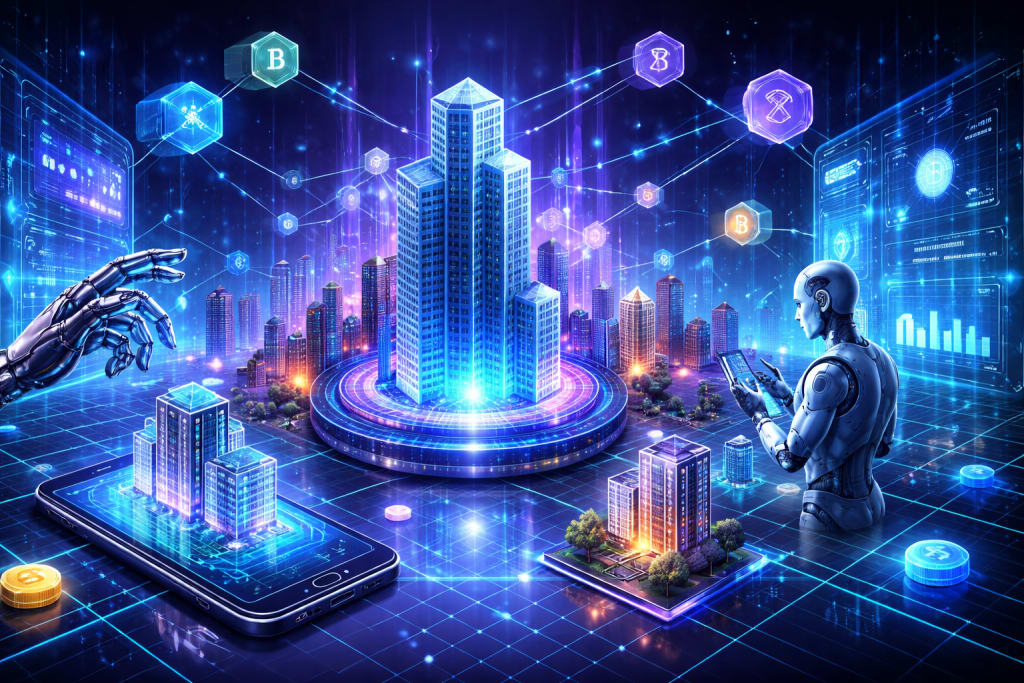
Real estate has historically been one of the most substantial asset classes in the global economy, rooted in physical property, local markets, and deeply entrenched traditional financial systems. Yet the dawn of digital transformation specifically the convergence of artificial intelligence (AI) and blockchain is redefining how property assets are owned, traded, financed, and unlocked for broad investment access. This shift toward real-world asset tokenization is more than a technology trend: it represents a fundamental reimagining of real estate’s economic infrastructure. By digitizing property rights through tokenized structures and leveraging AI to enhance every layer of analysis, management, and transaction execution, this next generation of real estate tokenization development promises greater liquidity, transparency, inclusivity, and operational efficiency.
In this blog, we explore in detail the mechanisms, opportunities, and implications of AI-enabled blockchain tokenization in real estate — covering the core technologies, benefits, challenges, real-world use cases, regulatory environments, and what the future of this space may hold.
The Foundations of Real Estate Tokenization
At its essence, real estate tokenization is the process of converting ownership rights in physical property or portfolios into digital tokens that can be issued, stored, and transferred on a blockchain. These tokens represent fractional ownership, future cash flows, or contractual rights attached to the underlying real estate asset. Unlike traditional property ownership — where one buyer purchases the entire asset — tokenization enables multiple investors to own smaller, liquid, and interoperable fractions, similar to shares in a company.
Implicit in tokenization are two core technologies: blockchain as the immutable ledger that records ownership and enforces transactional rules, and smart contracts programmable protocols that automate compliance and business logic. When paired effectively, these technologies dismantle legacy barriers such as high transaction costs, geographically restricted investor bases, limited liquidity, and opaque pricing structures.
However, real estate tokenization in isolation doesn’t address all frictions in real estate markets. Here is where artificial intelligence begins to play an increasingly transformative role.
How AI Enhances Tokenized Real Estate
Artificial intelligence refers to computational models and systems that can learn from data, recognize patterns, make predictions, and make autonomous or human-assisted decisions. In the context of tokenized real estate, AI enhances value creation throughout the asset lifecycle — from underwriting and valuation to risk assessment, portfolio management, price discovery, and operational optimization.
AI-Driven Valuation and Risk Assessment
One of the most challenging aspects of real estate investment is accurate property valuation. Traditional appraisal processes involve time-consuming manual surveys, comparables, and subjective assessments. AI models — particularly those based on machine learning and neural networks — can process vast datasets of transaction records, market trends, macroeconomic indicators, demographic shifts, and even satellite imagery to produce more precise, real-time valuations. These models can adapt dynamically as new data flows in, reducing dependence on periodic manual appraisal cycles.
AI also enables more nuanced risk profiling by analyzing historical price volatility, tenant behavior, default patterns, neighborhood indicators, and environmental risks such as flood or climate exposure. When embedded into tokenization platforms, these insights help price tokens more accurately, inform investor decisions, and support automated risk-adjusted returns.
Advanced Portfolio Optimization
Investors in tokenized real estate often manage diversified holdings across multiple properties, sectors, and geographies. AI algorithms can analyze correlations, cash flows, vacancy trends, and macroeconomic data to recommend portfolio allocations that optimize for yield, liquidity, or risk tolerance. Reinforcement learning systems — which iteratively learn optimal strategies from simulated outcomes — can enhance dynamic rebalancing strategies based on changing market conditions.
Additionally, predictive analytics can forecast rent growth, demand shifts, and upcoming market cycles, giving token holders actionable insights to strategize entry and exit points.
Smart Contract Intelligence and Compliance Automation
Smart contracts automate the execution of predefined conditions — such as dividend distributions, compliance checks, or token transfer restrictions. AI can enhance these contracts by providing contextual intelligence, fraud detection, anomaly monitoring, and automated regulatory reporting.
For example, natural language processing (NLP) systems can parse legal documents and transform them into structured contract logic, reducing manual drafting errors. AI modules can also monitor transaction patterns and flag suspicious activity in real-time, integrating compliance with Anti-Money Laundering (AML) and Know Your Customer (KYC) frameworks into the token lifecycle.
Blockchain: The Transparent Ledger of Token Ownership
Blockchain is the underlying infrastructure that makes tokenization secure, transparent, decentralized, and programmable. At its core, a blockchain is a distributed ledger maintained by a network of participants, offering tamper-resistant records and verifiable audit trails. When real estate ownership rights are tokenized on such a ledger, investors have real-time visibility into their rights, history of transactions, and compliance status without relying on traditional intermediaries like brokers or registries.
Immutable Ownership Records
Real estate title systems have historically been siloed within local jurisdictions, prone to errors, fraud, and bureaucratic delays. Blockchain’s immutable ledger ensures that once an ownership token is issued, it cannot be altered without consensus from network participants. This reduces title disputes and can dramatically accelerate closing times for property transfers.
Moreover, tokenized ownership isn’t bound by physical paper titles — instead, it’s represented through cryptographic keys with clearly defined permissions. Ownership transfers can be executed instantly, recorded unambiguously, and made transparent to authorized parties.
Programmability and Automated Rights Enforcement
Unlike traditional securities, blockchain tokens can embed rights and restrictions directly into their code. A token can automatically enforce vesting schedules, dividend pay-outs, voting rights, and transfer restrictions without human intervention, reducing administrative costs and operational bottlenecks. This programmability also extends to compliance with capital controls, investor accreditation rules, and cross-border regulatory frameworks.
Decentralized Marketplaces and Liquidity Pools
Tokenization opens the door for decentralized exchanges (DEXs) and marketplaces where real estate tokens can be bought, sold, or swapped with minimal friction. Liquidity pools — common in decentralized finance (DeFi) — enable users to provide capital and earn yields, while buyers get instant price feeds based on supply-demand dynamics. These mechanisms significantly reduce the liquidity gap that has traditionally constrained real estate investment.
Convergence: AI + Blockchain in Real Estate Tokenization
Bringing AI and blockchain together in real estate tokenization creates a synergy where each technology amplifies the other’s benefits.
Real-Time Market Intelligence
AI models can ingest blockchain transaction data, external economic indicators, and market signals to produce real-time dashboards that reflect price discovery, liquidity flows, investor sentiment, and projected returns across tokenized assets. Investors can access granular analytics that combines historical performance with predictive insights.
Blockchain’s transparent and standardized data records also improve AI model accuracy. Instead of relying on disparate and siloed data sources, AI systems can learn from structured token ownership and transaction histories — enabling more robust forecasting and anomaly detection.
Automated Compliance and Reporting
Regulatory compliance is one of the most complex aspects of cross-border real estate investment. AI can automate KYC/AML verification, document validation, and risk profiling. Meanwhile, blockchain ensures that compliance records are transparent, traceable, and tamper-proof. Smart contracts can automatically restrict token transfers to verified and accredited investors based on AI-validated credentials.
Regulators themselves may gain access to permissioned blockchain views, allowing them to monitor systemic risk, tax compliance, and investor protections without manual reporting from issuers.
Dynamic Pricing and Liquidity Adjustment
AI-driven price models, fed with real-time blockchain trading data, can help establish dynamic pricing mechanisms for real estate tokens. Instead of static price points set at issuance, token prices could adjust to reflect current market conditions, demand intensity, risk metrics, and macroeconomic factors. AI-assisted liquidity management strategies can optimize order books and marketplace depth, reducing volatility and improving investor confidence.
Use Cases Driving Adoption
The intersection of AI and blockchain in real estate tokenization isn’t hypothetical — it’s already taking shape in several pioneering applications that demonstrate tangible benefits.
Fractional Ownership for Residential Properties
Tokenization enables homeowners or developers to fractionalize single-family homes or multi-unit complexes, allowing investors worldwide to hold small stakes. AI valuation models can establish fair initial pricing and ongoing adjustments based on rental incomes, neighborhood trends, and maintenance factors. Investors benefit from transparent dashboards showing projected cash flows, risk indicators, and automated revenue distributions.
Commercial Real Estate Funds
Large commercial properties — such as office towers, retail centers, and logistics hubs — often require high capital commitments, making them accessible only to institutional investors. Tokenization democratizes access by breaking these assets into smaller units. AI-powered forecasting can analyze lease expirations, tenant mixes, and market shifts to optimize token pricing and dividends. Blockchain facilitates faster capital deployment, transparent ownership tracking, and secondary market trading.
Real Estate Investment Trusts (REITs) Reimagined
Traditional REITs operate under stringent regulatory frameworks and centralized custodianship. Tokenized REITs leverage blockchain to represent shares, while AI oversees portfolio allocation, risk management, and predictive returns. Shareholders benefit from real-time liquidity, lower fees, and algorithmic balancing of asset exposure based on evolving market signals.
Public-Private Development Projects
Governments and municipalities exploring affordable housing or infrastructure projects can use tokenization to raise capital from retail investors. AI can help model community impact, cost projections, and risk scenarios, while blockchain ensures transparent fund deployment, regulatory compliance, and ownership tracking.
Challenges and Considerations
Despite the exciting possibilities, AI-driven blockchain tokenization in real estate is not without obstacles.
Regulatory Fragmentation
Real estate law differs vastly by jurisdiction. Tokenization projects must navigate securities regulations, property transfer laws, tax frameworks, and investor protection standards. Some countries have yet to define legal frameworks for digital securities or recognize tokenized ownership rights. Harmonizing these frameworks requires collaboration between technologists, lawmakers, and industry stakeholders.
Data Privacy and Security
AI systems require extensive data to generate accurate insights. Balancing the need for open market data with privacy protection — especially when dealing with investor personal information — is a complex challenge. Blockchain’s transparent nature must be carefully architected to avoid exposing sensitive data while preserving auditability.
Market Adoption and Education
Bringing mainstream investors — particularly traditional real estate stakeholders — into tokenized ecosystems demands education and trust-building. Many investors are unfamiliar with blockchain technology, smart contracts, and AI analytics. Clear communication about risk, compliance safeguards, and operational protocols is essential to wider adoption.
Integration with Legacy Systems
Existing financial institutions, asset managers, and property registries operate on legacy infrastructures. Integrating tokenization systems with these established networks, while ensuring secure data exchange and compliance, requires significant technical and organizational effort.
The Future of Tokenized Real Estate
As AI and blockchain mature, the next decade is likely to see accelerated innovation and mainstream adoption of tokenized real estate ecosystems. Several key trends can be anticipated:
Interoperable Asset Networks
Different blockchain platforms may evolve interoperable protocols, allowing tokens from various real estate projects to circulate across multiple marketplaces and wallets. Standardized token formats and compliance templates could reduce fragmentation and improve liquidity.
AI-Administered Autonomous Investment Vehicles
Decentralized autonomous organizations (DAOs) and AI-administered funds could emerge that autonomously allocate capital across tokenized real estate assets based on predefined risk profiles and performance goals. These structures could democratize portfolio management while reducing human biases.
Enhanced Predictive and Prescriptive Analytics
AI models will continue to refine forecasting accuracy and expand into prescriptive decision-making — recommending strategic actions such as buying, selling, hedging risks, or reallocating capital based on real-time indicators and scenario simulations.
Real-World Data Integration
Internet of Things (IoT) sensors, geospatial data feeds, tenant activity logs, and environmental monitoring systems will feed AI platforms with continuous real-world inputs. These data streams can enhance predictive models around property conditions, maintenance needs, and valuation dynamics.
Conclusion
AI and blockchain are not separate forces reshaping real estate — they are complementary technologies converging to unlock a new paradigm for property investment and asset management. By digitizing ownership rights, reducing friction, enhancing transparency, and augmenting decision-making through data-driven intelligence, next-generation real estate tokenization development is poised to democratize access to one of the world’s most valuable asset classes. The complexity of regulations, technological integrations, and market adoption should not be underestimated, but as innovators, policymakers, and investors continue to collaborate, a future where real estate markets operate with the speed, efficiency, and inclusivity of digital finance becomes increasingly tangible.
By understanding the underlying technologies, use cases, and evolving landscape, stakeholders can confidently navigate this transformative era — building solutions that make property investing more efficient, equitable, and responsive to real-world demands.
About the Creator
Gabrielle
Blockchain enthusiast and NFT writer dedicated to merging technology with art on decentralized platforms, driving innovation for a creative future. Embracing the potential of digital expression.
Turning Innovation Into Reliable Engineering
Innovation captures attention, attracts investment, and fuels progress. However, excitement alone does not guarantee long-term success. Many groundbreaking ideas fail because they cannot withstand real operating conditions. Customers expect products and systems to perform consistently, safely, and efficiently. This expectation highlights the importance of applied engineering and real-world reliability.
By Michael Gastinelabout 13 hours ago in Education
Blooket 2026: The Complete Strategic Guide for Educators, Schools, and Students
Modern education is no longer about delivering information — it is about creating engagement, retention, and measurable improvement. Students today are digital-native learners. They respond to interactivity, autonomy, and feedback-driven environments.
By Backlinks Cartabout 23 hours ago in Education



Comments
There are no comments for this story
Be the first to respond and start the conversation.