
How a Sandwich Taught Me to Write the Perfect Paragraph
Master academic writing with this simple five-step method—easy enough for beginners, powerful enough for pros.

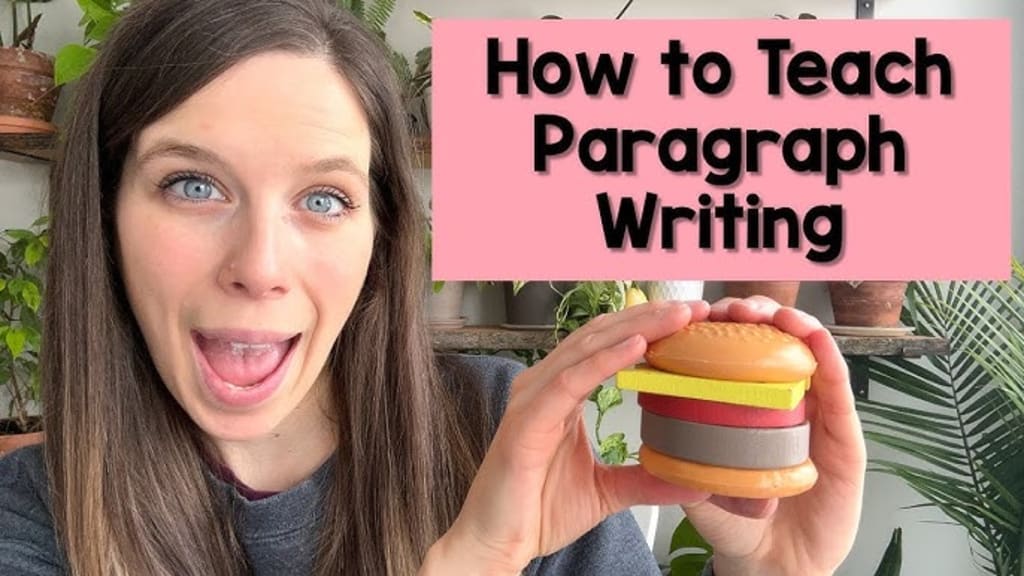
Have you ever thought of an essay as a sandwich? If not, you’re in for a tasty surprise—and a writing trick you’ll never forget.
Think about it: the introduction and conclusion are like the two slices of bread that hold everything together. They're essential, of course, but what really makes the sandwich satisfying is the filling—the meat, cheese, lettuce, tomato, or whatever your heart desires. In an essay, that filling is your body paragraphs.
Just as no one wants a sandwich stuffed with soggy lettuce, bland meat, or imitation cheese, no teacher or reader wants to slog through weak, flavorless paragraphs. So, how do you avoid this common writing mistake?
The answer is simpler than you think. With a straightforward formula, anyone—from middle school students to college undergrads—can learn to write solid, impactful body paragraphs for any subject. Whether you're writing a personal essay, an academic paper, or even a blog post, this method works like a charm.
Step One: Start With the Main Idea
Before you even begin writing your paragraph, you need to know what you're trying to say. This is your main idea, also called your controlling idea or thesis. It tells the reader what you’re arguing or explaining and why it matters.
A solid main idea contains two simple parts:
The subject: What are you writing about?
Your opinion or point about the subject (without saying "I think" or "I believe").
For example, let’s say your assignment is to write about a food you enjoy. Your main idea could be:
“Peanut butter and jelly sandwiches are the best.”
That sentence contains both parts of a strong thesis:
The subject is peanut butter and jelly sandwiches.
The opinion is they are the best.
This sentence becomes the anchor for your entire essay. Every paragraph you write should support or develop that main idea.
Step Two: Know the Ingredients of a Perfect Paragraph
Now that you’ve got your thesis, it’s time to build your sandwich—your paragraph. A perfect body paragraph has five basic parts, like ingredients in a recipe. This structure is often called the chunk method, and it’s a game-changer for writers who struggle with organizing their thoughts.
Here are the five essential components:
Topic Sentence (TS) – This sentence introduces the main idea of the paragraph. It acts like a mini-thesis for that paragraph.
Concrete Detail (CD) – A specific fact, quote, or example that supports your topic sentence.
Commentary/Analysis (CM) – Two sentences explaining why the detail matters. This is where your voice and reasoning come in.
Concluding Sentence (CS) – A sentence that wraps up the paragraph and transitions smoothly to the next idea.
Let’s break this down further with a practical example.
Step Three: Put It All Together
Let’s use our earlier main idea: Peanut butter and jelly sandwiches are the best. Now, we’re going to write a full paragraph using the chunk method.
Example Body Paragraph:
One reason peanut butter and jelly sandwiches are the best is because they are easy to make. A peanut butter and jelly sandwich only requires three basic ingredients: bread, peanut butter, and jelly. Virtually any type of bread can be used—from white and whole wheat to rye or even gluten-free options. The same goes for peanut butter and jelly: crunchy or creamy, grape or strawberry, the choice is yours. With a quick smear of peanut butter and jelly between two slices of bread, your sandwich is ready in under a minute. The ease with which a peanut butter and jelly sandwich can be made is not the only reason peanut butter and jelly sandwiches are the best.
Let’s examine what each sentence is doing:
Topic Sentence (TS): One reason peanut butter and jelly sandwiches are the best is because they are easy to make.
Concrete Detail (CD): A peanut butter and jelly sandwich only requires three basic ingredients: bread, peanut butter, and jelly.
Commentary (CM):
Virtually any type of bread can be used—from white and whole wheat to rye or even gluten-free options.
The same goes for peanut butter and jelly: crunchy or creamy, grape or strawberry, the choice is yours.
Additional Commentary (optional for more depth):
With a quick smear of peanut butter and jelly between two slices of bread, your sandwich is ready in under a minute.
Concluding Sentence (CS): The ease with which a peanut butter and jelly sandwich can be made is not the only reason peanut butter and jelly sandwiches are the best.
This structure creates a clear, concise, and convincing paragraph that supports your thesis while keeping your reader engaged.
Step Four: Expand When Needed
The great thing about this method is how flexible it is. Need to write a longer essay? Simply repeat the pattern. Each new paragraph introduces a different reason or angle that supports your thesis.
Let’s say you need three body paragraphs to support your thesis about peanut butter and jelly sandwiches. Here’s how you could structure them:
Paragraph 1 – They are easy to make.
Paragraph 2 – They are affordable and accessible.
Paragraph 3 – They remind people of childhood and provide comfort.
Each of these paragraphs follows the same chunk method, just with different examples and details. And before you know it, you have a well-structured, thoughtful essay that practically writes itself.
Step Five: Master the Basics, Then Make It Your Own
I’ve used this method with students of all ages—from elementary school writers to college freshmen. It works. Not because it’s fancy, but because it gives writers a reliable structure to build from. Once you’re confident with the basics, you can start bending the rules a little. Add your personality, your humor, your creativity.
But first? Stick to the formula.
Think of it like cooking. You need to learn how to follow a recipe before you can start improvising like a chef.
Final Thoughts: Writing Shouldn’t Be Scary
Writing a strong paragraph doesn’t have to be overwhelming. When you break it down into manageable pieces—just like assembling a sandwich—it becomes easier, even fun. And the more you practice, the better you’ll get.
So, the next time you're sitting at your desk with a blank page in front of you, just remember the sandwich. Start with a clear topic sentence. Add a juicy detail. Layer in some thoughtful commentary. Wrap it all up with a satisfying conclusion.
Before you know it, you’ll be writing paragraphs that are packed with flavor—and earning the grades to match.
About the Creator
Muhammad Hamza Safi
Hi, I'm Muhammad Hamza Safi — a writer exploring education, youth culture, and the impact of tech and social media on our lives. I share real stories, digital trends, and thought-provoking takes on the world we’re shaping.
Keep reading
More stories from Muhammad Hamza Safi and writers in Education and other communities.
Online Learning Isn’t Easier — It’s Just Different
While distance learning isn't new, the number of people turning to it has exploded in recent years — and it’s not just students anymore. Employees are also being asked (or outright required) to complete online training for certifications or job retention.
By Muhammad Hamza Safi10 months ago in Education
Creating Strong and Adaptable Healthcare Teams
Healthcare environments demand constant focus, quick decisions, and consistent teamwork. Medical professionals work under pressure while managing patient care, administrative tasks, and evolving clinical practices. In such demanding conditions, organizations must focus on building strong healthcare teams that remain stable and effective even during challenging situations.
By Brady Beitlich3 days ago in Education
TUS NUA - ch 53
TUS NUA – ch 53 New Beginnings – Mia and Midnight (*)(*)(*) Finola knew Ali’s brother-in-law needed to put his mind at rest. She fed her arm through his and led him outside. “We’ll sit here. If you like, I can put a block around us so our conversation will be private.”
By Margaret Brennan7 days ago in Fiction



Comments
There are no comments for this story
Be the first to respond and start the conversation.