
Homer Lane: Experimental Educator
All childhood education is a form of experimentation...


Experiments with children
All childhood education is a form of experimentation. Teaching objectives, measurements and syllabi change change almost every year, but do we know what really works well, do we put enough effort into developing the ideal educational plan for each individual child?
When I was writing the biography Susan' Brother, I learned about Epping House Special School. At the time Chris (Susan's Brother) was a pupil there, the regime was based on that of the 'Little Commonwealth', a school set up by Homer Lane in Dorset, England.
Lane was an educational innovator (read experimenter on children), and some of his ideas were quite outlandish to most people.
Note that I am not a professional educator, although I have worked as a private tutor. And I am a parent.
Homer Lane: A pioneer in progressive education
Lane was an American educationalist known for his innovative approach to education, particularly for troubled and disadvantaged youth. He believed that education should be compassionate and respectful, rather than punitive, and that students should be empowered to take responsibility for their own learning. Lane's ideas have had a significant impact on the development of progressive education in the United States and around the world.
Early life and career
Homer Lane was born in 1875 in Massachusetts, USA. He began his career as a teacher in Boston before moving to England in 1906. Lane's experiences teaching troubled youth in Boston and his interest in the emerging field of child psychology led him to explore new approaches to education that were more humane and effective.
The Little Commonwealth
In 1913, Lane founded the Little Commonwealth in Dorset, England, with the support of a group of philanthropists and social reformers. The school was a residential community for troubled youth that aimed to provide a supportive and stable environment for learning and growth. Students at the Little Commonwealth lived and worked together in a cooperative community, where they were responsible for running the school, including cooking, cleaning, and maintenance.
Lane's approach to education at the Little Commonwealth was based on the principles of community, self-government, and cooperative living. Students were given a say in the decision-making process through regular meetings of the community council, which helped to develop their sense of responsibility and independence. Lane believed that this approach also helped to break down the barriers between students and teachers, creating a more democratic and equal learning environment.
Arguably, the Little Commonwealth was highly successful, and its principles and practices became a model for progressive education around the world. It attracted the attention of educators and social reformers from many countries, including the United States, where it inspired a number of similar schools and programs.
Here are a few examples from that era:
- The Highlander Folk School, Tennessee - founded in 1932, the Highlander Folk School was an adult education center that focused on social and economic justice;
- The Children's Community School, California - founded in 1945, the Children's Community School was a progressive school that emphasized child-centered learning and cooperative living;
- The Escuela Moderna, New York City - founded in 1911, the Escuela Moderna was a Spanish-language school for immigrant children that emphasized child-centered learning, progressive teaching methods, and cooperative living.
Return to the United States
In 1919, Lane returned to the United States and founded the Cottage School in New York City. The Cottage School was a day school for low-income families, based on the same principles as the Little Commonwealth. Students at the Cottage School were also given responsibility for running the school and making decisions about its operation.
His ideas about the importance of community, self-government, and cooperative living continue to be influential in progressive education today. I have to say that those principles did not apply in my grammar school, where slower learners were chastised and corporal punishment was rife (I certainly took a few canings in my time).
Criticisms of Lane's approach
One of the main criticisms was that Lane's approach was too permissive and allowed students too much freedom, which some believed could lead to chaos and disorder. Critics argued that children needed more structure and discipline in order to develop a sense of responsibility and self-control.
Susan's Brother explained to me that during his time at Epping House Special School, the headmaster and his wife were practising nudists and the children were encouraged to run around naked. Chris (Susan's Brother) told me that there was no sexual impropriety that he was aware of at that time.
Another criticism of Lane's approach was that it could be overly idealistic and unrealistic, particularly in its emphasis on communal living and self-government. Some argued that Lane's vision of a self-governing community was not achievable in the real world, and that his methods were better suited to a small, homogeneous group rather than a diverse society. Today this might seem a 'hippyish' approach.
There were also concerns about the effectiveness of Lane's approach for children with more severe behavioral or emotional problems. Some argued that Lane's methods were too focused on the social and emotional aspects of education, and that they did not provide enough academic rigor or structure for children who needed it most. Feedback on the Susan's Brother website from past pupils at Epping House varies widely in this respect.
Finally, there were criticisms that Lane's approach was too focused on the individual child and did not take into account the broader social and economic factors that contribute to children's difficulties. Critics argued that a more systemic approach was needed to address the root causes of social problems, rather than relying solely on individualistic solutions.
Here is an argued example of such a criticism by Michael Apple, a professor of education at the University of Wisconsin-Madison.In his book, "Can Education Change Society?", he writes:
"Progressive education has emphasized the development of the individual child, but it has often failed to engage with broader social, political, and economic issues that affect the lives of children and families. If we want to create more just and equitable societies, we need to move beyond individualistic approaches to education and address the structural inequalities that perpetuate social problems."
I find that hard to agree with, as I think it is essential to teach every child as an individual and not as part of some societal machine. But of course I recognise that the cost of doing so is prohibitive unless more parents start to play a greater part in their children's education.
Lane's legacy
Homer Lane died in 1925, at the age of 49, but his ideas and principles continue to inspire educators and social reformers around the world, while others still disagree strongly.
His work is the basis for many of the progressive educational programs and schools that exist today. Some of the currently operational schools in the US include:
- Sudbury Valley School - located in Framingham, Massachusetts. Sudbury Valley School is a democratic school that emphasizes self-directed learning and student autonomy.
- High Tech High - located in San Diego, California, High Tech High is a network of charter schools that emphasizes project-based learning and real-world problem-solving.
- Big Picture Learning - a non-profit organization that operates schools and programs across the United States.
In the UK we have:
- Summerhill School founded in 1921 by A.S. Neill.
- Sands School - located in Devon, England, Sands School is a democratic school that was founded in 1987 by a group of parents and educators who were inspired by Homer Lane's ideas.
- The Green School - located in Isleworth, London, The Green School is a public school that emphasizes personalized learning and student-centered education.
- The Iona School - located in Nottingham, England, The Iona School is a Waldorf-inspired school that emphasizes holistic education and the development of the whole child.
Lane's approach to education, based on compassion, respect, and empowerment, continues to be an important influence on progressive education theory and practice.
But the approach is still not in the mainstream.
“Let us put our minds together and see what life we can make for our children.”– Hunkpapa Lakota Sioux Chief, Sitting Bull.
Sources:
- Lane, Homer. The Little Commonwealth. London: George Allen & Unwin, 1913.
- Lane, Homer. The Cottage School. New York: Harcourt, Brace & Howe, 1922.
- Kean, Hilda. Homer Lane and the Little Commonwealth. London: Allen & Unwin, 1951.
- Scott, William R. Homer Lane and the Psychology of Society. London: Tavistock Publications, 1968.
- Davies, Beth. "Homer Lane and the Cottage School Movement." History of Education Quarterly, vol. 22, no. 4, 1982, pp. 399–415.
https://infed.org/mobi/homer-lane-and-the-little-commonwealth/
***
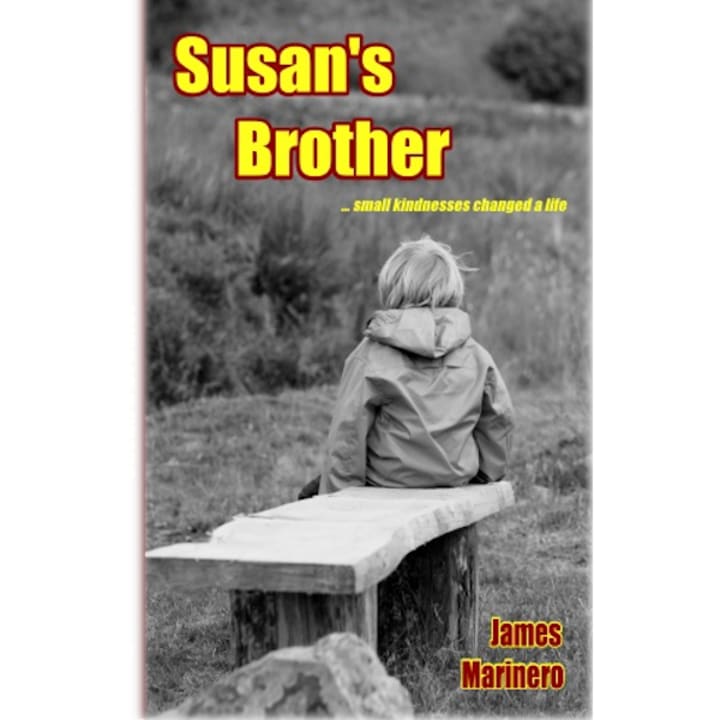
Susan's Brother is available at my Gumroad bookstore, and at Amazon and Apple
About the Creator
James Marinero
I live on a boat and write as I sail slowly around the world. Follow me for a varied story diet: true stories, humor, tech, AI, travel, geopolitics and more. I also write techno thrillers, with six to my name. More of my stories on Medium
Keep reading
More stories from James Marinero and writers in Education and other communities.
Real Estate vs. Stock Market Investing: Which Path Builds More Wealth?
Real estate vs. stock market investing is a common debate for anyone who wants to grow wealth. Many people ask which option is safer, which earns more money, and which fits their lifestyle. The truth is that both choices can build wealth over time. However, they work in very different ways. You need to understand the strengths and risks of each before you decide.
By Manny Khoshbin5 days ago in Education
The Reality of doing it all before graduation
Many kids hear from their parents that they should try to live life to the fullest and do as much as they can before it’s too late. None of them is wrong in that regard, but putting it into practice is a little harder than it sounds.
By Aydn Young6 days ago in Education



Comments
There are no comments for this story
Be the first to respond and start the conversation.