
Hitler's Life And Impact
Everything you will love to know about him :)

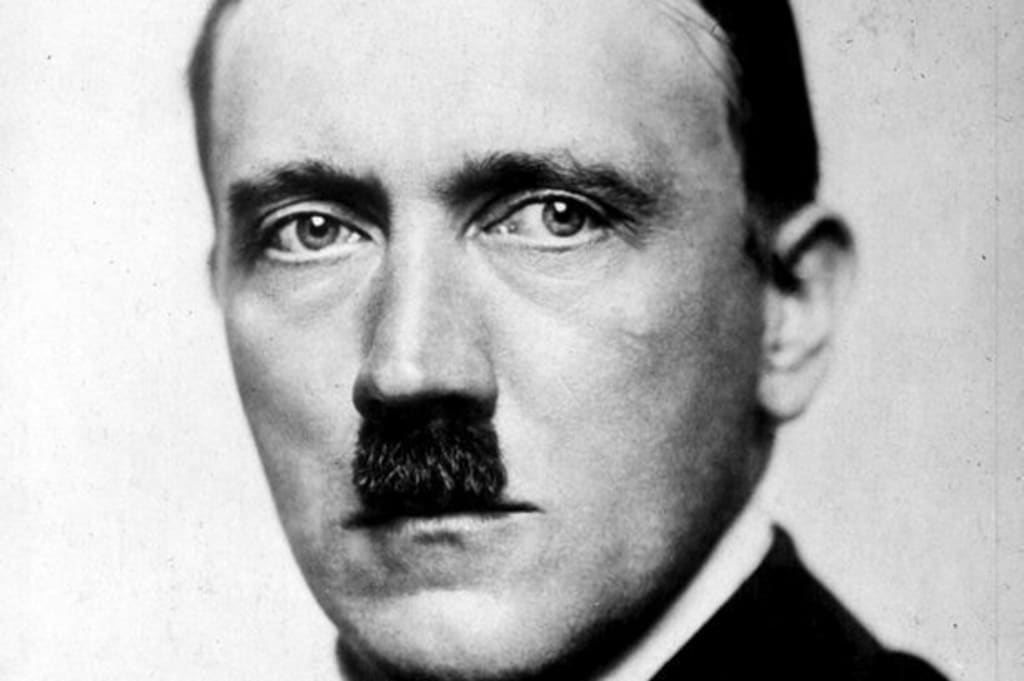
Adolf Hitler, the infamous German dictator, remains a significant figure in history due to his role in World War II and the Holocaust. His actions and ideology have had a profound impact on the world. It is important to approach this topic with sensitivity and accuracy, using reliable sources to provide an unbiased account of Hitler's life and influence.
Adolf Hitler was born on April 20, 1889, in Braunau am Inn, Austria. He grew up in Linz and later moved to Vienna, where he pursued a career as an artist. However, his dreams of becoming a successful painter were dashed, and he struggled to find his purpose in life.
In the aftermath of World War I, Germany faced economic and political turmoil. It was during this time that Hitler emerged as a charismatic and influential figure. He joined the German Workers' Party, which would later become the National Socialist German Workers' Party (NSDAP), or the Nazi Party. Hitler's powerful oratory skills and nationalist rhetoric attracted a growing number of followers.
By 1933, Hitler had risen to power as Chancellor of Germany. He quickly consolidated his position and transformed the democratic Weimar Republic into a totalitarian regime. Hitler's vision for Germany centered on racial purity, anti-Semitism, and expansionist ambitions.
Under Hitler's leadership, Germany embarked on a path of aggressive foreign policy, aiming to restore German greatness and secure Lebensraum (living space) for the Aryan race. In 1939, Hitler's invasion of Poland triggered the outbreak of World War II. Over the course of the war, Germany occupied and controlled vast territories in Europe.
One of the darkest chapters of Hitler's reign was the implementation of the Holocaust, the systematic genocide of six million Jews and millions of other individuals deemed undesirable by the Nazi regime. Hitler's deep-seated anti-Semitism fueled his belief in a master race and led to the establishment of concentration camps, where millions of innocent people were subjected to unspeakable horrors.
Hitler's regime also imposed strict control over German society, suppressing dissent and targeting groups considered enemies of the state. Political opponents, homosexuals, Romani people, and disabled individuals were among those persecuted and marginalized.
As the war progressed, Hitler's military fortunes began to decline. The tide turned against Germany with the Soviet Union's successful defense in the Battle of Stalingrad and the Allied forces' D-Day invasion in 1944. Realizing the imminent defeat, Hitler retreated into his underground bunker in Berlin.
On April 30, 1945, as Allied forces closed in on Berlin, Hitler and his longtime companion, Eva Braun, died by suicide. The following week, Germany surrendered unconditionally, marking the end of Hitler's reign.
The legacy of Adolf Hitler is one of immense destruction and human suffering. The world was forever changed by his actions, and the Holocaust remains a stark reminder of the depths of human cruelty and the importance of vigilance against extremist ideologies.
Studying Hitler's life and the circumstances that allowed him to rise to power serves as a reminder of the dangers of unchecked power, propaganda, and the consequences of intolerance. It is through education and understanding that we strive to prevent such atrocities from happening again and build a more inclusive and tolerant world.
In conclusion, Adolf Hitler was a pivotal figure in history, whose ideologies and actions led to the devastation of World War II and the Holocaust. By examining his life and the circumstances surrounding his rise to power, we can learn valuable lessons about the importance of safeguarding democracy, promoting tolerance, and confronting hatred in all its forms.
About the Creator
Keep reading
More stories from Nabeela Khan and writers in Education and other communities.
The Titanic: A Tragic Tale Of Ambition And Disaster
The RMS Titanic, dubbed the "unsinkable" ship, was a marvel of engineering and a symbol of human ambition in the early 20th century. Launched on May 31, 1911, this luxury British ocean liner was hailed as a masterpiece of modern maritime technology. However, its maiden voyage would forever be etched in history as a catastrophic event that claimed the lives of more than 1,500 people.
By Nabeela Khan3 years ago in Education
Modern Entrepreneurship and Best Practices for Long-Term Success
Modern entrepreneurship combines creativity, innovation, and strategic planning to build businesses that thrive in an ever-changing global landscape. Today’s entrepreneurs must navigate advanced technologies, shifting consumer expectations, and competitive markets while maintaining long-term sustainability.
By Chris Kelly4 days ago in Education
Breaking the Emotion Cycle: How Data-Driven Trading Transforms Investor Behavior
Emotional investing has shaped market behavior for generations, often with costly consequences. Fear drives investors to sell during downturns, while excitement pushes them to buy during euphoric rallies. As a result, many portfolios suffer from poor timing and inconsistent strategy. These emotional reactions feel natural, yet they frequently undermine rational analysis and long-term planning.
By Agast Mishra2 days ago in Education
Where there's Art there's Heart
Here's a stupid thing: I adore art, but I start to panic whenever I step into a gallery. In the one place I should be at my contented best - surrounded by walls teeming with creative expression - I fall apart. What ought to be an enriching experience, tacitly designed to facilitate the exploration of human empathy and perspective, is for me an overwhelming purgatory of anxiety that compresses me to the point I cannot breathe. At the same time, I experience a sense of extraction, as though my head is being prized open to create a hole so big my sanity could evaporate. Somewhere between these two opposing forces of vice and vortex, I feel myself dissolving in a stream of panic that makes me want to cry; and I feel so daft feeling this way, that all I want to do is run for the hills.
By Caroline Jane4 days ago in Humans


Comments
There are no comments for this story
Be the first to respond and start the conversation.