
History of World and Dinosaurs
Mystery of Dinosaurs and their extinction
Introduction
Hello, friends! Today writing is dedicated to one of the most dangerous and enduring species to ever live on this planet, Earth. About 100 million years ago, Earth looked completely different from what it looks like today.
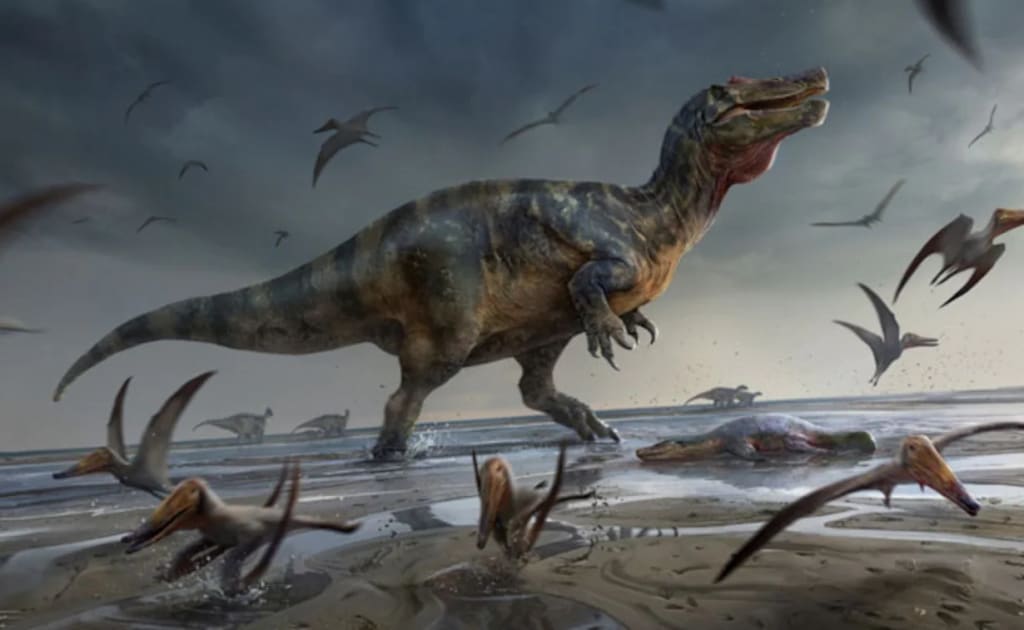
With no humans, some scary animals were ruling over this planet. Dinosaurs. Dinosaurs were so big, that they were taller than buildings, longer than private jets, and wider than tanks. With jaws so strong, they could have crushed your bones within a second. They were so fast, that they ran at around the speed of 90km/hr. They were truly fear-arousing creatures. The presence of these mighty creatures dates back to around 230 million years. They ruled over Earth for more than 170 million years. But then one day, something happened, that completely wiped them off the planet. What happened exactly? And how?
The word ‘Dinosaur’ originated from Greek. From the words Denios and Sauros. Denios means Terrible. And Sauros means Lizard. A terrible lizard. This is the literal meaning of the word Dinosaur. The word was used for the first time in 1841. When the dinosaur fossil was discovered for the first time by Reverend William Buckland in Gloucestershire, England. Richard Owen, a British scientist used the word dinosaur.
Back then, people did not know much about dinosaurs or their appearance. So the initial drawings of how dinosaurs might have looked vastly different from what we know now.
Megalosaurus was one of the first fossils to be discovered.
Decades later, as the researchers discovered more information about them, the drawings were modified. Trying to make them more realistic. Today, more than 10,000 dinosaur fossils have been unearthed by paleontologists worldwide, and more than 900 distinct have been identified. You might be excited by the prospect of discovering more fossils. But interestingly, from 2003 to 2022, on average, about 45 new species of dinosaurs have been identified each year.
The work of paleontologists is far from over. Last year, new species of dinosaurs were discovered. Of them, this is a bizarre dinosaur discovered in Chile, with a weapon that looks like a blade on its tail, and a beak for a mouth. It was named Stegouros Elengassen.
Overall, we know a lot about dinosaurs today. But come, let’s start this story at the beginning. Let’s dive into the past.
Earliest of Time
Millions of years ago, scientists estimate that the first dinosaur emerged about 230-240 million years. Because the oldest dinosaur fossils that we have found till now are from 231.4 million years ago in Africa. Back then, Earth was much different than it is today. The continents that you see now, Asia, Africa, Australia, and Europe, all continents were joined together. There was only one supercontinent. That we call Pangaea.
Scientists believe that Pangaea looked somewhat like giant C. The climate of Earth was dry with only a little rain. This period has been named the Triassic Period. The era when the dinosaurs had started emerging. Dinosaurs were slowly populating the Earth due to evolution. The dinosaurs of this era, aren’t anything like the ones you imagine. They were quite small in size. The common dinosaurs of the time were generally around 2 meters long only. For example, Eoraptor was a dinosaur that existed in that period. This dinosaur is known as the ancestor of other dinosaurs. The dominant animals of the era were giant reptiles.
Some of these reptiles looked cute. With time, Earth started changing. 201 million years ago, the Triassic period ended. When Earth’s climate changed suddenly. The Pangaea started breaking apart. Although I am using the word ‘suddenly’, it didn’t happen in a day or two, it was relatively sudden.
In the time scale of millions of years, it happened gradually over thousands of years. Cracks appeared in the supercontinent. Large-scale volcanic explosions took place on and around the cracks.
Due to the numerous volcanic eruptions, a large amount of carbon dioxide and sulfur dioxide was released into the atmosphere. This caused intense global warming. When the sulfur dioxides and aerosols entered the atmosphere, they blocked the sunlight and caused some cooling. Acidification of the oceans started when carbon dioxide and sulfur dioxide mixed with the water. The acidity of the ocean water increased. The climate was changing rapidly. And survival became difficult for the animals that existed. Most reptiles and other species back then were cold-blooded animals. They couldn’t withstand the temperature changes. But the dinosaurs were warm-blooded like humans. It was easier for the dinosaurs to tolerate the temperature changes. The volcanic eruptions and climate change continued for about 600,000 years. Due to this, almost all the other species became extinct. The only animals remaining on Earth were the dinosaurs, crocodiles, turtles, and early mammals. This event is known as the Triassic-Jurassic Extinction Event.
Jurassic Period
As I said, after this, the Triassic period ended. And the Jurassic period began. If this sounds like a familiar name. This is the inspiration for the name of the Jurassic Park film. The word Jurassic refers to this Jurassic Period. The Jurassic period lasted from 201 million ago to 145 million years ago. During this time, dinosaurs emerged as the most dominant species on the planet. Due to evolution, some of them became quite large. Like some of the earliest Titanosaurus. They lived around 160 million years ago. Each of them weighed up to 15,000 kg. And could be up to 15 meters long. During the Jurassic period, some dinosaurs evolved to fly. One of the first feathered dinosaurs was Archaeopteryx. At this time, the Pangaea supercontinent was divided into two. Two smaller supercontinents. We named them Laurasia and Gondwanaland.
Due to the Jurassic Park films, The Jurassic period is the most widely known. But it was the next period when dinosaurs truly flourished. The Cretaceous period.
Because at this time, we saw an explosion in the diversity of dinosaurs. Several new species of dinosaurs evolved. T-Rex, perhaps, is the most famous dinosaur to be shown in films. Existed in the Cretaceous period.
It reached peak dominance only at the end of the Cretaceous period. Around 65-68 million years ago. Though this is debated among researchers, Most scientists believe that T-Rex didn’t exist in the Jurassic period. It’s quite ironic that in the film ‘Jurassic Park, T-Rex is used for their logo. The Cretaceous period was the longest time in the era of dinosaurs. Starting around 145 million years ago, it lasted til 65 million years ago.
The 2 supercontinents, Laurasia and Gondwanaland started breaking up, And the structure of the continents, Looked similar to what we see today. Several flowering plants evolved around this time. And the average temperature of the Earth was warmer than it was in the past. Sea levels were quite high, And almost all kinds of dinosaurs that you can imagine, Existed during this period.
The Earth was once dominated by dinosaurs of all shapes and sizes. From the raptors and armored dinosaurs to the giant herbivores and dangerous carnivores, there was a wide variety of species thriving during this time. The Titanosaurus and Argentinosaurus were among the largest land animals, weighing up to 77 tonnes. And of course, the T-Rex was the apex predator, with the strongest jaws of any animal. Interestingly, the evolution of grass only began 70 million years ago, so don't imagine a grass-filled Earth in this era. Instead, there were other kinds of plants.
T-Rex and Triceratops evolved 68 million years ago, meaning we are closer in time to the T-Rex than it was to the Jurassic period, which is separated by 80 million years. Another interesting dinosaur from this time was the Ornithomimids, which looked like ostriches and were among the fastest dinosaurs, running at speeds of up to 80 km/hr. The largest flying dinosaur was Quetzalcoatlus, which had a wingspan of 10-11 meters. Overall, this was the most prosperous period for dinosaurs, with the climate and lack of competition favoring their evolution and expansion.
The Change
However, everything changed when a large asteroid, with a diameter of roughly 10-15 km, crashed into Earth 66 million years ago, ending the Cretaceous period. This catastrophic event wiped out the dinosaurs forever, as well as many other species. The asteroid was traveling at a speed of 30 km per second, 150 times faster than a jet airliner, and specifically hit the Yucatan Peninsula in Mexico, where the Mayan tribe would later emerge. This event marks a pivotal moment in the history of the Earth, leading to the rise of mammals and ultimately, the evolution of humans. And built historical wonders like Chichen Itza.
The dinosaurs, who were already struggling due to the changing climate, could not survive this catastrophic event. The herbivorous dinosaurs lost their food sources, and the carnivorous ones lost their prey. Some of the smaller dinosaurs that survived the initial impact struggled to find enough food to survive, and they eventually died out as well. Over 75% of all species on Earth, not just dinosaurs, went extinct during this event. This was known as the Cretaceous-Paleogene extinction event.
However, this catastrophic event was not the end of life on Earth. Some species managed to survive, and new species evolved. It took millions of years for life on Earth to recover from the asteroid impact, but eventually, new ecosystems developed, and new species flourished. This event changed the course of life on Earth, and it serves as a reminder of the fragility of life and the impact that even a small event can have on our planet.
It's important to note that while the asteroid impact was a significant event in Earth's history, it was a catastrophic event that resulted in the extinction of many species. It's also important to remember that humans did not exist during the Cretaceous period and that we have no reason to believe that we would have evolved if the asteroid had not hit. While it's true that the extinction of the dinosaurs allowed for the evolution of mammals, including our ancestors, it's important to recognize the devastation that occurred and to take steps to prevent similar events from happening in the future. We should also work to protect and preserve the biodiversity of our planet, as every species plays an important role in maintaining the health of our ecosystems.
Paleogene Period
The asteroid impact that occurred 66 million years ago brought an end to the Cretaceous period and marked the beginning of the Paleogene period. The impact caused a chain reaction that led to the extinction of all terrestrial dinosaurs and over 75% of the plant and animal species on Earth. The only animals that survived were small omnivorous creatures that could scavenge for food, such as mammals, lizards, turtles, and some birds. The impact also released carbon and sulfur into the atmosphere, causing a significant reduction in sunlight levels and the continuation of acid rain for thousands of years. The resulting nuclear winter ended when the dust in the atmosphere settled, but the release of a large quantity of carbon dioxide caused intense global warming. The gap in the food chain left by the dinosaurs was filled by several mammals, including horses, whales, bats, and primates. Birds, the closest living relatives of dinosaurs, evolved from the flying dinosaurs that survived the impact. The asteroid's impact location and date were determined through the analysis of iridium, a rare mineral found in high concentrations on Earth's surface due to its abundance in comets and asteroids. The impact left a crater, but the continents' shifting over millions of years has made it difficult to observe.
The crater of this asteroid is hidden in the Yucatan Peninsula. But several digging expeditions were conducted, Which proved that it had happened, And the exact location it happened. If you look at the map, this is the exact location. Half of it is submerged under the sea, And the other half is on land.
Modern Era
We have always been fascinated with space and the objects in it. One of the biggest fears that we have is the threat of an asteroid colliding with Earth. This fear is not unfounded as we know from history that such an event can have devastating consequences. The asteroid that hit Earth 66 million years ago wiped out the dinosaurs and caused a massive extinction event. However, we have made a lot of progress since then. NASA and other space agencies continuously track near-earth asteroids and have identified over 28,000 of them, with more than 800 having a diameter of 1 km or more. We can predict their path and estimate the chances of a collision with Earth. The DART space mission launched in 2021 aims to alter the path of an asteroid by colliding with a spacecraft. The test conducted in September 2022 was successful and showed that we could alter the path of an asteroid. However, humans are still the biggest danger here. The possibility of an asteroid collision is still very real, but we can take steps to mitigate the risk.
The asteroid strike that killed the dinosaurs is the 5th extinction event in Earth’s history.
Are we facing extinction?
Scientists have determined that the sixth extinction event is already underway, caused solely by humans rather than any natural disaster. Over the last two centuries, biodiversity has suffered greatly due to human activities such as deforestation and pollution. Thousands of species have already gone extinct or are endangered due to these factors, and urgent action is needed to prevent further losses. In 2010, a United Nations Convention set 20 biodiversity targets to be achieved by 2020, but only six have been partially achieved. A new plan similar to the Paris Agreement aims to protect 30% of land and oceans and reduce pollution by 50% by 2030. Scientists recommend limiting extinctions to 20 or fewer per year. The survival of plant and animal species is crucial to human survival, as our species has only been on Earth for 300,000 years compared to the dinosaurs' reign of 174 million years. The question remains whether humans can beat the record set by the dinosaurs.
About the Creator
Reader insights
Outstanding
Excellent work. Looking forward to reading more!
Top insights
Easy to read and follow
Well-structured & engaging content
Excellent storytelling
Original narrative & well developed characters
Expert insights and opinions
Arguments were carefully researched and presented
On-point and relevant
Writing reflected the title & theme
Keep reading
More stories from Ammad Ateéq and writers in Education and other communities.
FALL OF SHAH OF IRAN
Reason for the hatred in the people of Iran for Shah It is a known fact that the Shah and his wife were criticized for their extravagant lifestyle and perceived lack of concern for the struggles of the Iranian people. They were also accused of suppressing political opposition and limiting free speech.
By Ammad Ateéq3 years ago in Education
What Should Be Your Main Focus During an Online Limited Radiology Tech Program
Well, the short answer is that there is not a single module that you should strictly focus on. If you want to become a X-ray technician, you need to develop both technical and soft skills.
By Meaghan Howe3 days ago in Education
Precision in Motion: The Rise of Sport Shooting and Firearms in Modern Competition
Sport shooting has grown from a simple test of aim into a structured sport that demands discipline, patience, and technical skill. Today, sport shooting and firearms play a major role in global competitions, training programs, and recreational events. Athletes train for years to improve accuracy and control. They study equipment, posture, breathing, and focus. Because of this dedication, sport shooting has become a respected sport that rewards precision and calm thinking.
By Matthew Pothoff2 days ago in Education
Hottest in the Office
Dear Rafi, You’re very distracting to work around. For the first second I saw you the other day, I thought you were some type of executive. It took a moment to realize no, you were just the new guy, dressed up for the job he wants. Be still, my heart.
By Gabriel Shames4 days ago in Pride




Comments (1)
Worth reading article for Dino enthusiasts Great work!!!