
History of tamil
Tamil is a classical language that has been spoken for over 2,000 years.
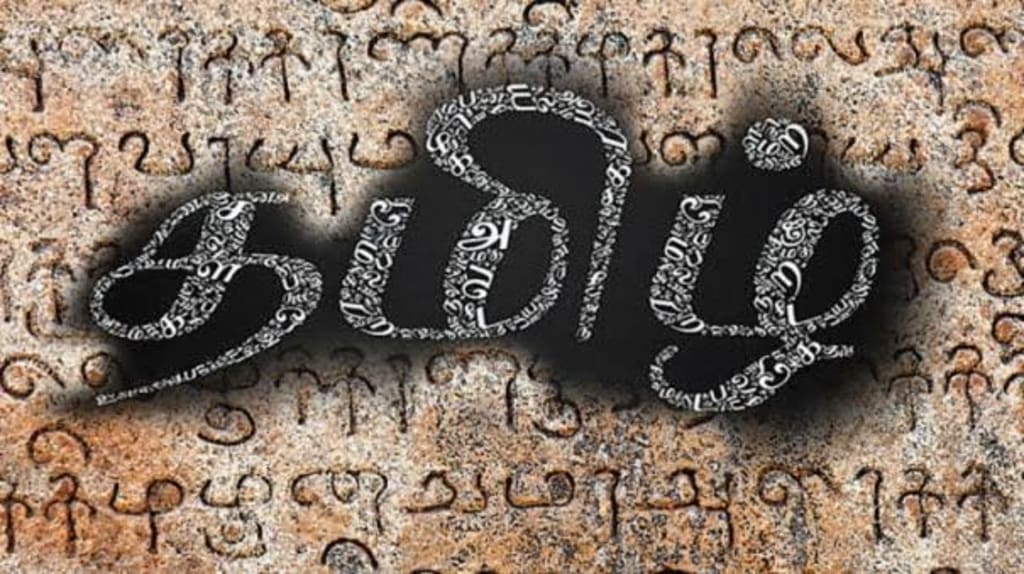
Tamil is a classical language that has been spoken for over 2,000 years. It is the official language of the Indian state of Tamil Nadu and also spoken by millions of people in other parts of India, as well as in Sri Lanka, Singapore, Malaysia, and other countries. Tamil is a unique language with a rich history, literature, and culture that is worth exploring.
History of Tamil Language
Tamil is considered one of the oldest languages in the world, with a history that dates back to at least the 3rd century BCE. The earliest known Tamil inscriptions were found in the caves of Mahabalipuram in Tamil Nadu. The Tamil language evolved over time through contact with other languages, including Sanskrit, which influenced Tamil literature and grammar.
During the mediaeval period, Tamil literature flourished, producing works such as the Thirukkural, a classic text on ethics and morality, and the Silappathhikaram, an epic poem that tells the story of a woman named Kannagi who seeks revenge for her husband's unjust execution. Tamil literature has also been important in the development of Hindu and Jain traditions.
In the modern era, Tamil has continued to evolve and adapt to new circumstances. It was a key language in the Indian independence movement and played a significant role in the struggle against British colonialism. Today, Tamil is a vibrant and living language that continues to be spoken by millions of people around the world.
Features of Tamil Language
Tamil is a unique language with several distinctive features. One of the most notable is its use of agglutinative grammar, which allows words to be formed by combining multiple morphemes (meaningful units of language). This allows for a high degree of flexibility and creativity in the construction of sentences.
Another distinctive feature of Tamil is its complex system of verb conjugation. Tamil verbs can be conjugated in multiple ways to indicate tense, mood, and other grammatical features. This allows for precise expression of ideas and emotions in a way that is not possible in many other languages.
Tamil also has a rich vocabulary that includes many words borrowed from other languages, including Sanskrit, English, and Arabic. This reflects the language's long history of contact with other cultures and its adaptability to new influences.
Tamil Literature
Tamil literature is among the oldest and richest in the world. The earliest known Tamil literature dates back to the Sangam period (3rd century BCE to 3rd century CE), when Tamil poets composed works on love, war, and other themes. The Sangam literature consists of 2,381 poems written by 473 poets, and is divided into two categories, akam (love poems) and puram (heroic poems).
The mediaeval period saw the emergence of Tamil epics, including the Silappathikaram and Manimeghalai, as well as the Thirukkural, a work of ethical and moral teachings that remains widely read and influential today. The Thirukkural, written by the poet Thiruvalluvar, consists of 1,330 couplets on topics such as love, ethics, and governance.
In the modern era, Tamil literature has continued to flourish. Prominent writers include the novelist R.K. Narayan, who wrote in English but drew heavily on Tamil culture and traditions in his work, and the poet Subramaniya Bharath, who wrote in Tamil and was a leading figure in the Indian independence movement.
Tamil Culture
Tamil culture is rich and diverse, encompassing a wide range of traditions, beliefs, and practices. One of the most important aspects of Tamil culture is its devotion to Hinduism, which has played a central role in the development of Tamil literature, music, and art.
Tamil culture is also known for its vibrant music dance traditions. Classical Tamil music, known as Carnatic music, is characterised by its intricate rhythms and melodic structures, and has a long history dating back to the Sangam period. Tamil dance forms, such as Bharatanatyam, are also known for their grace, elegance, and expressive movements.
Tamil cuisine is another important aspect of Tamil culture, known for its use of fresh ingredients and bold flavors. Some popular Tamil dishes include dosa (a thin, crispy pancake made from fermented rice and lentil batter), idli (a steamed rice cake), and sambar (a spicy lentil soup).
Tamil festivals are an important part of Tamil culture, with each region of Tamil Nadu having its own unique celebrations. Some of the most popular festivals include Pongal (a harvest festival celebrated in January), Diwali (the festival of lights), and Navratri (a nine-day festival dedicated to the worship of the goddess Durga).
Tamil cinema, often referred to as Kollywood, is also an important part of Tamil culture. Tamil films are known for their colourful visuals, melodramatic plots, and catchy music. Many Tamil films have also tackled social and political issues, making them an important medium for social commentary and activism.
Conclusion
Tamil is a unique and fascinating language with a rich history, literature, and culture. From its ancient roots to its modern-day expressions, Tamil has adapted and evolved to reflect the diverse influences that have shaped its development. Its agglutinative grammar, complex verb conjugation, and rich vocabulary make it a fascinating language for linguists and language learners alike. And its literature, music, art, and cuisine offer a window into the vibrant and diverse culture of Tamil Nadu and beyond. Whether you are a Tamil speaker or simply curious about this fascinating language and culture, there is much to explore and appreciate.
About the Creator
Can You Really Earn Money With Transcription? The Real Income Reality
The short answer is yes—you can earn money with transcription. But the more honest, useful answer is this: transcription only becomes worthwhile when you understand how the income actually works, not how it’s often presented online.
By Mahesh Kumar6 days ago in Education
A brief history of chess
The attacking infantry advances steadily, their elephants already having broken the defensive line. The king tries to retreat, but enemy cavalry flanks him from the rear. Escape is impossible. But this isn’t a real war– nor is it just a game. Over the roughly one-and-a-half millennia of its existence, chess has been known as a tool of military strategy, a metaphor for human affairs, and a benchmark of genius. While our earliest records of chess are in the 7th century, legend tells that the game’s origins lie a century earlier.
By Munesh Yadav2 days ago in Education



Comments
There are no comments for this story
Be the first to respond and start the conversation.