

I. Introduction
A gun is a weapon that uses an explosive force to propel a projectile, typically a bullet, out of a barrel. Guns have been used for hunting, self-defense, and warfare for centuries. They have evolved over time, from early muskets and hand cannons to modern handguns, rifles, and automatic weapons.
The history of the gun can be traced back to the late 14th century, with the invention of the matchlock, the first mechanism for firing a gun. In the centuries that followed, gun technology advanced rapidly, with the introduction of the wheel lock, flintlock, and percussion cap ignition systems. Today, guns are widely used around the world for a variety of purposes, from hunting and sport shooting to law enforcement and military operations.
II. Types of guns
Guns come in a wide variety of types and styles, each designed for a specific purpose. Some of the most common types of guns include:
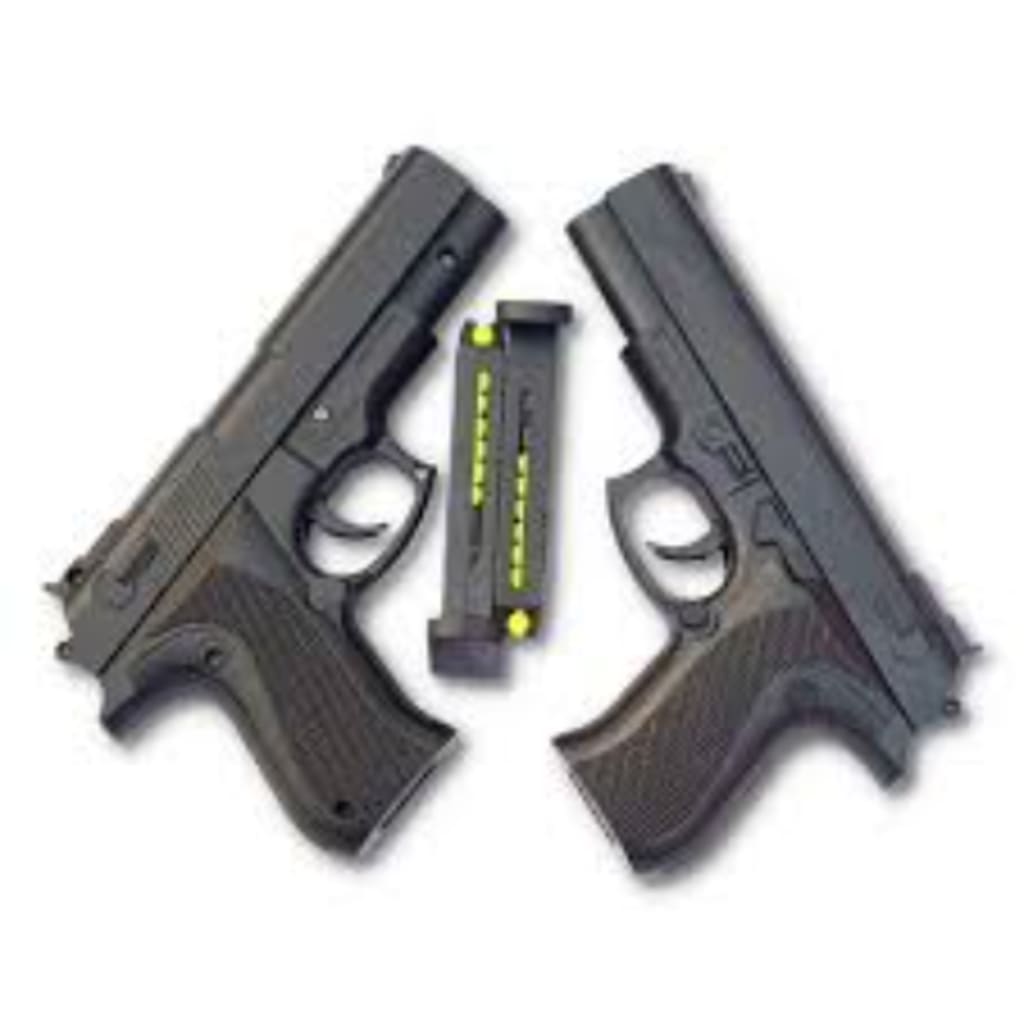
Handguns: These are small, portable guns that are designed to be held and fired with one hand. They include revolvers and pistols, such as the Colt .45 and the Glock 17.
Rifles: These are long guns that are designed to be fired from the shoulder and typically have a longer barrel than handguns. They include bolt-action rifles, such as the Remington 700, and semi-automatic rifles, such as the AR-15.
Shotguns: These are long guns that are designed to fire a spread of shot, or multiple small pellets, and are typically used for hunting and sport shooting. They include pump-action shotguns, such as the Mossberg 500, and semi-automatic shotguns, such as the Benelli M4.
Automatic and semi-automatic weapons: Automatic weapons are designed to fire multiple rounds with a single trigger pull and are typically restricted by law. Semi-automatic weapons fire one round with each trigger pull.
III. How guns work (Continued)
Mechanisms of firing: Most modern guns use a system called "centerfire" ignition, which involves a firing pin striking the primer located in the center of the cartridge. This causes the powder inside the cartridge to ignite, creating a high-pressure gas that propels the bullet out of the barrel. Other types of ignition systems include "rimfire" ignition, which uses the rim of the cartridge to ignite the powder, and "percussion" ignition, which uses a small charge of powder in a separate chamber to ignite the main charge.
Ammunition types: Different types of guns use different types of ammunition. Handguns and rifles typically use metallic cartridges, which contain the bullet, powder, and primer in a single unit. Shotguns typically use shells, which contain multiple small pellets called "shot" as well as the primer and powder.
IV. Gun ownership and laws
Regulations and laws regarding gun ownership vary by country and state. In the United States, for example, the Second Amendment of the Constitution guarantees the right to bear arms, but individual states have the authority to regulate gun ownership. This includes background checks and licensing for gun owners, as well as restrictions on certain types of firearms and accessories.
Background checks and licensing: In the United States, most states require a background check for any person purchasing a firearm from a licensed dealer. This check is intended to ensure that the buyer is not prohibited by law from owning a firearm, such as if they have a criminal record or history of mental illness. Some states also require a license or permit to own a firearm, which may include additional requirements such as training or a waiting period.
Concealed carry laws: Concealed carry laws refer to the regulations that govern the carrying of firearms in public places. In the United States, the laws vary by state, with some states having "shall issue" laws, which means that anyone who meets the legal requirements may carry a concealed weapon, while others have "may issue" laws, which means that the issuing authority has discretion to grant or deny a permit.
V. Gun violence and safety
Gun violence is a significant public health issue in many countries, including the United States. According to the Center for Disease Control and Prevention (CDC), in 2019, there were 39,740 deaths from firearm-related injuries in the United States, with more than half of them being suicides. The impact of gun violence can be felt not just by the victims and their families but also by entire communities, causing trauma and destabilization.
Safety measures and gun storage: To reduce the risk of gun violence, safe storage of firearms is essential. This includes keeping guns locked and unloaded, using gun safes or locking devices, and properly storing ammunition. Additionally, training on firearms safety and responsible gun ownership can help prevent accidents and misuse of firearms.
VI. Conclusion
Guns are a contentious issue in modern society, with passionate arguments on both sides of the debate. While they are used for hunting, self-defense, and recreation, they can also be used to cause harm and death. Regulations and laws regarding gun ownership and use vary widely, with some countries having strict laws and others having more permissive laws. Gun violence and safety are significant concerns, and efforts to reduce gun violence, such as background checks, licensing, and safe storage, are ongoing. As technology advances, new innovations in gun design and technology are likely to continue to shape the conversation around gun use and regulation in the future.
About the Creator
Keep reading
More stories from Giridharan and writers in Education and other communities.
Breaking Spiritual Strongholds
Many believers love God and sincerely desire to live victorious lives, yet they sometimes feel trapped by recurring struggles. These struggles may appear as persistent fear, discouragement, addiction, negative thinking, or spiritual oppression. No matter how much someone prays or tries to move forward, certain battles seem to repeat themselves.
By Errick Ruffinabout 4 hours ago in Education



Comments (1)
Sadly, firearm is just a tool and people are the one to choose how to use it. I'm mainly going with bolt-actions for hunting(gladly there are a good selection at the local hunting store https://gritroutdoors.com/ ) but over the last years a lot less folks are getting guns for hunting and a lot more self-defense... Not sure if I like this or not.