
Health Information Technology: Transforming Healthcare for the Digital Age
Empowering Patients and Providers Through Innovation
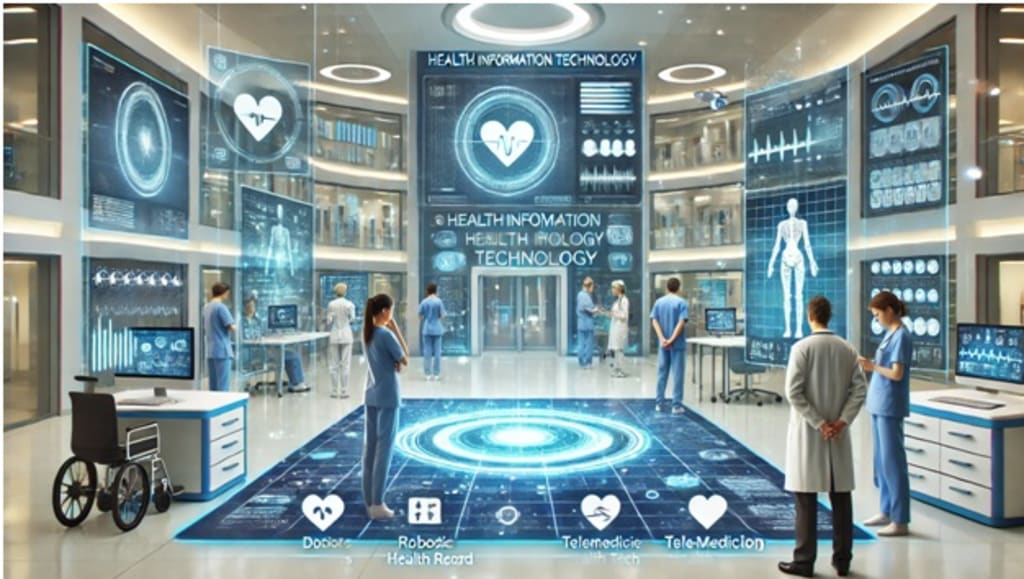
Health Information Technology (HIT).
Has become a cornerstone of modern healthcare, reshaping how medical data is collected, stored, analyzed, and shared. Over the last few decades, advancements in information technology have significantly impacted healthcare, improving the quality of care, patient safety, and the efficiency of healthcare delivery. As healthcare systems across the world continue to adapt to digital solutions, understanding the role, benefits, challenges, and future directions of health information technology is essential for healthcare professionals, policymakers, and the general public.

Introduction to Health Information Technology
Health Information Technology refers to the use of various technologies to collect, store, manage, and transmit health data electronically. This broad field includes electronic health records (EHR), electronic medical records (EMR), health information exchanges (HIE), telemedicine, mobile health (mHealth), clinical decision support systems (CDSS), and data analytics tools, among others. The integration of these technologies into healthcare practices helps streamline workflows, reduce errors, and improve patient outcomes.
The push toward adopting health information technology
Has been motivated by the need for better patient care, enhanced communication between healthcare providers, and the reduction of healthcare costs. In many countries, the use of digital health technologies is mandated by regulations and government policies, which aim to foster standardization, improve accessibility, and enhance the quality of healthcare services.
Key Components of Health Information Technology
Health Information Technology encompasses a wide range of tools and systems. Below are some of the key components that make up HIT:
1. Electronic Health Records (EHR)
The EHR is a digital version of a patient’s medical history, maintained over time by healthcare providers. It includes essential information such as diagnoses, medications, immunizations, allergies, test results, and treatment plans. Unlike paper-based records, EHRs can be accessed, updated, and shared across different healthcare settings, facilitating real-time information exchange among physicians, hospitals, clinics, and pharmacies. This interconnectivity improves the coordination of care and minimizes the risk of errors due to incomplete or outdated information.
2. Electronic Medical Records (EMR)
Similar to EHRs, electronic medical records (EMRs) are digital records maintained by healthcare providers but are generally confined to one practice or organization. While EHRs are meant to be shared across different healthcare systems, EMRs are designed for use within a specific healthcare provider's office or facility. They are typically used for clinical purposes, such as documenting treatment history and providing a snapshot of a patient’s health status.
3. Health Information Exchange (HIE)
Health Information Exchange (HIE) is a system that allows the electronic sharing of health-related information between organizations, such as hospitals, laboratories, and insurance companies. It enables healthcare providers to access and exchange critical patient data quickly and securely, regardless of the system used. This facilitates better decision-making, reduces duplication of tests, and promotes a more cohesive approach to patient care.
4. Clinical Decision Support Systems (CDSS)
Clinical Decision Support Systems (CDSS) are technologies designed to aid healthcare providers in making clinical decisions. CDSS analyzes data from EHRs, medical literature, and other sources to provide real-time, evidence-based recommendations. These systems can alert healthcare providers to potential drug interactions, allergies, and deviations from clinical guidelines, helping improve patient safety and treatment outcomes.
5. Telemedicine and Telehealth
Telemedicine refers to the use of technology to provide clinical services remotely. Through telemedicine platforms, patients can consult with healthcare providers via video calls, phone calls, or online messaging. This is particularly beneficial for patients in rural or underserved areas who may have limited access to healthcare facilities. Telehealth encompasses a broader range of services, including remote monitoring, health education, and administrative tasks, and can be used for non-clinical purposes such as health coaching or follow-up care.
6. Mobile Health (mHealth)
Mobile health (mHealth) involves the use of mobile devices, such as smart phones and tablets, to support healthcare practices. mHealth applications help patients track their health conditions, manage chronic diseases, receive medication reminders, and communicate with their healthcare providers. These apps and devices empower individuals to take control of their health and provide healthcare professionals with valuable data that can enhance treatment plans.
Benefits of Health Information Technology
The integration of health information technology into healthcare offers numerous benefits for both patients and healthcare providers. Here are some of the key advantages:
1. Improved Patient Care
HIT enhances the quality of care by providing healthcare providers with accurate, up-to-date information. With systems like EHRs, doctors can make better-informed decisions regarding diagnoses, treatments, and medications. The ability to access a patient’s complete medical history in real time helps avoid mistakes, reduce the chances of adverse drug reactions, and minimize unnecessary tests or procedures.
2. Enhanced Communication and Collaboration
Health information technology facilitates communication and collaboration among healthcare professionals. Systems like Health Information Exchanges (HIEs) allow healthcare providers to securely share patient data across various organizations. This is particularly important for patients who receive care from multiple specialists, ensuring that all relevant parties are aware of a patient's health status, allergies, medications, and treatment history.
3. Increased Efficiency and Productivity
HIT improves the efficiency of healthcare systems by reducing the administrative burden on healthcare providers. For instance, automating patient records and prescription orders eliminates the need for manual data entry, reducing the chance of human error. Additionally, systems like Clinical Decision Support Systems (CDSS) provide healthcare providers with evidence-based recommendations, streamlining the decision-making process and helping doctors make faster, more accurate choices.
4. Better Data Management and Storage
Electronic systems allow for more organized and secure storage of patient data. Unlike paper records, which can be easily lost or damaged, digital records can be backed up and stored in multiple locations to ensure safety and compliance with privacy regulations. Furthermore, electronic records are easier to search, update, and manage, saving valuable time for healthcare providers and patients alike.

5. Reduced Costs
While the initial investment in health information technology can be substantial, the long-term cost savings can be significant. The reduction in paperwork, errors, and redundant tests translates into cost savings for healthcare providers. In addition, the use of telemedicine and remote monitoring can reduce the need for hospital visits and readmissions, further lowering costs for both patients and healthcare organizations.
Challenges and Barriers to Health Information Technology Adoption
Despite the numerous benefits, the widespread adoption of health information technology faces several challenges. These barriers must be addressed to ensure the effective use of digital health technologies in healthcare systems worldwide.
1. Cost of Implementation
The initial cost of implementing health information technology can be prohibitive for many healthcare organizations, especially smaller practices or those in developing countries. Investments in infrastructure, training, and ongoing maintenance can add up quickly, making it challenging for organizations to adopt these technologies without significant financial support.
2. Privacy and Security Concerns
As healthcare organizations digitize patient data, concerns about privacy and data security become more prominent. Cyber security threats, such as data breaches or hacking, pose significant risks to patient confidentiality. Strict regulations like the Health Insurance Portability and Accountability Act (HIPAA) in the U.S. have been put in place to safeguard patient information, but healthcare organizations must continuously invest in securing their IT infrastructure.
3. Resistance to Change
Healthcare professionals may resist adopting new technologies, especially if they feel that these tools disrupt their established workflows. Some may also be concerned about the time required to learn and adapt to new systems. Overcoming this resistance often requires comprehensive training and a shift in organizational culture to emphasize the benefits of HIT.
4. Interoperability Issues
One of the most significant barriers to the successful implementation of health information technology is interoperability—the ability of different health IT systems to communicate and share data seamlessly. Many healthcare systems use different software platforms, and these systems often do not "talk" to each other, hindering the exchange of patient data. Achieving interoperability requires standardization of data formats and protocols, which is an ongoing challenge in the healthcare industry.
5. Legal and Regulatory Challenges
The rapidly evolving landscape of health IT is often ahead of the regulatory curve, leaving healthcare organizations with unclear or outdated guidelines regarding its use. Governments and regulatory bodies are working to create and enforce policies that govern the use of HIT, but the speed of technological innovation often outpaces legislation, creating uncertainty for healthcare providers and patients alike.
The Future of Health Information Technology
As technology continues to advance, the future of health information technology looks promising. Some of the key trends and innovations to watch in the coming years include:
1. Artificial Intelligence (AI) and Machine Learning
Artificial intelligence and machine learning are revolutionizing healthcare by enabling more accurate predictions, personalized treatments, and automation of routine tasks. AI algorithms can analyze large datasets from EHRs, medical imaging, and clinical trials to identify patterns and predict outcomes, assisting healthcare providers in making more informed decisions.
2. Blockchain Technology
Block chain, which is best known for its application in cryptocurrency, has the potential to improve data security and interoperability in healthcare. By creating decentralized, tamper-proof records of patient data, blockchain could enhance the security and accuracy of health information exchanges, providing a solution to current privacy concerns.
3. Personalized Medicine
The rise of genomics and biotechnology is leading to the development of personalized medicine, which tailors medical treatments to individual genetic profiles. Health Information Technology will play a crucial role in managing and analyzing the vast amounts of data required to develop personalized treatment plans.
4. Integration of Wearables and IoT
The use of wearable devices and Internet of Things (IoT) technologies to monitor patient health in real time is expected to expand. These devices can track vital signs, activity levels, and other health parameters, allowing healthcare providers to offer proactive care and patients to manage their conditions more effectively.
About the Creator
Keep reading
More stories from Muhammad Akhtar Ali and writers in Education and other communities.
Learn Golf the Smart Way: A Clear Path for New Players
Golf is often seen as a demanding sport, but it does not have to be confusing or intimidating. Many people want to learn golf for fun, fitness, or social reasons, yet they feel unsure about where to start. The truth is that golf becomes enjoyable when you focus on the fundamentals and take steady steps forward. This article is designed to help new players understand the game in a practical, straightforward way, especially those seeking golf basics for beginners that are easy to follow and apply on the course.
By Dr. Shawn Keller4 days ago in Education
How Community Service Strengthens You and the Place You Call Home
Community service is more than simply giving your time—it’s a powerful way to build stronger connections, improve local spaces, and create positive change that lasts. Whether you volunteer once a month or every weekend, your efforts can make a meaningful difference for both you and the people around you.
By Kevin Knasel3 days ago in Education



Comments (1)
?This Article by Health information & Latest technology