
Health and Wellness
How to process your emotions in healthy ways


Emotions are subjective feelings or mental states that arise in response to stimuli or events in our environment. They are complex, multi-dimensional experiences that can include physical sensations, cognitive evaluations, and behavioral responses.
There are many different emotions that humans experience, including happiness, sadness, anger, fear, disgust, surprise, and many others. Emotions can be triggered by a wide range of stimuli, including the actions of other people, environmental factors, or internal thoughts and beliefs.
Emotions are often thought of as having a physiological and psychological component. Physiologically, emotions can cause changes in heart rate, breathing, and other bodily functions. Psychologically, emotions can affect our thoughts, perceptions, and behavior.
There are many different theories and models of emotions, including basic emotion theories, cognitive appraisal theories, and social constructionist theories.
Despite their complexity and subjectivity, emotions are an important aspect of human experience and play a crucial role in how we interact with the world around us.
Here are some common emotions:
1. Happiness:
- Joy
- Delight
- Contentment
- Euphoria
- Gratitude
- Satisfaction
- Pleasure
2. Sadness:
- Grief
- Despair
- Melancholy
- Disappointment
- Sorrow
- Regret
- Loneliness
3. Anger:
- Rage
- Irritation
- Frustration
- Resentment
- Bitterness
- Hostility
- Fury
4. Fear:
- Anxiety
- Dread
- Panic
- Nervousness
- Apprehension
- Terror
- Paranoia
5. Disgust:
- Revulsion
- Repulsion
- Contempt
- Loathing
- Nausea
- Aversion
- Abhorrence
6. Surprise:
- Amazement
- Astonishment
- Startle
- Shock
- Bewilderment
- Confusion
- Uncertainty
It's worth noting that emotions are complex and nuanced, and people may experience them differently and have their own set of subheadings. Additionally, some emotions may overlap or blend together, and it's possible to experience multiple emotions at the same time.
Processing your emotions in healthy ways is an essential part of maintaining good mental health. Here are some ways to do so:
1. Recognize and acknowledge your emotions:
The first step to processing your emotions in a healthy way is to recognize and acknowledge them. Pay attention to how you feel and try to name the emotions you are experiencing.
2. Allow yourself to feel your emotions:
It's important to allow yourself to feel your emotions and not suppress them. Give yourself permission to experience your emotions fully, and don't judge yourself for feeling a certain way.
3. Express your emotions:
Find a healthy way to express your emotions, such as talking to a friend or therapist, journaling, or creating art. Choose a method that works best for you.
4. Practice self-care:
Take care of yourself by engaging in activities that make you feel good, such as exercise, spending time outdoors, reading a book, or taking a bath. Self-care can help you manage your emotions more effectively.
5. Practice mindfulness:
Mindfulness can help you stay present in the moment and prevent you from getting lost in your emotions. Meditation, deep breathing, and yoga are all great ways to practice mindfulness.
6. Seek professional help:
If you're struggling to process your emotions, don't hesitate to seek professional help. A therapist or counselor can provide you with the tools you need to manage your emotions in a healthy way.
7.Challenge negative thoughts:
Negative thoughts can contribute to negative emotions. Challenge negative thoughts by asking yourself if they are true, and if there is evidence to support them. Consider alternative perspectives or ways of looking at the situation.
8. Talk to someone:
Talking to a trusted friend or family member, or a mental health professional, can help you process your emotions. Sometimes just talking about how you feel can be very therapeutic.
9. Write it down:
Journaling can be a helpful way to process your emotions. Write down how you're feeling, what's causing your emotions, and any thoughts or insights you have about them.
10. Develop healthy coping skills:
Develop healthy coping skills to manage difficult emotions. This can include deep breathing, meditation, mindfulness, or progressive muscle relaxation.
About the Creator
Sara
I deeply love to read and write. I can narrate stories in my free time. Writing is my biggest passion and hobby. I love myself in the world. Always be positive and motivated. Keep my surroundings happy
Follow me on: www.sarafitrition.com
Natural Ways to Clear Blackheads and Whiteheads
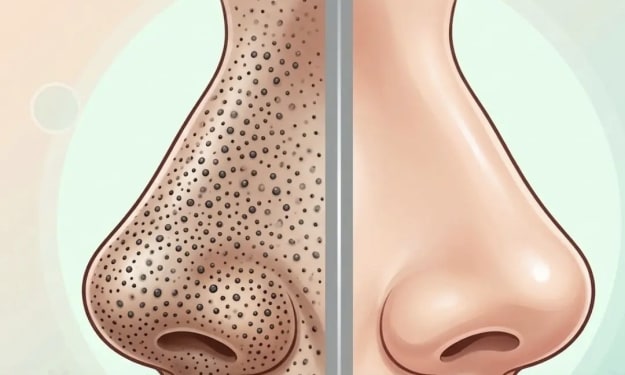
Blackheads and whiteheads are very common skin problems that affect people of all ages. They usually appear on the nose, chin, forehead, and sometimes on the cheeks. These small bumps form when the pores of the skin become clogged with oil, dead skin cells, and dirt. Blackheads appear dark because the clogged material inside the pore reacts with air and becomes oxidized, while whiteheads remain covered by skin, giving them a white or flesh-colored appearance.
By DigitalAddi3 days ago in Education



Comments
There are no comments for this story
Be the first to respond and start the conversation.