
Harappan Civilization Now Referred to as "Sindhu-Sarasvati Civilization" in New NCERT Textbooks
Harappan Civilization

The National Council of Educational Research and Training (NCERT) has recently updated its Social Science textbooks for Class 6, replacing the term "Harappan Civilization" with "Sindhu-Sarasvati Civilization." This change has sparked discussions and debates around the reasoning behind it. In an interview with The Indian Express, the head of the NCERT Social Science panel, Dr. Neerja Rashmi, defended the decision, stating that it is based on established scholarship rather than any political agenda.
Established Scholarship Supports the Change
According to Dr. Rashmi, the decision to refer to the ancient civilization as the "Sindhu-Sarasvati Civilization" is rooted in academic research and evidence. She argued that the term "Harappan Civilization" was a colonial construct, as the ancient sites were first discovered in the town of Harappa, located in what is now Pakistan.
"The term 'Harappan Civilization' was coined by the British archaeologists who first discovered the sites in Harappa. However, the civilization was not limited to the Indus Valley alone but spread across a much larger geographical area, including the Sarasvati River basin," Dr. Rashmi explained.
Scholars have long argued that the ancient civilization was not solely confined to the Indus Valley and that the Sarasvati River, which is now largely dry, played a significant role in the development and expansion of this ancient culture. The new textbooks, Dr. Rashmi stated, are reflecting this broader understanding of the civilization's geographic and cultural spread.
Addressing the Perception of Political Agenda
The decision to replace the term "Harappan Civilization" has raised concerns among some that it may be driven by a political agenda, particularly by the Hindu right-wing. However, Dr. Rashmi firmly refuted these allegations, stating that the change is based solely on academic considerations and not on any political motivations.
"The decision to use the term 'Sindhu-Sarasvati Civilization' is not a result of any political agenda. It is simply a reflection of the current scholarly consensus on the geographical and cultural expanse of this ancient civilization," she said.
Dr. Rashmi emphasized that the NCERT panel responsible for the textbook revisions includes scholars from diverse backgrounds and that the decision was made through a collaborative and rigorous process. She maintained that the panel's focus was on ensuring the accuracy and relevance of the content, rather than catering to any particular ideological agenda.
Contextualizing the Change
The shift in terminology from "Harappan Civilization" to "Sindhu-Sarasvati Civilization" is part of a broader effort by the NCERT to update and align its textbooks with the latest academic research and findings. This is not the only change made in the new Class 6 Social Science textbook, titled "Exploring Society: India and Beyond."
The textbook also incorporates other updates, such as a greater emphasis on the diverse cultural and geographical aspects of India, as well as a more comprehensive treatment of the country's history and social dynamics. The aim, according to Dr. Rashmi, is to provide students with a more nuanced and accurate understanding of India's rich past and present.
Reactions and Implications
The decision to use the term "Sindhu-Sarasvati Civilization" has elicited mixed reactions from various stakeholders. While some have welcomed the change as a more accurate reflection of the civilization's geographic and cultural breadth, others have raised concerns about the potential implications of this terminology shift.
Critics argue that the new terminology is an attempt to align the textbooks with the Hindu right-wing's narrative, which emphasizes the ancient Hindu roots of Indian civilization. They fear that this could lead to a skewed or biased presentation of history, potentially undermining the secular and inclusive nature of the education system.
However, defenders of the change, such as Dr. Rashmi, maintain that the decision is based on scholarly evidence and that the NCERT is committed to maintaining the academic integrity of its textbooks. They argue that the new terminology does not necessarily imply a particular ideological agenda, but rather reflects the evolving understanding of this ancient civilization among historians and archaeologists.
As the debate continues, it remains to be seen how the implementation of the "Sindhu-Sarasvati Civilization" terminology in the new NCERT textbooks will be received by students, educators, and the broader public. The outcome of this change may have far-reaching implications for the way India's ancient history is taught and understood in the years to come.
Calling Harappan Civilization Sindhu-Sarasvati in new textbooks is based on established scholarship, not politics: NCERT Social Science panel head Harappan society is 'Sindhu-Sarasvati civilisation' in NCERT's new Social Science textbook for Class 6 Exploring Society: India and Beyond With New Class 6 Textbook, NCERT Legitimises Hindu Right's 'Sarasvati' Claim Harappan society is 'Sindhu-Sarasvati civilisation' in NCERT's new Social Science textbook for Class 6
Conclusion: Implications for the Future
The implementation of the "Sindhu-Sarasvati Civilization" terminology in the new NCERT textbooks is likely to influence how India's ancient history is taught and understood. While the debate continues, it is essential to consider the scholarly basis for this change and its potential impact on students, educators, and the broader public.
This update represents a significant shift in historical interpretation and serves as a reminder of the dynamic nature of academic research and education. As students and educators adapt to these changes, the focus must remain on providing an accurate, inclusive, and well-rounded understanding of India's rich history.
About the Creator
Keep reading
More stories from Priyangini and writers in Education and other communities.
What is Innovation in Education?
Innovation in education refers to the process of introducing new ideas, methods, and approaches to improve the teaching and learning experience. It encompasses a wide range of changes, from incorporating new technologies to developing alternative teaching strategies and curricular designs. The goal of innovation in education is to make the learning process more engaging, effective, and relevant for students in the 21st century.
By Priyangini about a year ago in Education
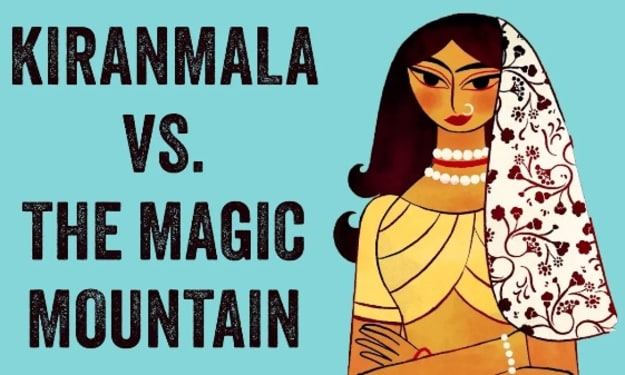
Kiranmala: The tale of the princess who conquered magic mountain
Long ago, in a land far away, the queen was panicked, her grasp on reality seemingly slipping. She had given birth to two boys and one girl. But to her horror, before even meeting their father, each child vanished, something else taking their place. She faced accusations of witchcraft and demon sorcery. And though the king loved her, he was easily swayed. He soon grew doubtful and banished his wife, who left the kingdom in anguish. Little did they know, the queen’s jealous sisters were the ones to replace the newborns
By Munesh Yadav about 15 hours ago in Education
Personalization in Hospitality Marketplaces: Turning Browsers into Bookers
In today’s digital world, travelers expect more than just a list of rooms and rates when they browse hospitality marketplaces. They want experiences tailored to their preferences, timely recommendations, and a sense that the brand understands their needs. Personalization is no longer a bonus; it has become a driving factor in turning casual browsers into committed bookers. Hotels and travel brands that harness personalization effectively can increase conversion rates, strengthen loyalty, and deliver experiences that resonate long after the stay.
By Jason Nissena day ago in Education



Comments
There are no comments for this story
Be the first to respond and start the conversation.