
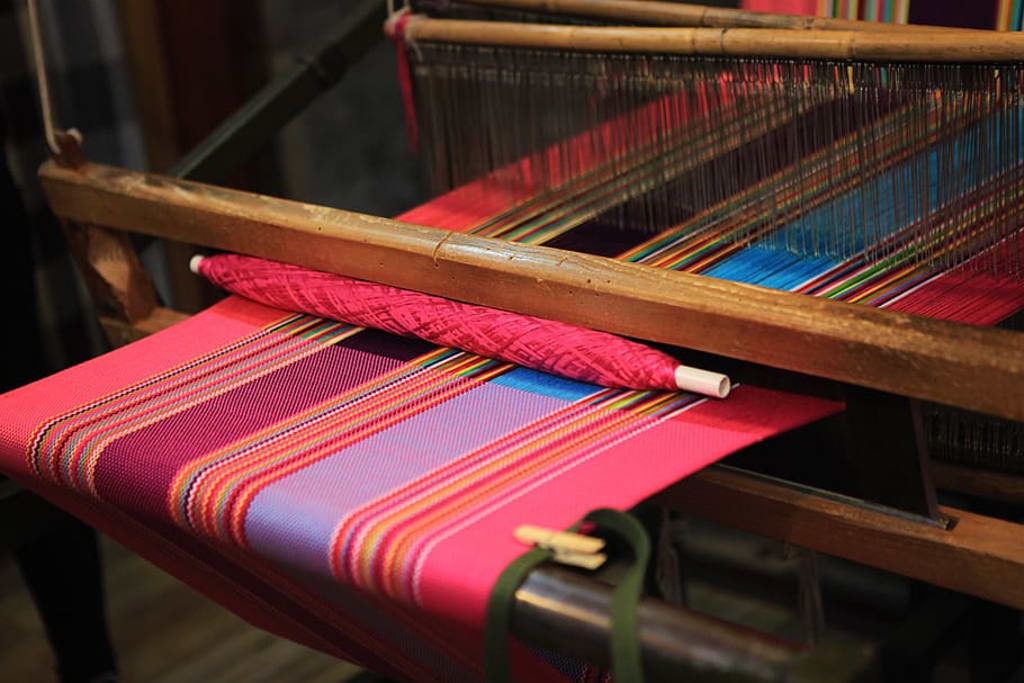
Handloom refers to a traditional method of weaving fabric using a manually operated loom. In this process, threads are interlaced to create a fabric by the weaver using a shuttle and a comb. The handloom is a simple machine that is operated by hand, foot or with the help of a flywheel.
Handloom weaving is a labor-intensive process and requires great skill and precision. It is a traditional craft that has been passed down from generation to generation, and is an important source of livelihood for many weavers in various parts of the world. The use of handloom fabrics is also considered eco-friendly and sustainable as it uses minimal electricity and produces minimal carbon footprint. The handloom industry plays a crucial role in preserving the cultural heritage and traditions of various communities, as well as providing unique and artistic fabrics for fashion and home decor.
The process of handloom weaving involves several steps:
• Preparing the yarn: The first step in handloom weaving is to prepare the yarn. This involves spinning the raw materials (such as cotton, silk, wool or jute) into threads of the desired thickness and quality.
• Warping: In this step, the weaver sets up the warp, which is the set of parallel threads that run lengthwise on the loom. The threads are wound onto a frame or reel to create a warp beam, which is then placed on the loom.
• Threading: Once the warp is set up, the weaver threads each individual thread through the heddles and reed in a specific pattern, based on the desired design and weave structure.
• Weaving: With the warp set up and threaded, the weaver begins the weaving process by passing the shuttle through the threads to create the weft, which is the thread that runs perpendicular to the warp. The weaver uses a comb or other tool to push the weft threads tightly together, creating a tight and even fabric.
• Finishing: After the weaving is complete, the fabric is cut off the loom and undergoes several finishing processes, such as washing, pressing, and dyeing. These processes help to bring out the texture, color, and shine of the fabric.
Throughout the entire process, the weaver must maintain careful control over the tension and positioning of the warp and weft threads to ensure a high-quality and consistent fabric. Handloom weaving is a highly skilled and time-consuming process, but it results in unique and beautiful fabrics that cannot be replicated by machine.
After the weaving process is complete, the fabric is removed from the loom and undergoes several finishing processes. These may include:
• Washing: The fabric is washed to remove any sizing or other substances used during the weaving process, as well as to soften and clean the fabric.
• Dyeing: The fabric may be dyed to achieve the desired color. Natural dyes made from plant extracts or other natural sources are often used in handloom fabrics.
• Ironing: The fabric is ironed to remove any wrinkles and to create a smooth finish.
• Embroidery: In some cases, handloom fabrics are embroidered with intricate designs or patterns to add texture and detail.
• Starching: Starch is sometimes applied to handloom fabrics to stiffen them and make them more durable.
• Cutting and Sewing: The finished handloom fabric may be cut and sewn into various garments or products, such as sarees, shawls, bags, and home furnishings.
The finishing processes help to bring out the texture, color, and quality of the handloom fabric, and can vary depending on the type of fabric and the intended use. Handloom fabrics are often prized for their unique beauty and durability, and are considered a valuable cultural herit
Thank you for Reading
About the Creator
Keep reading
More stories from writers in Education and other communities.
February Begins
White rabbits, white rabbits, white rabbits. It’s February, the worst month! I never know what to do in February, it suddenly hits that we’re a month into the new year and the belief that I have plenty of time to accomplish whatever it is I want to do this year evaporates into thin air. I respond in two ways, procrastinating or working on random little tasks. We had entrance examinations on Monday, so while I still went into work we didn’t have any exams to do, but I got everything prepped for the rest of the week. That means tests, exams and presentation grading!
By Max Brooks6 days ago in Education
Foot Bindings
I asked my grandmother how she knew she'd fallen in love. I am not sure I ever did love him, she said. This was before I met my husband. I was naive, a naked spring, a raw nerve of a thing. That cannot ever be me, I knew. Sadness swept in gently like a Moscow thaw. It is no simple thing, looking into a woman's vast soul and seeing its foot bindings. Now, in Italy divorced with my skin singed off, when I say I don't love him mean: I have succeeded at feeling nothing most days and it mostly works. Do you want the comfort of Nothing? Do you want Nothing, too? Be warned: you'll never be free, even when you are nothing. Here is what doesn't work: Accepting the stages of grief. Talking about it. Sitting with the feeling. Missing him—no, the person you were when you believed in death do us part. Writing poetry. That, too. When I say I don't love him I mean: I feel capsized in an endless, starved tide. What sometimes works: selective memory. You must forget ripe tomatoes and his beard and feeling perfectly sheltered in a big blue world. Forget coffee in bed, laughter watching TV, blowing out the candles on the birthday cake and the quiet all-encompassing knowledge that you are chosen. Remember only how love turned to a banal everyday survival act, a trapeze act unsure whether he will catch you, how the warmth stagnated and became sour, remember the foot bindings and remember the resentment boiling in your veins as you stick it out for the kids. Six-hour Netflix binges help, too. A man's fingers tracing your spine. Frozen pizza at 2 a.m. Random trips to the museum just to stand near things that last a while. The realization that crying won’t change anything. Seeing that life is just a dream, and refusing to participate in your own suffering. Bite your fist. Walk on eggshells around joy. When I say I don't love him, I mean he didn’t break my heart, he just stopped touching it and it forgot how to beat right.
By Ella Bogdanova7 days ago in Poets



Comments
There are no comments for this story
Be the first to respond and start the conversation.