
Gut health and vagus nerve: causes of problems + tips for beginner.
read to learn more.....

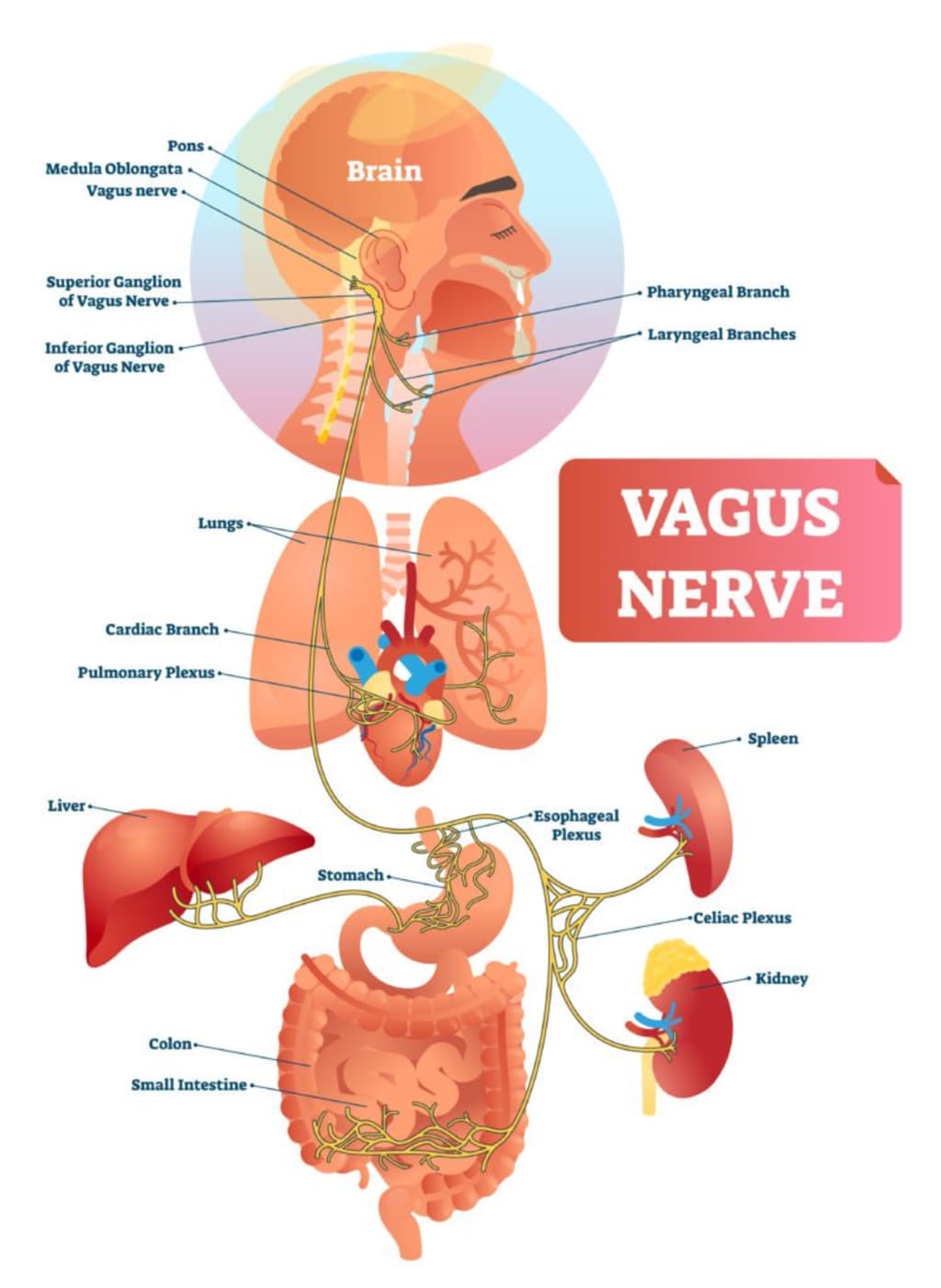
Your gut and brain are more connected than most people realize. At the heart of this connection lies the vagus nerve — a long nerve that runs from your brain to your stomach and intestines. When your gut health is poor or your vagus nerve isn't working well, it can lead to issues like bloating, constipation, anxiety, and fatigue.
In this guide, we’ll explore what causes gut and vagus nerve problems, and share easy-to-follow tips to help you take control of your health.
🌿 What Is Gut Health?
“Gut health” refers to how well your digestive system functions, especially your:
Stomach
Small and large intestines
Gut bacteria (also known as your microbiome)
A healthy gut helps you digest food, absorb nutrients, eliminate waste, and support your immune system. It even affects your mood and brain function!
🔌 What Is the Vagus Nerve?
The vagus nerve is the main part of the parasympathetic nervous system, which helps your body relax, digest, and recover. It sends messages between your gut and brain. This is why the gut is often called the "second brain."
When your vagus nerve isn’t functioning well (a condition called low vagal tone), it can affect:
Digestion
Heart rate
Breathing
Stress levels
Mood and memory
⚠️ What Causes Gut and Vagus Nerve Problems?
1. Poor Diet
Eating too much processed food, sugar, or unhealthy fats can damage gut bacteria. This causes inflammation, bloating, and poor nutrient absorption.
2. Chronic Stress
Stress directly weakens the vagus nerve and affects gut motility (how food moves through the digestive tract). It can also trigger stomach pain, diarrhea, or constipation.
3. Lack of Sleep
Poor sleep harms both gut health and vagal tone. The body needs rest to repair and regulate digestion and nerve function.
4. Overuse of Antibiotics
Antibiotics can kill good bacteria in your gut, leading to imbalances and digestive problems.
5. Sedentary Lifestyle
A lack of movement reduces blood flow to the gut and can slow digestion, increasing the risk of constipation and gut discomfort.
6. Not Chewing Food Properly
Chewing is the first step of digestion. If you rush your meals or eat while stressed, it affects how well your body breaks down food.
7. Alcohol and Smoking
These habits can irritate the gut lining and weaken vagus nerve function over time.
8. Underlying Medical Conditions
Conditions like IBS, leaky gut, SIBO, or even anxiety and depression can affect both gut health and the vagus nerve.
🌟 Tips to Improve Gut and Vagus Nerve Health (Beginner-Friendly)
🥦 1. Eat More Whole Foods
Focus on natural, unprocessed foods:
Fruits and vegetables (especially fermented ones like yogurt, kimchi, and sauerkraut)
Whole grains (brown rice, oats)
Lean proteins (chicken, fish, legumes)
Healthy fats (avocado, olive oil, nuts)
💧 2. Stay Hydrated
Water helps keep digestion smooth and prevents constipation. Aim for 6–8 glasses a day.
🧘 3. Practice Deep Breathing
Slow, deep breaths stimulate the vagus nerve. Try this:
Breathe in for 4 seconds
Hold for 4 seconds
Exhale slowly for 6–8 seconds
Do this 2–3 times a day for relaxation and better digestion.
🛏️ 4. Prioritize Sleep
Get 7–9 hours of good-quality sleep each night. This supports healing, hormone balance, and vagus nerve function.
🚶 5. Move Your Body
Regular movement — even walking for 20–30 minutes daily — improves gut motility and boosts vagal tone.
🍽️ 6. Eat Mindfully
Chew slowly
Avoid distractions (TV, phone)
Eat in a relaxed environment
Mindful eating helps your body better digest and absorb nutrients.
🚿 7. Try Cold Exposure
Brief cold showers or face splashes with cold water can stimulate the vagus nerve. Start with 10–30 seconds and build up.
🎶 8. Sing, Hum, or Gargle
These actions stimulate the vagus nerve because it passes through your throat. Hum your favorite tune daily!
🧠 9. Manage Stress
Practice meditation, yoga, journaling, or nature walks. Managing stress is key to gut and nerve health.
💊 10. Consider Probiotics
Probiotics (good bacteria) may help rebalance your gut, especially after antibiotics or digestive problems. Choose a high-quality supplement or probiotic-rich foods.
🧠 Final Thoughts
Your gut and brain are a powerful team — when one struggles, the other feels it too. If you’re feeling tired, anxious, bloated, or “off,” your gut and vagus nerve might need some support.
The good news? You don’t need to overhaul your entire life. Just a few small changes — eating better, managing stress, and moving more — can make a big difference. Start with one or two tips and build from there.
Remember: consistency is more important than perfection. Your body will thank you for taking small steps toward better health.
for solution.click here..
About the Creator
Keep reading
More stories from cherry marl and writers in Education and other communities.
how nutritional problem caused:A beginners guide + tips to stay healthy.
Nutrition plays a major role in our overall health. The food we eat directly affects how our body functions, grows, and heals. But when we don’t get the right nutrients — or get too much of certain ones — it can lead to nutritional problems. These issues can affect energy, mood, weight, immunity, and long-term health.
By cherry marl11 months ago in Education
Purpose Driven Leadership: How Corporate Success Is Fueling Social Change
Business leaders are often recognized for their ability to build organizations, create economic growth, and guide companies through competitive markets. Yet in recent years, a growing number of executives and entrepreneurs have chosen to extend their influence beyond corporate success. Many are investing their time, expertise, and resources into philanthropic efforts that address social challenges and strengthen communities. This evolution reflects a broader understanding that leadership carries responsibilities not only to shareholders but also to society.
By John Olin Killgore5 days ago in Education



Comments
There are no comments for this story
Be the first to respond and start the conversation.